
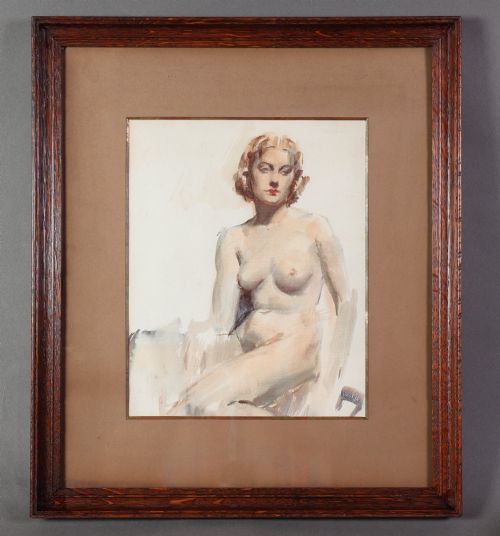


20th Century Life Study
When you examine a 20th century life study, you encounter direct figurative observations and botanical compositions captured through academic draughtsmanship.
20th Century Life Study
A 20th century life study typically encompasses figurative drawings of the human form alongside botanical still life compositions. These works capture the observed subject with directness, spanning decades from the Edwardian era through the mid-century period.
The figurative examples feature seated, reclining, or full-size nudes executed in charcoal, graphite, or oil paint. Alongside these figure studies, botanical subjects record floral arrangements in jugs, vases, and bowls.
Originating from British and European schools, these artworks reflect academic training and modernist tendencies. The pieces on this page unite these traditions through sustained observation of the physical world.
Materials and Technique
Artists utilised paper, canvas, wood panels, and boards as surfaces for their observations. Charcoal, graphite, and chalk pastels provided the dry mediums for rapid tonal sketching and contour definition.
Oil paint and watercolour were applied to build colour, light, and texture. Pigments rendered the subtle transitions of tone found in skin and floral petals.
Support structures varied from unstretched canvas to framed wood panels. Framing often incorporated decorative gilt surrounds to complement the painted surface.
One unexpected botanical study preserves the accidental footprint of an inquisitive garden snail right alongside the painted petals.
Evaluating Execution
Quality rests upon the sureness of the line and the command of tone. A successful study demonstrates anatomical understanding or botanical structure without hesitation in the mark-making.
The management of light across the subject reveals the hand of a trained observer. Stronger works capture spatial depth and volume rather than relying on flat outlines.
Material longevity also separates examples. Works maintained on stable supports with stable pigments retain their original visual impact.
Augustus John·Peter Jackson·Phyllis I Hibbert·Winifred Eugene Ballard·Marion Broom·Margaret Evangeline Wilson·Frank Dobson·Harry Epworth Allen·Jessie Wolfe·Millicent Emily Ayrton·William Greaves·Olive Higginbottom·Patience Mary Hallward·Lady Ethel Alice Chivers Harris·L E Hole·Peter Colville Horridge Gardner
The 20th Century Life Study Glossary
- Life study
- A drawing or painting executed directly from a live model. This practice formed the foundation of academic art training throughout the era.
- Charcoal
- A dry drawing medium made from burnt wood. It allows for deep blacks, rapid shading, and broad tonal adjustments.
- Still life
- An artwork depicting inanimate subject matter, typically commonplace objects or botanical specimens. Floral arrangements dominate the examples found here.
- Gouache
- An opaque water-based paint that dries to a matte finish. It provides stronger coverage than traditional watercolour.
- Impasto
- Paint applied in thick layers that stand out from the surface. This technique leaves visible brush marks and catches light.
20th Century Life Study: Frequently Asked Questions
What is a 20th century life study?
These artworks are direct visual records of human figures or botanical subjects created by artists working between nineteen-ten and nineteen-sixty.
They reflect the academic teaching methods and modernist movements of the period across Britain and Europe.
How were these drawings and paintings used?
Artists produced life studies to sharpen their observational skills, record anatomy, or prepare for larger exhibition canvases.
Botanical studies served both as rigorous exercises in colour mixing and as finished decorative works for domestic interiors.
How do I live with works on paper?
Works executed on paper or delicate card require mounting behind glass and protection from direct sunlight.
Placing them away from humid environments ensures the charcoal, graphite, and watercolours remain stable over decades.
How can I tell the periods apart?
Early examples from the nineteen-tens lean toward academic realism and traditional charcoal or watercolour handling.
Mid-century pieces often display modernist simplification, expressive brushwork, or impasto application reflecting the shifts in European art schools.