


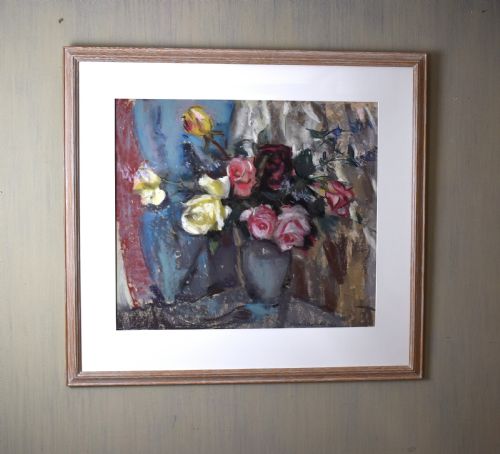


Framed Life Study Painting
A framed life study painting brings traditional figurative observation and floral composition into domestic spaces through enduring canvas and paper formats.
Framed Life Study Painting
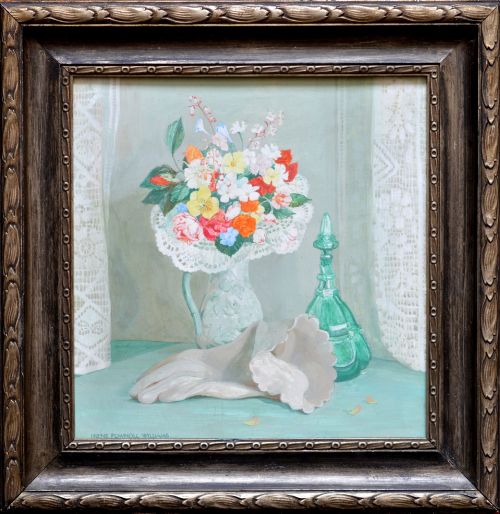
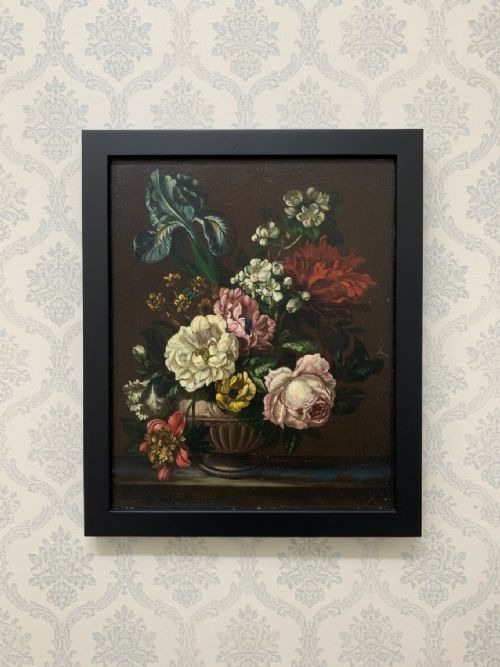
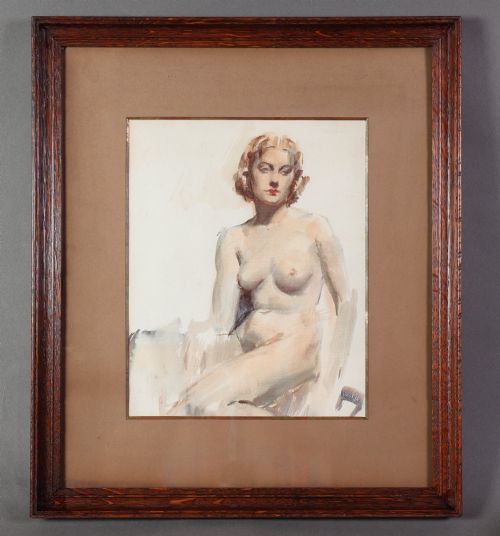
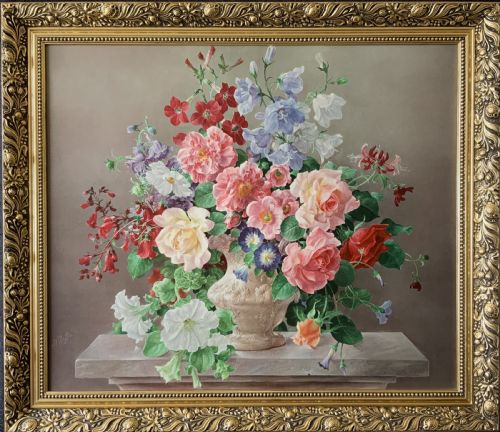
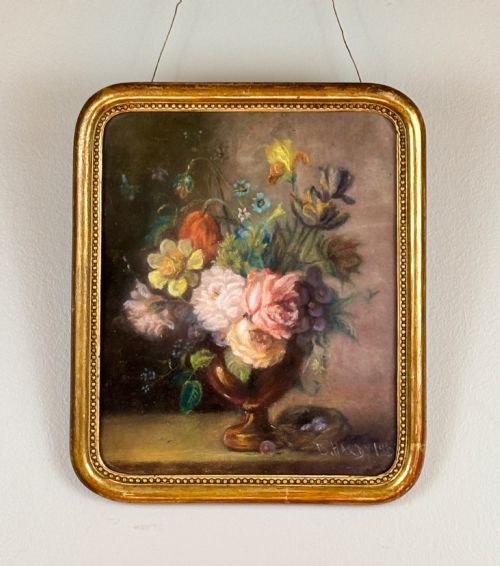
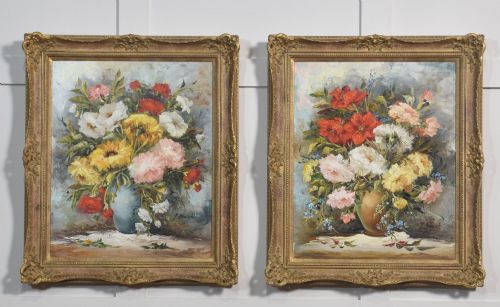
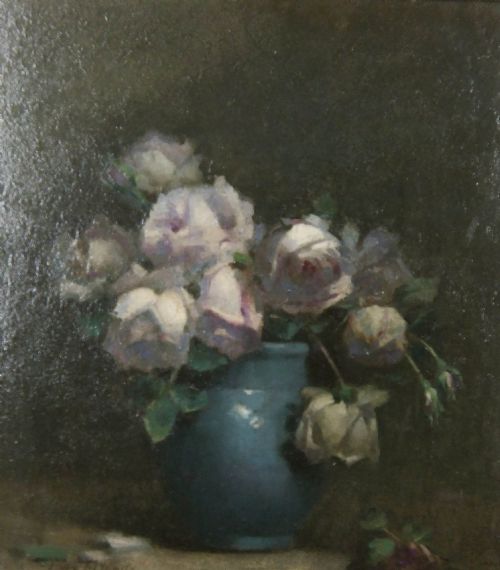
A framed life study painting encompasses direct observations of nature, botanical arrangements, and human subjects captured across the nineteenth and twentieth centuries. These works include detailed floral arrangements, fruit studies, and figurative representations executed by named artists and regional schools.
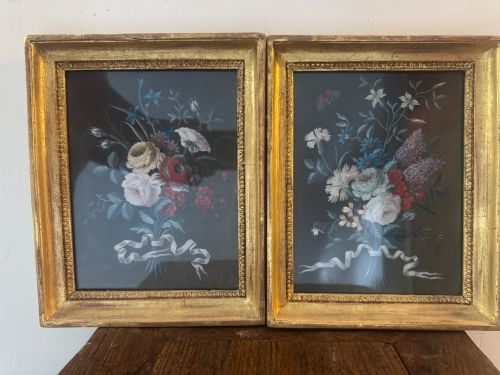
The selection on this page leans heavily toward floral and botanical watercolours alongside oil paintings on canvas and panel from the Victorian era through the mid-twentieth century. Buyers encounter everything from intimate miniature floral watercolours to large scale mid-century European still life compositions and figure studies.
Drawn from diverse stylistic movements including British Impressionism, Victorian botanical illustration, and Modern British art, these pieces reflect domestic and studio practices over two centuries. Each framed work retains its original character, bounded by period wood and gilt mouldings.
How they were made
Artists painted these studies using oil paint, watercolour, pastel, gouache, and tempera applied directly to prepared canvas, wood panel, paper, or board. Oil mediums provided rich colour depth on woven canvas, whilst watercolours and pastels captured delicate tonal shifts on paper supports.
Finished works were secured behind protective glass or mounted within wooden frames finished with gold leaf and gilt gesso. These traditional framing techniques preserved fragile paper and canvas surfaces from atmospheric moisture and handling over successive decades.
Listings feature works executed on canvas, wood panel, paper, and board using oil, watercolour, pastel, tempera, and gouache media.
What varies in quality
Quality rests in the precision of draughtsmanship, the handling of light and shadow, and the structural integrity of the underlying support and frame. Superior works demonstrate confident brushwork and balanced composition, whether rendering complex floral petals or human anatomical forms.
The preservation of the original pigments and the authenticity of the period frame influence the standing of an individual piece. Works retaining their untouched historic mounts and stable canvas tensions command greater appreciation amongst collectors.
Irene Christobelle Pownoll Williams·Harold Clayton·Thomas Hooper·Phyllis I Hibbert·Lena M Alexander·Jennifer Toombs·Alice Macallan Swan·Marion Broom·Annie Mary Youngman·John Robertson Reid·Frank Dobson·John Sherrin·Owen Bowen·Kershaw Schofield
The Framed Life Study Painting Glossary
- Gouache
- An opaque watercolour paint that dries to a matte finish, frequently utilised for botanical studies to achieve saturated colour fields.
- Tempera
- A permanent, fast-drying painting medium consisting of coloured pigments mixed with a water-soluble binder such as egg yolk.
- Oleograph
- A mechanical colour lithograph reproduction printed on canvas to simulate the appearance of an original oil painting.
- Pastel
- A dry drawing medium composed of powdered pigment and a binder, allowing for soft blending and vibrant chromatic effects on paper.
- Panel
- A rigid wooden support used by artists as an alternative to stretched canvas, common in earlier painting traditions.
Framed Life Study Painting: Frequently Asked Questions
How should I hang a framed life study painting?
Position the artwork at eye level on a stable interior wall away from direct sunlight and excessive moisture. Ensure the wall fixings match the weight of the wooden frame and glass.
Keep the painting clear of heat sources such as radiators to prevent the canvas or wooden panel from warping over time.
Are these paintings original artworks?
The listings comprise original hand-painted works in oil, watercolour, pastel, and gouache created directly by the artists. Each piece represents a singular creative effort rather than a modern reproduction.
Occasional printed items, such as vintage oleographs, are explicitly identified as reproductions in their individual descriptions.
How do I care for antique paper watercolours?
Protect works on paper from direct ultraviolet light to prevent the fading of delicate watercolour and pastel pigments. Maintaining a stable room temperature prevents foxing and paper degradation.
Leave the original backing and glass undisturbed unless professional conservation is required to secure the delicate surface.
What periods do these paintings represent?
The collection spans the nineteenth and twentieth centuries, encompassing Victorian botanical art, Edwardian watercolours, and mid-century European compositions. Each period brings distinct stylistic conventions and framing materials.
Nineteenth-century works often feature gilt frames and detailed naturalism, whilst mid-century pieces showcase bolder brushwork and simplified forms.