






Vintage Nude Portrait Artwork
Vintage nude portrait artwork captures the human form through the lens of early twentieth-century painters and draughtsmen, offering collectors intimate studies in light and gesture.
Vintage Nude Portrait Artwork
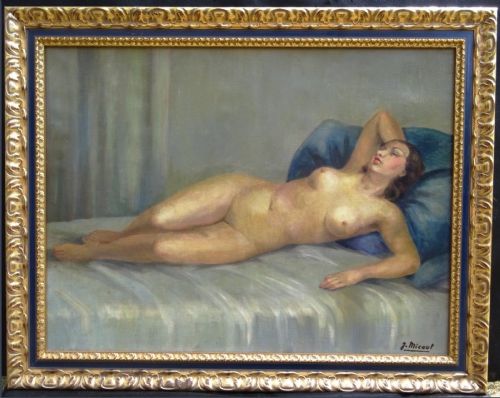
When you search for vintage nude portrait artwork, you encounter oil paintings, charcoal drawings, and framed photographs created primarily between the Edwardian era and the mid-twentieth century. The selection spans academic life studies from British and French studios alongside avant-garde compositions from continental Europe.
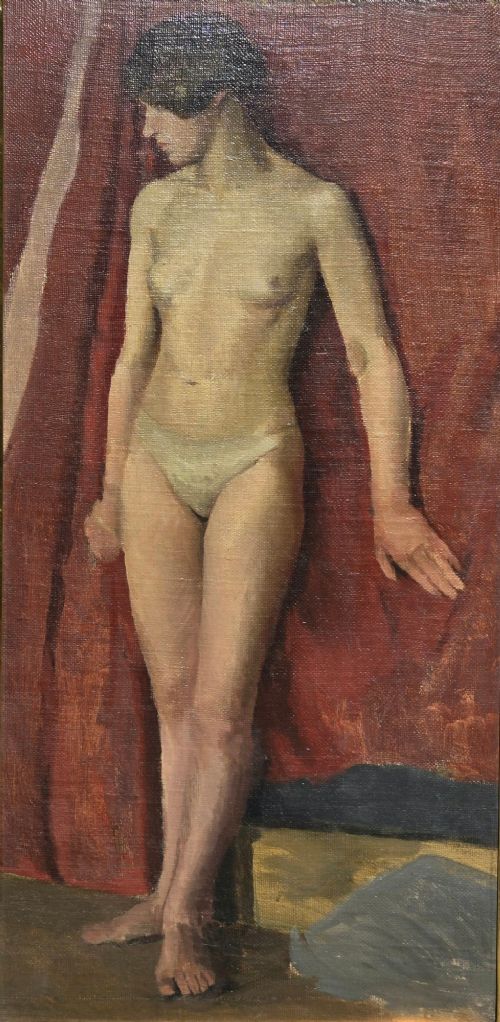
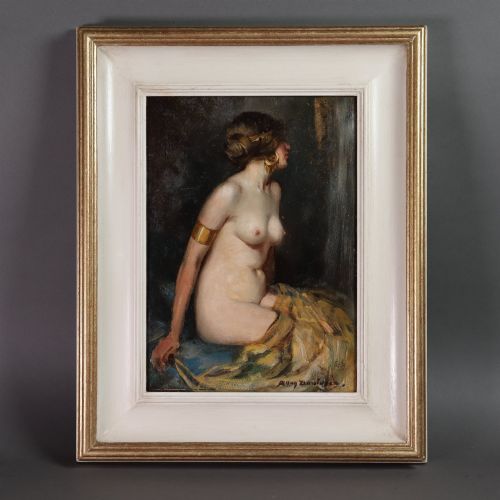
Most pieces on this page are oil on canvas or oil on board, reflecting the dominant media of twentieth-century figurative artists. You will frequently find works attributed to named regional painters as well as anonymous school studies, capturing subjects from reclining female figures to outdoor sunbathing scenes.
The aesthetic ranges from strict academic realism to French Art Deco and mid-century British modernism. These works function equally as historical documents of studio practice and as striking decorative focal points for contemporary interiors.
How they were made
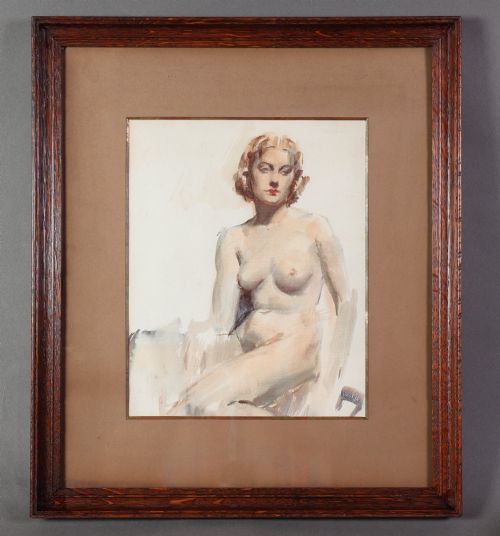
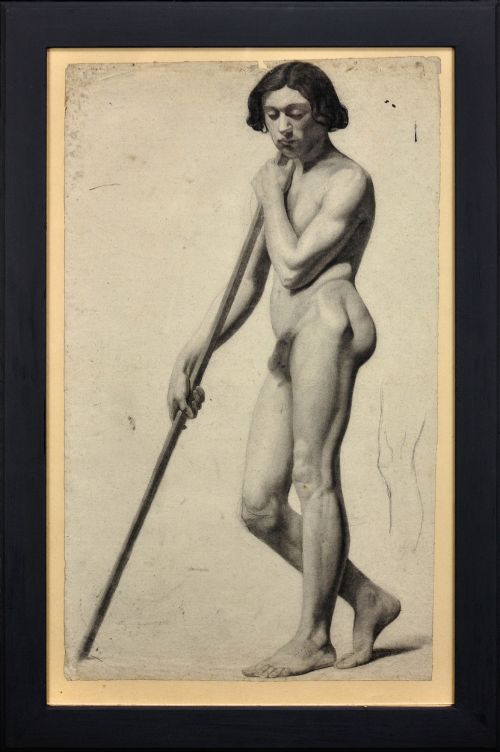
Artists relied heavily on traditional supports, applying oil paint to stretched canvas, wooden board, or heavy paper. Charcoal and pastel were also utilised frequently for rapid life studies and academic drawings executed directly from the model.
Framing often complements the period, utilising wood mouldings that sometimes incorporate glass protection to preserve delicate charcoal or watercolour surfaces. Miniature paintings on panel demonstrate finer, more meticulous brushwork compared to the looser strokes found in larger studio canvases.
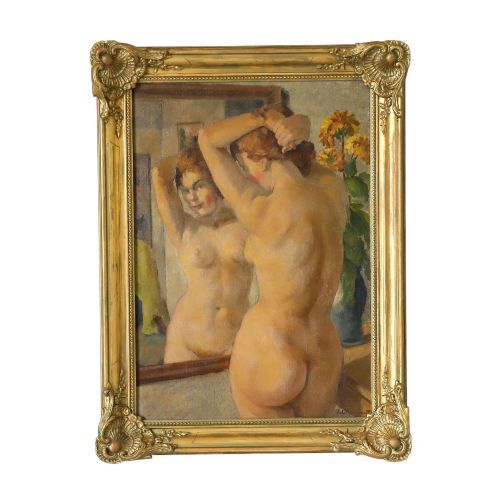
One French model takes a quiet moment to wash herself while a Fauvist painter immortalises the suds.
What varies in quality
Quality in these figurative works rests largely upon the artist's command of anatomy, tonal balance, and expressive brushwork. A master life study demonstrates confident line work and an accurate understanding of light falling across the human form, whereas lesser works may exhibit flat shading or rigid proportions.
The distinction also lies in the vitality of the composition and the preservation of the medium. Works that retain their original untouched pigment and period framing hold greater visual integrity than those compromised by heavy restoration or surface cracking.
Winifred Rymer·Philippe de Rougemont·Julian Mandel·Augustus John·Henry Arthur Roberts·Raymond Moritz·Tony Giles·Henri Vincent-Anglade·Gaetan Dumas·Allan Douglas Davidson·James Clark·Peter Jackson·Jean Hippolyte Marchand·Pinchus Krémègne·Winifred Eugene Ballard·Mariette Lydis·Yetta Kane·Raymond Arthur Roadnight·Montagu Barstow
The Vintage Nude Portrait Artwork Glossary
- Academic Realism
- A style of painting and drawing produced under the influence of European academies of art. It emphasises precise anatomical accuracy and traditional subject matter.
- Art Deco
- A design style that peaked in the 1920s and 1930s, characterised by sleek lines, stylised forms, and bold geometric influences. In figurative art, it often manifests in stylised poses and smooth contours.
- Life Study
- A work of art executed directly from a live nude model. These pieces were foundational exercises in art schools and studios.
- Fauve
- A style associated with early twentieth-century French painters who favored expressive, non-naturalistic use of colour. It translates roughly to wild beasts.
- Board
- A rigid flat material, such as wood or heavy paper pulp, used as an alternative support to stretched canvas for oil painting.
Vintage Nude Portrait Artwork: Frequently Asked Questions
What periods do these artworks cover?
The listings span from the early nineteenth-century academic tradition through the Edwardian period, the 1920s and 1930s Art Deco era, and into post-war mid-century modernism.
Most pieces cluster around the first half of the twentieth century, reflecting the peak of traditional figurative painting before abstraction took hold.
How should I hang a nude painting?
These works suit private spaces such as studies, bedrooms, or dedicated gallery walls where their intimate scale and subject matter can be appreciated up close.
Pair wooden-framed oils with simple lighting to bring out the varied brushwork and rich tones of the pigments.
Are these works signed by the artists?
Many pieces feature visible signatures, monograms, or studio stamps, while others remain anonymous examples of the British or European school.
Signed works often connect to specific academies or exhibition histories noted in the title.
What is the difference between an oil study and a finished painting?
An oil study is typically executed more rapidly to capture gesture, lighting, or anatomy during a single life-drawing session.
A finished painting generally exhibits more developed background detail, deliberate composition, and heavier layers of worked pigment.