



Mid Century Nude Painting
A mid century nude painting brings bold brushwork and human form together, capturing the character of the period on canvas.
Mid Century Nude Painting
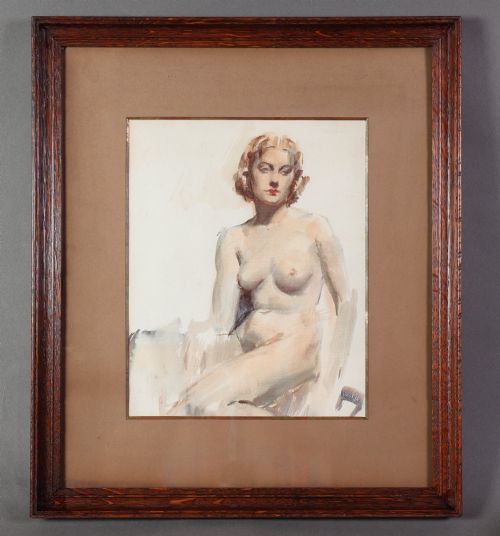
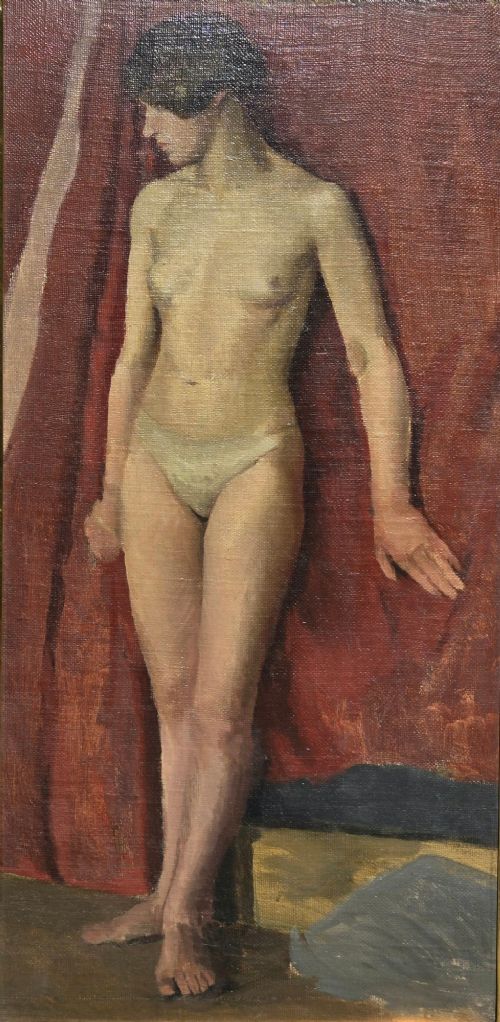
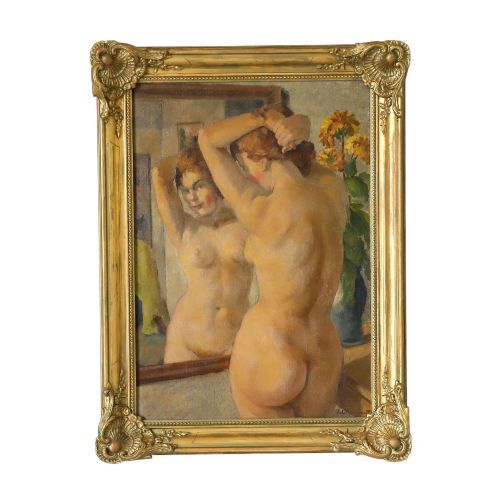
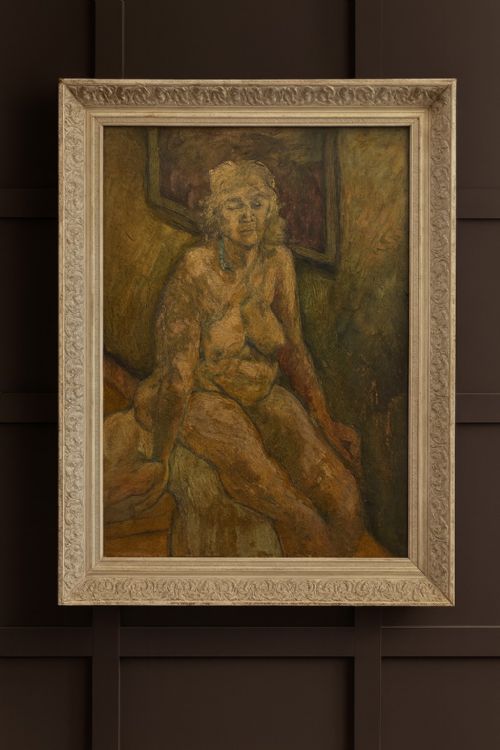
A mid century nude painting captures the human figure through the lens of modern British, Swedish modern, and mid-century expressionism styles. These artworks range from studio interior studies to reclining poses by rivers, reflecting the artistic shifts of the twentieth century.
Most pieces encountered on this page date from the nineteen-thirties to the nineteen-sixties, utilising canvas, paper, and board supports. Painters of this era experimented with form and line, moving away from strict academic realism toward expressive and impressionistic interpretations.
The selection includes works by listed artists alongside pieces from the wider British and French schools. Buyers will find both intimate studies and large-scale canvases suited to diverse interior settings.
Assessing quality and execution
Quality rests on the confidence of the brushwork and the artist's command of proportion and light. A stronger composition demonstrates a clear understanding of anatomy and space, whereas lesser works may rely on rigid outlines without tonal depth.
The preservation of the pigment and the stability of the canvas or board determine the physical longevity of the piece. Works that retain their original framing and untouched surfaces offer a more authentic representation of the period.
Mid Century Nude Painting Retail Price Guide 2026
Typical asking prices for mid century nude painting among the pieces listed under this phrase on Sellingantiques today, from the lower quarter to the upper quarter. They describe what is for sale here now, not the wider market.
Philippe de Rougemont·Tony Giles·Gaetan Dumas·Sir William Russell Flint·Peter Jackson·Yetta Kane·Raymond Arthur Roadnight·Frank Dobson
The Mid Century Nude Painting Glossary
- Chiaroscuro
- Strong contrast between light and dark areas within a painting. This technique heightens the drama of the human form.
- Impressionism
- A style of painting emphasising immediate visual impressions through small, thin brush strokes. It prioritises the accurate depiction of light.
- Oil paint
- A slow-drying paint made with pigments suspended in a drying oil. It allows for rich blending and textured impasto surfaces.
- Pastel
- A dry painting medium in the form of a stick, consisting of pure powdered pigment and a binder. It creates soft, velvety colour effects on paper.
- Watercolour
- Paint consisting of colour pigments suspended in a water-soluble vehicle. It produces translucent washes of colour.
Mid Century Nude Painting: Frequently Asked Questions
How should I hang a mid century nude painting?
Position the painting at eye level on a neutral wall to let the colours and brushwork command attention. Keep the artwork away from direct sunlight to protect the oil pigments and paper supports from fading over time.
Ensure the wall fixings match the weight of the wooden frame and any glass covering. Proper placement preserves both the structural integrity of the piece and its visual impact within the room.
What periods do these paintings cover?
The selection spans from Edwardian and nineteenth-century examples through to the nineteen-twenties, thirties, fifties, and sixties. Mid-century modern and post-war British realism dominate the later decades.
Each period brings distinct stylistic choices, moving from traditional academic studies toward expressive modernist interpretations of the human form.
Are these paintings signed by the artists?
Many works bear signatures from listed painters, while others originate from the broader British or French schools as unsigned studies. Documentation often names specific creators such as Peter Jackson or Raymond Arthur Roadnight.
Unsigned works rely on stylistic markers, materials, and framing to indicate their approximate date and regional origin.
What is the difference between canvas and board?
Canvas provides flexibility and texture, stretched over a wooden frame to hold the oil paint. Board offers a rigid support, sometimes used when a canvas is laid down for added stability.
Both materials were widely used throughout the twentieth century, influencing how the paint ages and interacts with environmental changes.