
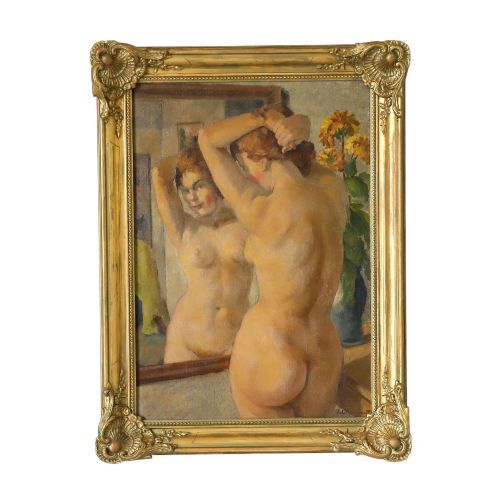


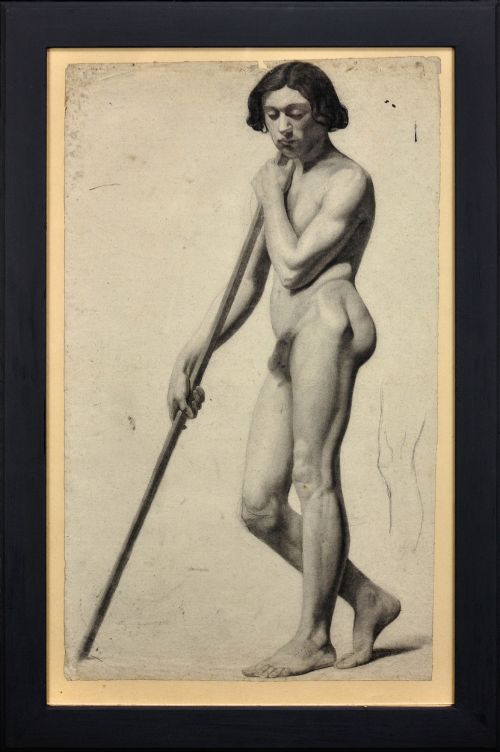


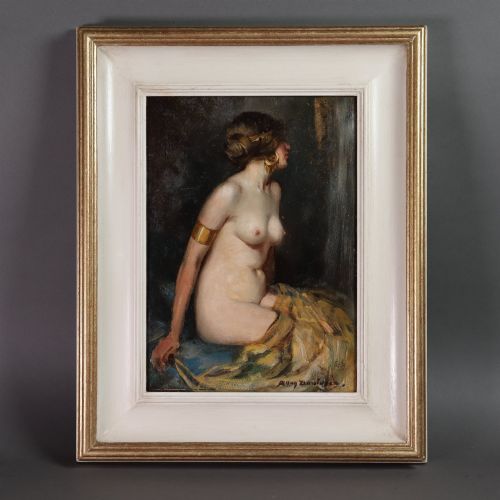


Vintage Nude Portrait
A vintage nude portrait captures the human form through oil, canvas, and charcoal across decades of changing artistic styles.
Vintage Nude Portrait
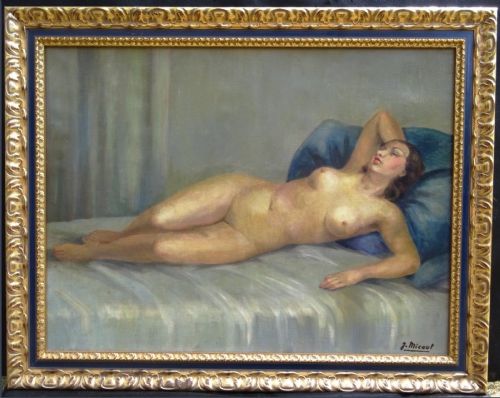
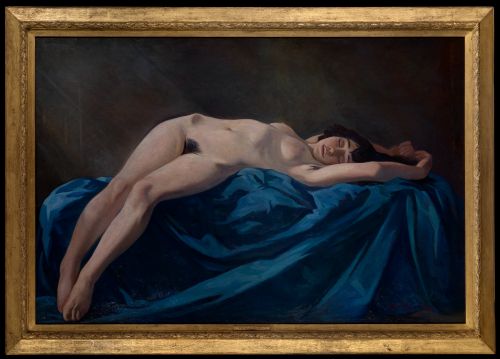
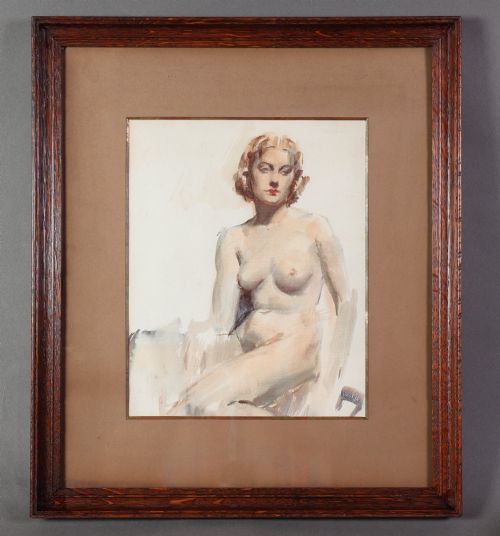
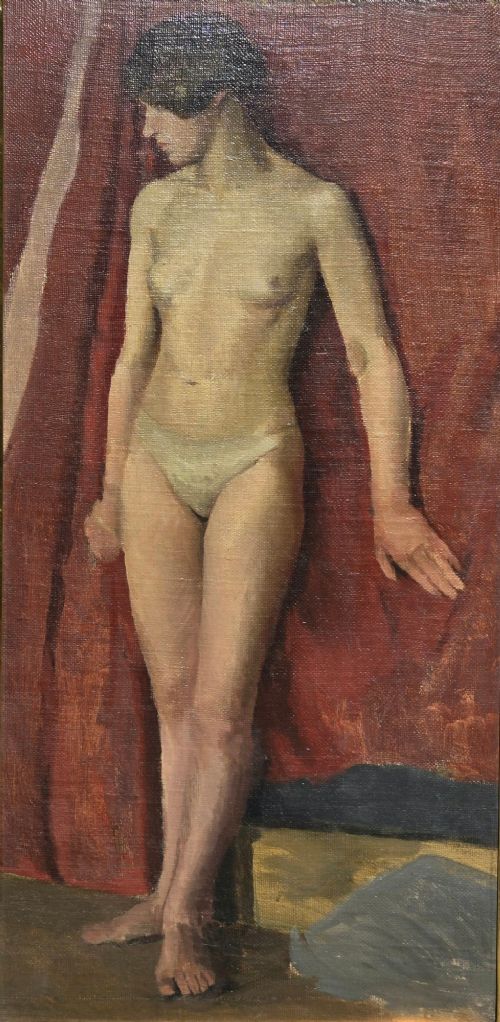
Most pieces you meet on this page date from the nineteen-twenties and nineteen-thirties, reflecting European and British modernist movements. These range from intimate charcoal sketches on paper to large oil paintings on canvas.
The subject matter varies from formal studio poses to relaxed sunbathing scenes by rivers and cliffs. Works originate from named artists across Britain, France, and Belgium.
Materials and technique
Painters utilised oil paint applied to canvas, board, or paper to build depth and texture within the figure studies. Draughtsmen employed charcoal and chalk pastels on paper to capture line and shadow during life classes.
Artists often worked within studio settings or en plein air, employing Impressionist, Post-Impressionist, or Academic Realism techniques. Supports occasionally include original frames of wood or glass protection for delicate miniatures and works on paper.
Listings feature oil on canvas, charcoal, pastel, and watercolour across British, French, and Belgian schools.
What separates the range
The distinction between works rests upon the artist's command of anatomy, light, and proportion within the composition. Masterful handling of paint or charcoal transforms a standard life study into a striking piece.
Provenance and documentation elevate certain examples, particularly signed works by established academy-listed painters. The integration of the subject with its background, whether a studio interior or a landscape, determines the visual strength of the portrait.
Eric Robertson·Winifred Rymer·Philippe de Rougemont·Julian Mandel·Augustus John·Henry Arthur Roberts·Raymond Moritz·Tony Giles·Henri Vincent-Anglade·Alexandre-Louis Martin·Gaetan Dumas·Allan Douglas Davidson·James Clark·Peter Jackson·Jean Hippolyte Marchand·Pinchus Krémègne·Winifred Eugene Ballard·Mariette Lydis·Yetta Kane·Raymond Arthur Roadnight·Montagu Barstow·Harry Epworth Allen·Louis Georges Bouché
The Vintage Nude Portrait Glossary
- Academic Realism
- A style of painting and sculpture produced under the influence of European academies of art. It emphasises precise anatomical accuracy and traditional techniques.
- En Grisaille
- A painting executed entirely in shades of grey or neutral monochrome. This technique often imitates sculpture or serves as a preparatory study.
- Life Study
- An artwork created from a live human model. These pieces form a core part of academic training and artistic practice.
- Post-Impressionism
- An art movement that extended Impressionism while rejecting its limitations. Artists stretched boundaries through vivid colours and distinct brushwork.
- Provenance
- The chronology of the ownership of a work of art. Documented history establishes authenticity and previous exhibitions.
Vintage Nude Portrait: Frequently Asked Questions
What periods do these portraits cover?
The works span from the nineteenth century through the mid-twentieth century. Major representation occurs from the nineteen-teens to the nineteen-sixties.
Pieces reflect shifts from academic study traditions towards modernist and avant-garde movements in Britain and Europe.
How were these artworks originally displayed?
Many oil paintings and drawings were framed in wood for display in artist studios, private collections, or public exhibitions. Smaller items such as hand-painted miniatures served as personal keepsakes.
Works on paper often received glass protection to preserve delicate charcoal and pastel mediums from environmental damage.
How do I care for a vintage nude portrait?
Keep oil paintings away from direct sunlight and fluctuating humidity to prevent cracking of the canvas or board. Works on paper and charcoal require acid-free mounting and framing behind UV-protective glass.
Dust wooden frames gently with a dry cloth and avoid liquid cleaners on the painted surfaces.
How can I tell academic and modernist works apart?
Academic pieces prioritise precise anatomical realism, smooth blending, and formal studio lighting. These follow strict traditional training methods from art academies.
Modernist examples embrace expressive brushwork, simplified forms, and unconventional palettes influenced by Fauvism and Cubism.