




![Pen and Ink Sketch - Female Nudes by William Edward Frost [1810-1877]](https://www.sellingantiques.co.uk/photosnew/dealer_kendallhouse/dealer_kendallhouse_full_1758970795762-8493507346.jpg)


British Nude Figure Painting
British nude figure painting captures the human form through oil and paper, offering collectors a rich study in historical academic and modernist techniques.
British Nude Figure Painting
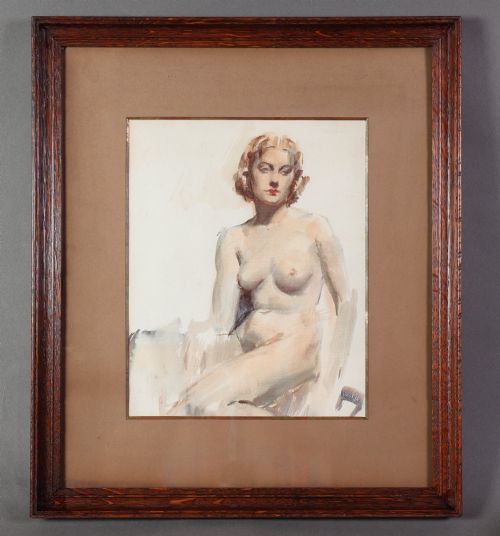
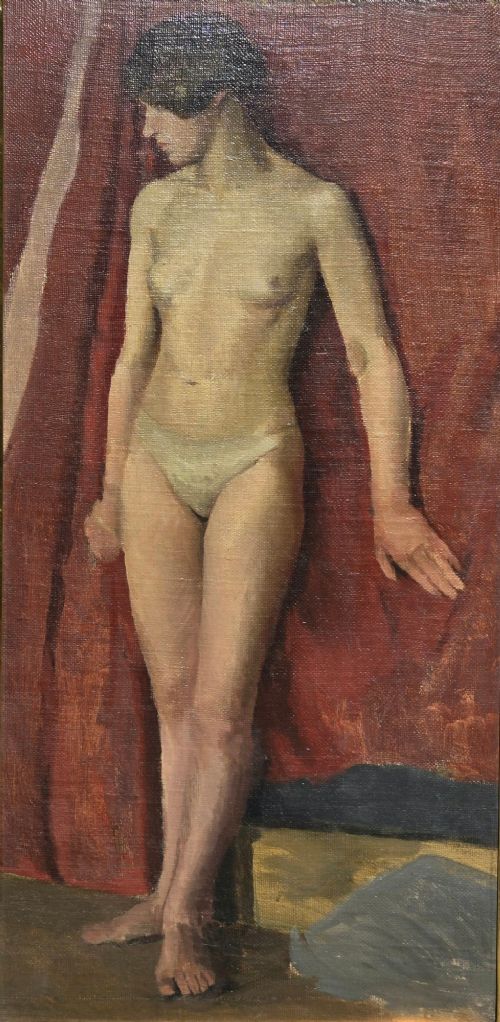
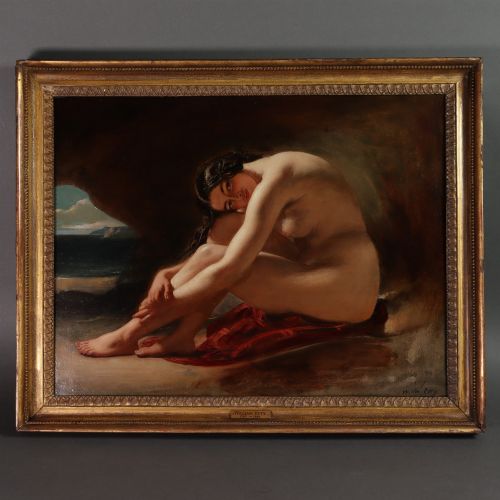
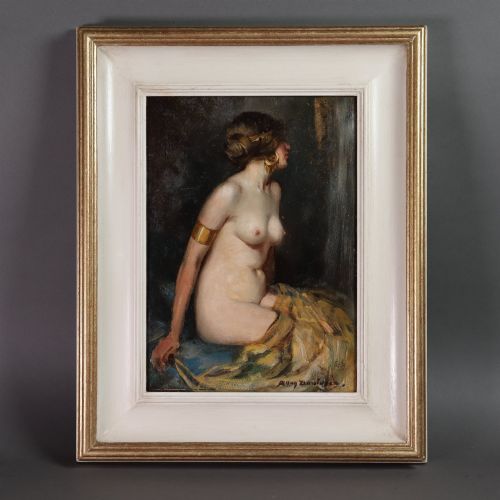
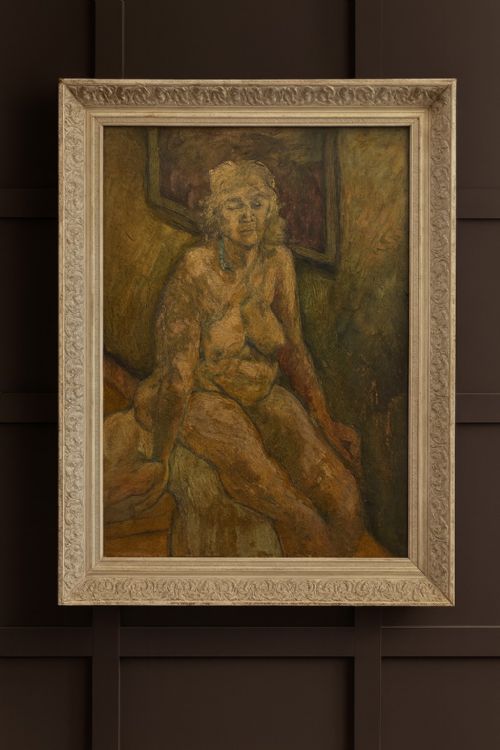
A british nude figure painting encompasses works executed on canvas, board, and paper across various historic periods. These artworks range from Victorian romanticism and Edwardian academic realism to mid-century modern and post-war realism.
Buyers frequently encounter pieces attributed to the British School alongside works by named artists from the nineteenth and twentieth centuries. The subjects span studio interiors, mythological scenes, and seated or reclining figures.
Framed artwork and original panels demonstrate how British artists approached the unclothed human form over successive generations. The material support typically consists of oil paint applied to canvas, board, or wood.
Factors of quality
Quality in these works is defined by the confidence of the brushwork and the precision of anatomical rendering. Academic pieces reveal rigorous training through careful proportion, whilst modernist examples rely on expressive paint handling and tonal balance.
The condition of the medium, whether oil on canvas or ink on paper, influences the visual impact of the piece. Well-preserved surfaces retain their original pigment vibrancy without excessive flaking or discolouration.
Winifred Rymer Standing·Margaret Maitland Howard·Tony Giles·William Etty·Allan Douglas Davidson·James Clark·William Edward Frost·Raymond Arthur Roadnight·Frank Dobson
The British Nude Figure Painting Glossary
- Oil paint
- A slow-drying paint made by mixing pigments with a drying oil, commonly linseed. This medium allows artists to blend tones smoothly and build thick impasto layers.
- Board
- A rigid flat substrate used as a support for painting instead of stretched canvas. Artists frequently utilised wooden or composition boards for smaller oil sketches.
- Academic realisms
- A style of painting produced under the influence of European academies of art. It emphasises precise drawing, smooth finishes, and classical subject matter.
- Panel
- A flat piece of wood used as a rigid support for a painting. Panels were standard before canvas became the dominant support.
- Post-war realism
- An artistic movement following the Second World War focusing on direct observation of the physical world. Figures are often rendered with grounded, unidealised presence.
British Nude Figure Painting: Frequently Asked Questions
How are these paintings dated?
Dating relies on recorded artist life spans, stylistic movements such as Edwardian academic realism, and specific medium choices. Catalogued dates help situate each work within its respective artistic period.
Changes in canvas preparation and framing styles also provide contextual clues for verification.
What subjects do they feature?
Subjects range from classical mythology, such as Pan or Ariadne, to studio interior studies of models. Reclining and seated poses are common compositions across the nineteenth and twentieth centuries.
Some works incorporate animals or domestic settings alongside the central figure.
How do I display them?
These works suit traditional or modern interiors, typically housed within their original or period-appropriate frames. Proper placement avoids direct sunlight to protect oil paint and paper from fading.
Stable indoor humidity preserves both wooden panels and canvas supports.
What is academic realism?
Academic realism refers to the style taught in official art academies, emphasising accurate anatomy and traditional techniques. Artists working in this manner demonstrated rigorous draughtsmanship.
This approach contrasts with the looser brushwork found in later mid-century modern pieces.