


![Pen and Ink Sketch - Female Nudes by William Edward Frost [1810-1877]](https://www.sellingantiques.co.uk/photosnew/dealer_kendallhouse/dealer_kendallhouse_full_1758970795762-8493507346.jpg)


Academic Female Nude Study
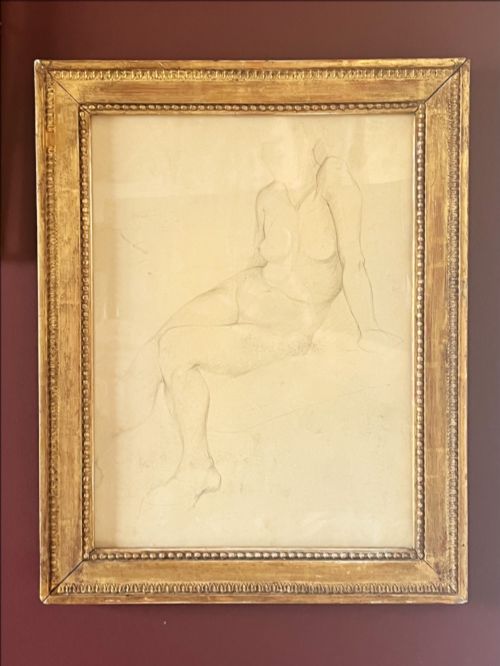
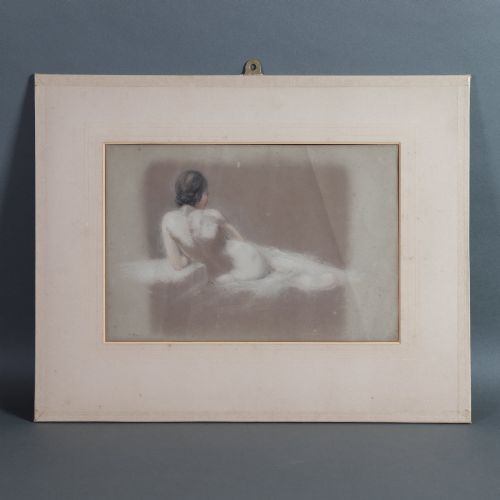
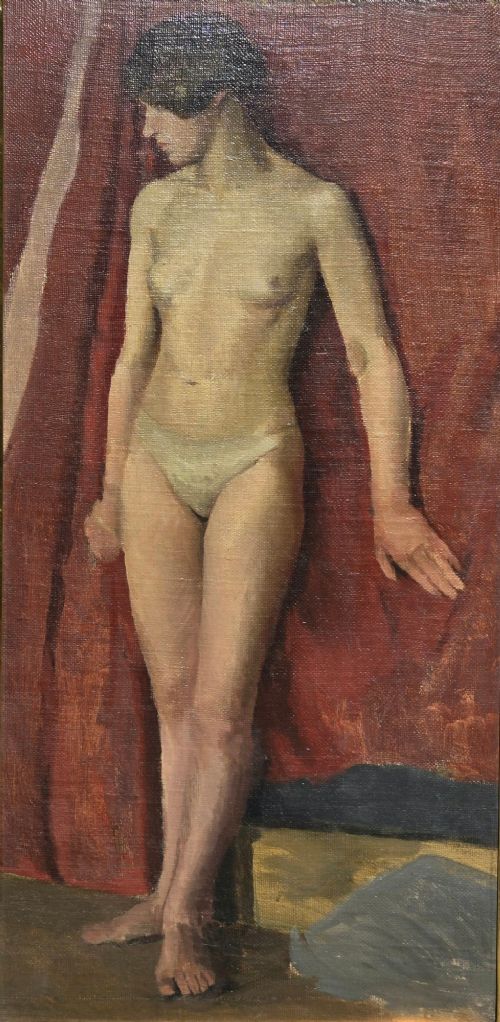
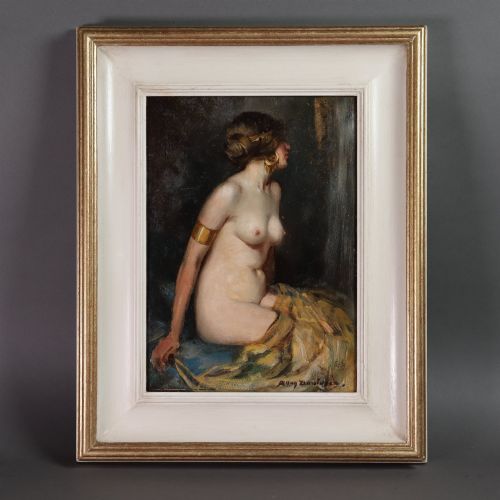
These academic female nude study pieces capture the human form through rigorous observation, offering collectors a direct window into classical training methods.
Academic Female Nude Study
An academic female nude study represents a foundational exercise in classical drawing, painting, or sculpture, executed within institutional or atelier settings. These works focus on anatomical precision and tonal variation, documenting the human form through structured observation rather than imaginative design.
The selections available here span from the nineteenth century through the mid-twentieth century, encompassing Victorian academic realism, French neoclassical influences, and modern British approaches. Common formats include charcoal and chalk drawings on paper, oil paintings on canvas or board, and sculptural bronze pieces.
Buyers encountering this group will find both finished framed artworks and direct life studies produced within art schools. These pieces reflect the evolving standards of figure drawing across different decades, maintaining a distinct academic discipline throughout.
How They Were Made
Artists utilised dry media such as charcoal, chalk, and graphite on paper to build form through shadow and highlight. These materials allowed draughtsmen to achieve subtle gradations of tone, capturing musculature and posture with immediate precision.
Painted works rely on oil on canvas or oil on board, often applied with controlled brushwork to render flesh tones and lighting accurately. Sculptural examples utilise cast bronze, sometimes presented with patination that accentuates the contours of the figure.
Media represented across the selection comprise charcoal, chalk, graphite, pastel, oil, and bronze.
What Varies In Quality
The measure of quality in these studies lies in the sureness of the line and the artist's grasp of proportion and anatomical structure. Superior examples demonstrate a confident handling of shadow that gives weight and volume to the figure without relying on heavy outlining.
Framing and preservation also contribute significantly to the standing of a piece, particularly when works retain their original gilt wood frames or contemporary mountings. The integrity of the paper or canvas, free from excessive discolouration, determines the visual clarity of the study.
William Etty·Winifred Rymer Standing·Augustus John·Allan Douglas Davidson·Pierre-Paul Prud'hon·William Edward Frost·Winifred Eugene Ballard
The Academic Female Nude Study Glossary
- Academic Realism
- A style of painting and drawing produced under the influence of European academies of art, adhering to strict standards of proportion, finish, and historical subject matter.
- Life Study
- A work of art executed directly from a live model, prioritising accurate observation of anatomy and posture over stylized interpretation.
- Mixed Media
- An artwork utilising a combination of different materials, such as charcoal and chalk applied together on the same surface to enhance tonal contrast.
- Recumbent
- Lying down or reclining in posture, a frequent pose in classical figure studies to test the artist's understanding of foreshortening and gravity.
- Patination
- The surface coloration or sheen developed on bronze sculpture through age or chemical treatment, which highlights the modelled contours of the metal.
Academic Female Nude Study: Frequently Asked Questions
What is an academic female nude study?
These works are instructional or exploratory depictions of the unclad human body, produced by artists training in traditional academies or art schools.
They serve as records of technical skill, focusing on realistic proportions, lighting, and shadow rather than narrative storytelling.
How were these studies used historically?
Artists created them to master human anatomy, composition, and tonal work before undertaking larger historical or allegorical paintings.
Many pieces originated in school settings where students drew from live models under the guidance of established masters.
How should I frame a paper study?
Works on paper require conservation-grade mounting behind protective glass to prevent environmental damage from light and moisture.
Choosing a period-appropriate frame, such as an antique gilt wood moulding, complements the traditional character of the artwork.
How do I distinguish nineteenth-century works?
Nineteenth-century pieces often exhibit the heavier reliance on neoclassical or Victorian academic realism seen in French and British schools.
Materials tend to include traditional charcoal, chalk, or oil on canvas, accompanied by signatures or archival framing markers from that era.