
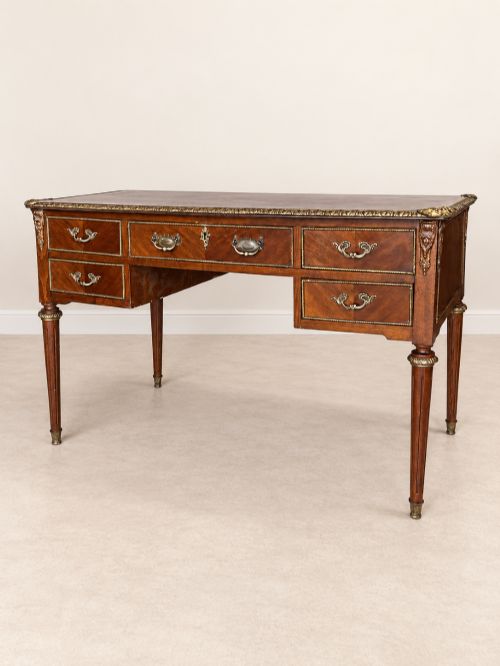
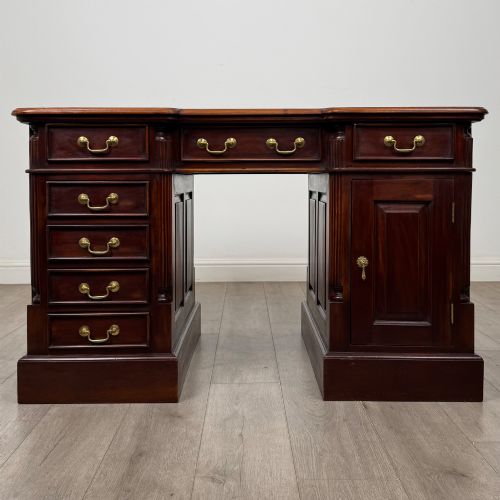
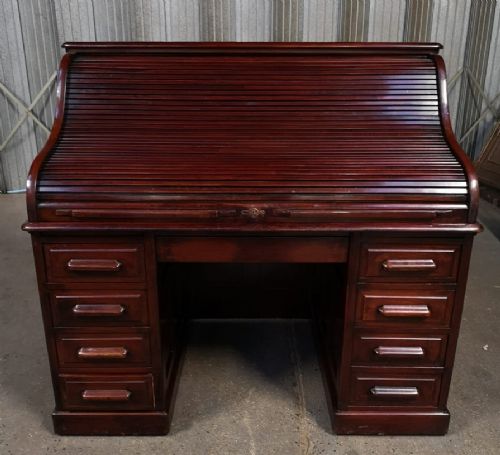
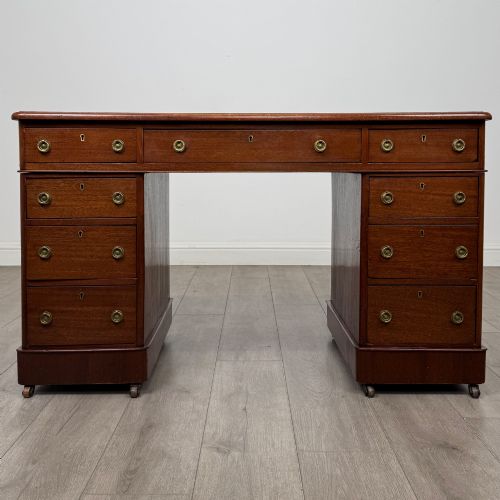
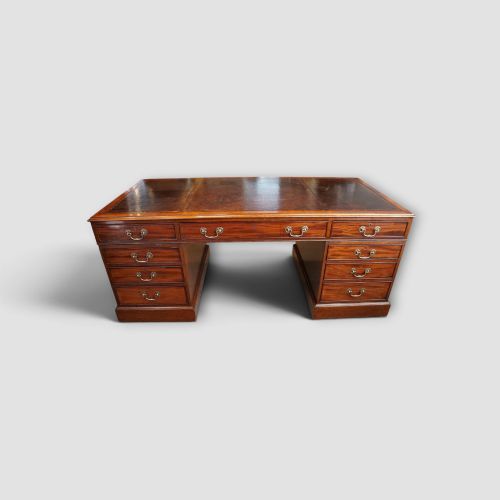
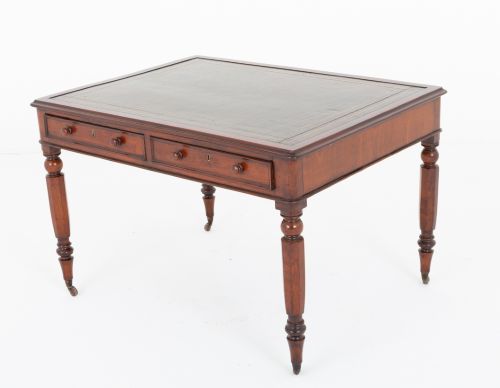
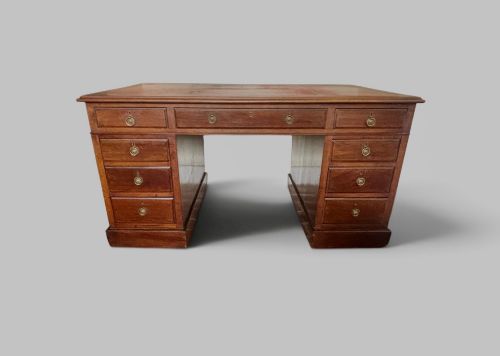


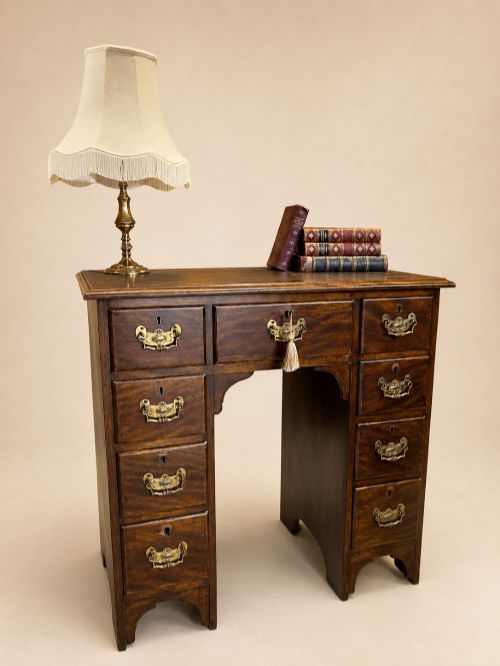
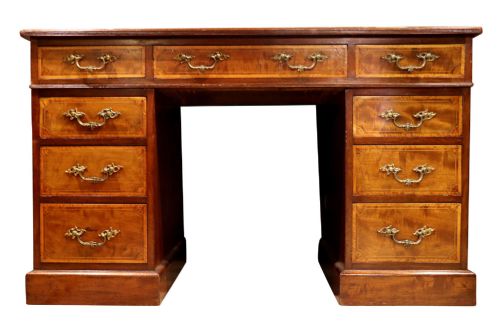
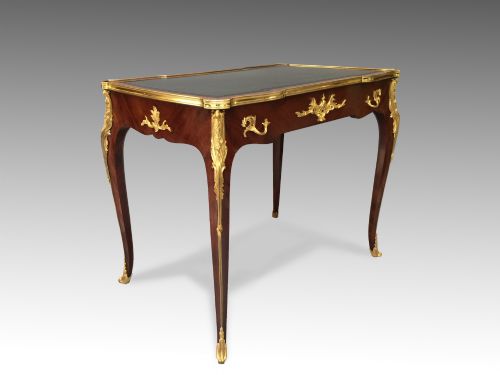
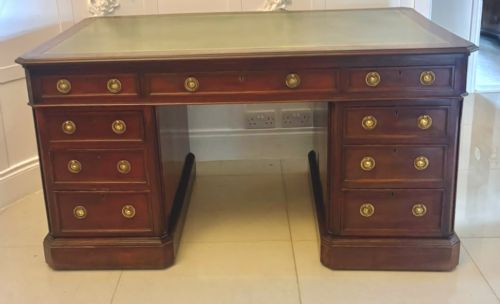
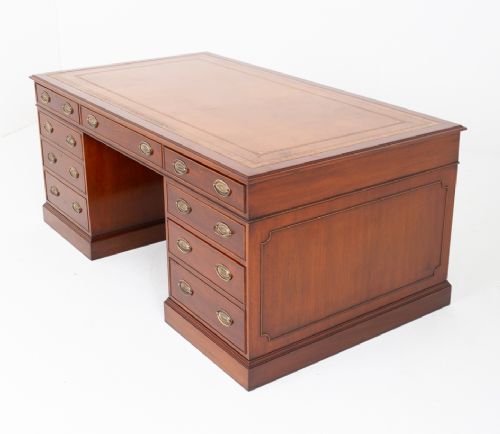
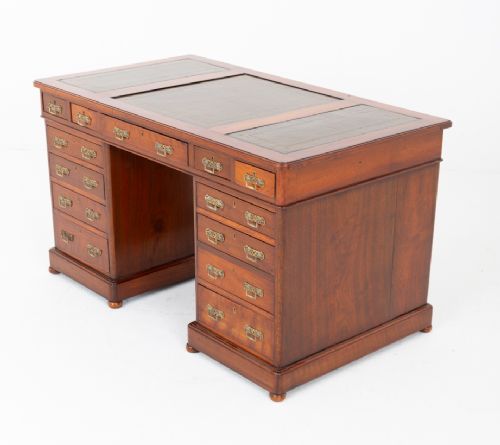
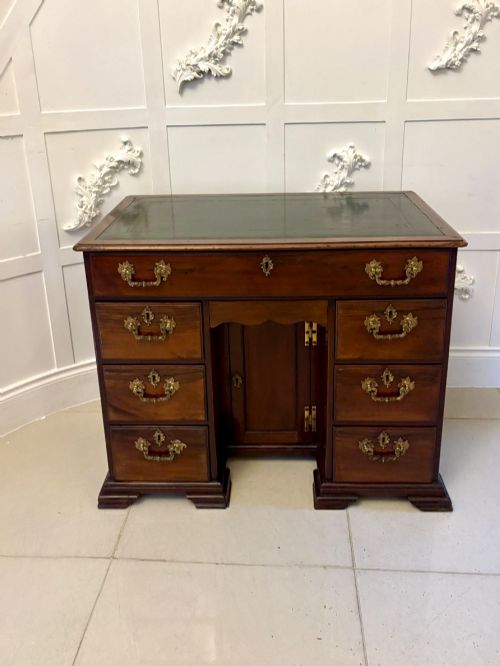
Executive Mahogany Writing Desk
An executive mahogany writing desk provides a substantial working surface and practical storage, built from dark timbers during the Georgian, Victorian, and Edwardian periods.
Executive Mahogany Writing Desk
An executive mahogany writing desk encompasses large pedestal desks, partners tables, and kneehole variants designed for serious study or administrative work.
The selections span the eighteenth, nineteenth, and early twentieth centuries, drawing heavily upon Victorian production alongside Georgian and Edwardian revivals.
Makers constructed these executive mahogany writing desk examples as freestanding centrepieces or heavy wall units, incorporating multiple drawers and leather writing surfaces.
Materials and Construction
Carpenters utilised solid and veneered mahogany timber, occasionally complemented by satinwood, walnut, or ebonised wood details.
Workshops integrated brass hardware, tooled leather writing inserts, and cast or gilt ormolu mounts to finish the pieces.
Cabinet makers joined timber using traditional dovetail methods for drawer construction and applied turned or panelled pedestals to support the heavy tops.
Listings feature mahogany, brass, leather, satinwood, ormolu, and ebonised wood across Victorian, Georgian, and Edwardian periods.
Assessing Craftsmanship
The grade of timber selection and the precision of the secondary drawer linings determine the structural integrity of the piece.
Makers distinguished high-end commissions through crisply carved mouldings, original brass handles, and sophisticated internal stationery fittings.
Proportion and scale dictate the visual balance, separating standard production furniture from master workshops.
Edwards & Roberts·François Linke·Hobbs & Co.·Johnstone & Jeanes·Trollope & sons
The Executive Mahogany Writing Desk Glossary
- Partners desk
- A double-sided writing table designed for two people to work opposite one another, featuring drawers on both faces.
- Pedestal desk
- A heavy writing table supported by two banks of drawers resting on the floor.
- Kneehole desk
- A compact writing desk with a central recess for the legs, flanked by smaller drawers.
- Ormolu
- Gilded bronze applied as decorative mounts on fine nineteenth-century furniture.
- Satinwood
- A pale, hard timber utilised for contrasting inlay and stringing on dark mahogany surfaces.
Executive Mahogany Writing Desk: Frequently Asked Questions
What is a partners desk?
A partners desk provides drawers and cupboards on both sides, allowing two individuals to sit opposite each other while working.
These large tables were traditionally used in libraries and boardrooms by business associates or legal colleagues.
How do I care for leather tops?
Leather writing surfaces require gentle dusting and occasional treatment with appropriate leather balms to prevent cracking and drying.
Keep liquids away from the tooled borders to protect the gold leaf tooling.
Are these desks freestanding?
Many examples feature finished backs, allowing them to sit in the middle of a room rather than against a wall.
Pedestal and partners variants are particularly suited to central placement due to their finished panels on all sides.
How do I identify the period?
Cabinet construction methods, handle styles, and timber choices help indicate whether a piece dates to the Georgian, Victorian, or Edwardian eras.
Drawer linings and secondary woods provide further clues regarding the manufacturing date.