




Classical Mahogany Table
A classical mahogany table brings together rich tropical timber and formal, ancient-inspired design to anchor a room with architectural presence.
Classical Mahogany Table
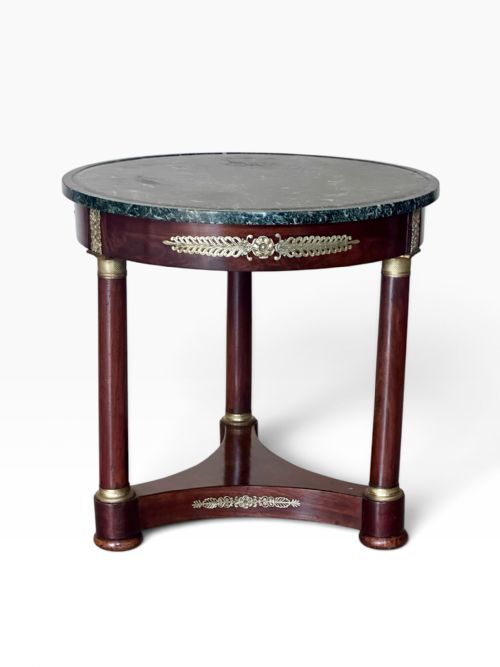
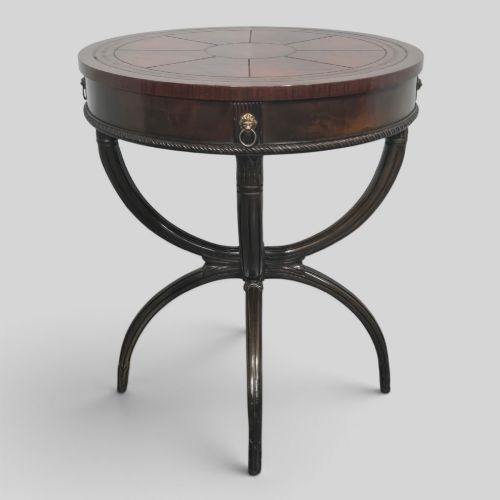
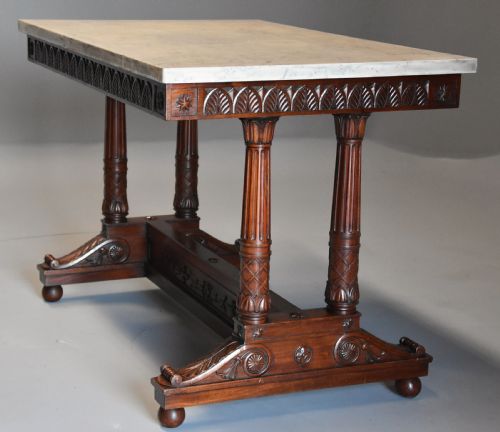
When searching for a classical mahogany table, buyers encounter pieces spanning the Georgian, Regency, and Victorian eras alongside later revivals, all sharing a vocabulary drawn from Greek and Roman antiquity. Console tables, centre tables, and dining formats dominate the selection, often displaying the severe geometry, column supports, and symmetry characteristic of the neoclassical and French Empire styles.
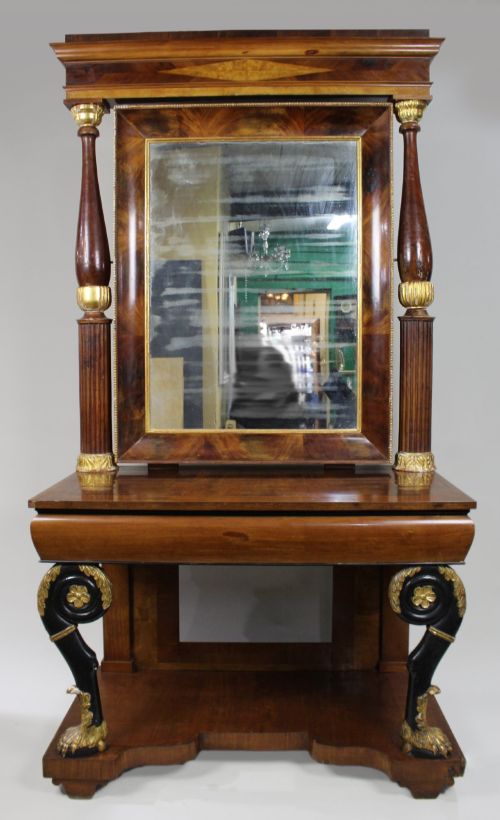
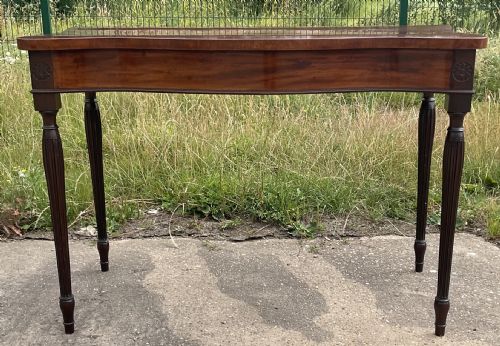
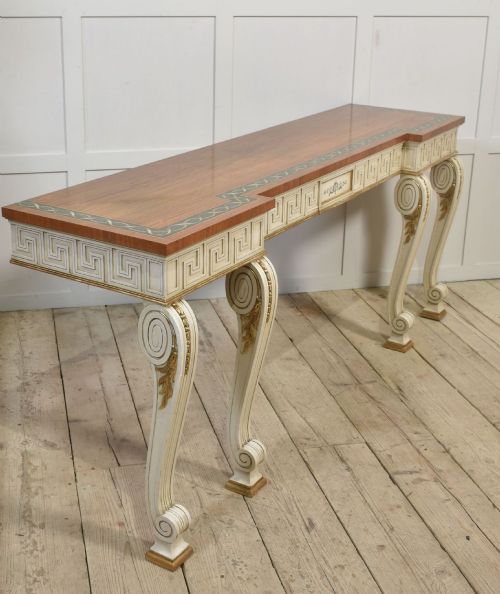
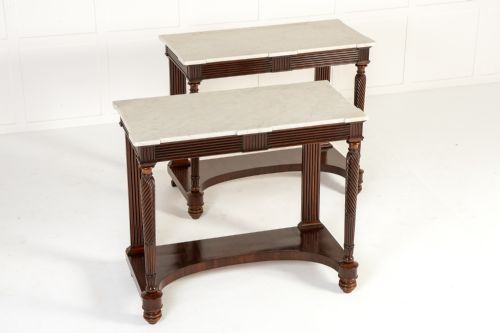
The most frequent iteration on this page is the console or serving table, designed to stand against a wall beneath a mirror or art piece, frequently topped with white marble. These tables draw heavily on the design language of periods like the Regency and George IV, utilising heavy mahogany timbers combined with architectural proportions and classical ornament.
How they were made
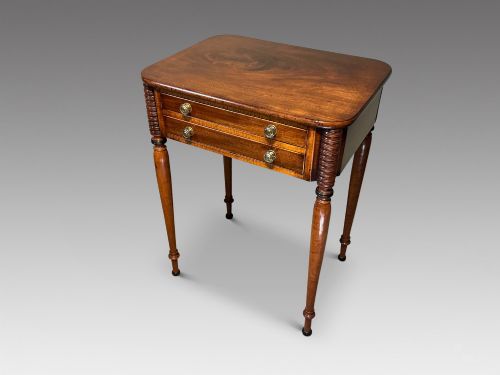
Cabinet makers built these tables using dense tropical mahogany, frequently selecting figured flame veneer or fiddle-back grain for large visible surfaces like table tops and drawer fronts. Carved details and structural frames relied on solid mahogany, while subsidiary woods such as maple or boxwood provided sharp contrast in geometric stringing and marquetry inlays.
Mounts of cast brass, ormolu, and parcel gilding highlighted key structural points, accentuating capitals, feet, and friezes in the French Empire and neoclassical manner. White statuary marble tops appeared frequently on console and side tables, providing a cool, contrasting surface inset directly into the timber frame.
Materials recorded across the selection include flame mahogany veneer, statuary marble, brass, and boxwood inlay.
What varies in quality
Quality in these pieces rests upon the selection of timber and the precision of its application, where choice flame mahogany veneer demonstrates a cabinet maker's ambition. Superior examples display seamless book-matching across wide surfaces and crisp, hand-carved classical motifs rather than cast composition ornament.
The architectural integrity of the base construction separates ordinary examples from the exceptional. Heavy marble slabs fitted precisely to rebated wooden frames, substantial weight in the pedestals, and fine secondary framing timbers reveal the hand of skilled workshops.
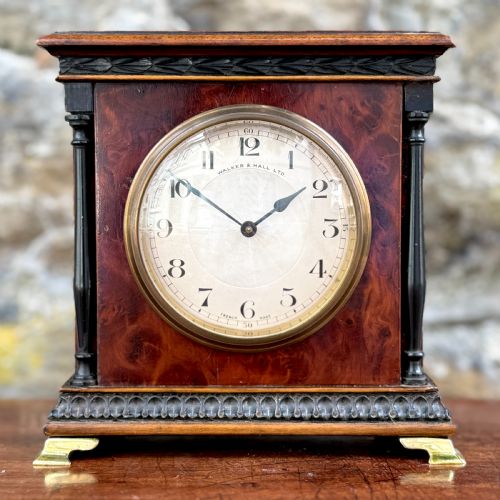
P and MA Nicholson·JACOB·Walker and Hall·George Hepplewhite·Mack Williams and Gibton·Edwards and Roberts·Druce and Co·Wilkinson London·Gillows·Maple and Co
The Classical Mahogany Table Glossary
- Mahogany
- A durable tropical hardwood known for its deep reddish-brown colour and stability, prized by cabinet makers for both solid carving and decorative veneers.
- Ormolu
- Gilded bronze used for decorative mounts and accents on furniture, particularly prominent in French Empire and neoclassical designs.
- Console table
- A table designed to be fixed or placed against a wall, frequently supported by two front legs or brackets and topped with marble.
- Gueridon
- A small round table supported by a central pillar or figures, originating in France during the seventeenth century and enduring through the Empire period.
- Marquetry
- The art of applying small pieces of veneer to a structure to form decorative patterns, often utilising contrasting woods like boxwood and satinwood.
Classical Mahogany Table: Frequently Asked Questions
How do I style a classical mahogany table?
These tables possess a strong architectural presence that suits traditional and contemporary interiors alike. Pair a console with a hanging mirror or position a centre table beneath a central light fixture to let its symmetry stand out.
Keep surface accessories restrained to showcase the timber grain and marble tops. Bronze or brass objects complement the metallic mounts often found on these pieces.
Were these tables used for dining?
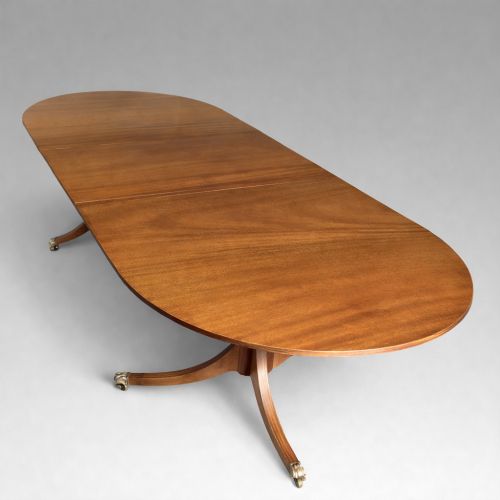
Certain forms, such as twin pillar dining tables and serving tables, were engineered specifically for the dining room. Serving tables managed heavy platters during formal meals, while dining tables expanded with leaves.
Smaller tables like gueridons and occasional pieces served for holding lamps, books, or tea services in drawing rooms and parlours.
How do I identify Regency features?
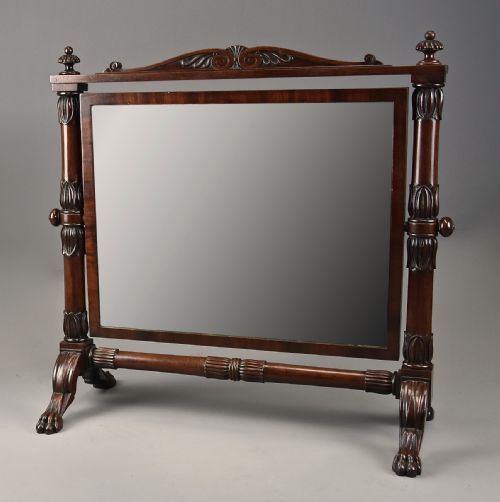
Regency pieces often borrow heavily from ancient Roman, Greek, and Egyptian motifs. Look for sabre legs, brass reeding, animal paw feet, and columns with gilded capitals.
The timber selection during this period frequently involved Cuban mahogany, which is notably heavy and dark.
What is French Empire style?
French Empire furniture reflects the neoclassical taste of early nineteenth-century France under Napoleon. The aesthetic emphasises mass, symmetry, and imperial symbols like sphinxes, swans, and laurel wreaths.
These tables frequently feature dark flame mahogany contrasted with bright ormolu mounts and heavy statuary marble slabs.
How should I care for the timber?
Protect mahogany surfaces from direct sunlight to prevent the rich reddish-brown tone from fading. Maintain a stable indoor humidity to keep veneers from lifting and timber from splitting.
Clean surfaces with a soft, dry cloth and apply occasional high-grade wax to nourish the grain without building up a heavy residue.