



Vintage Mahogany Bureau Plat
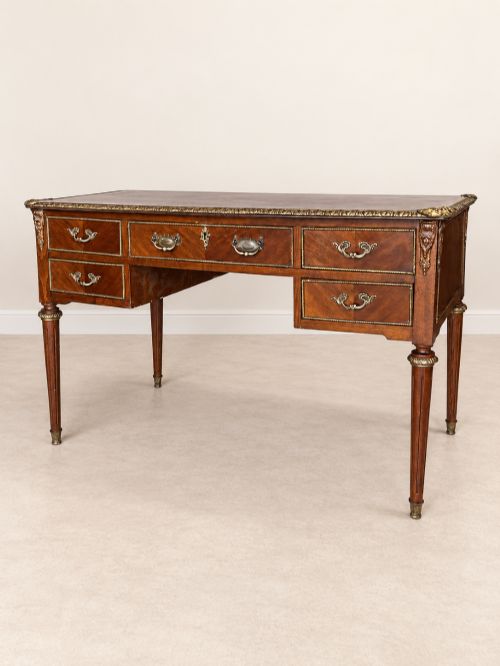
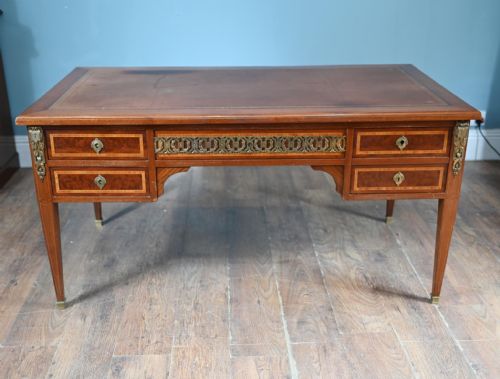
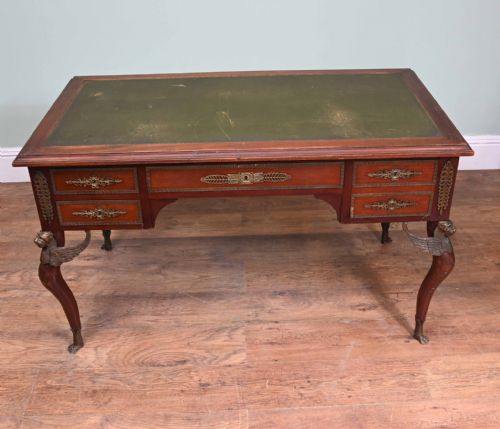
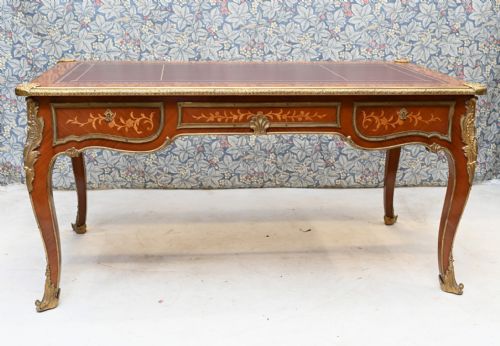
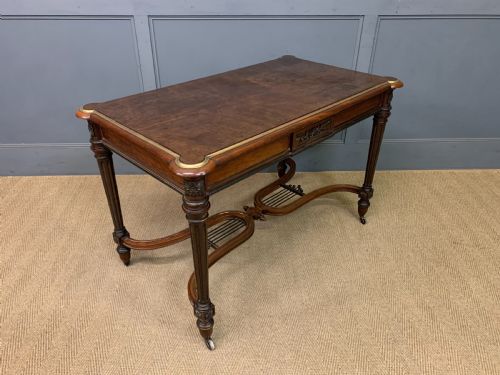
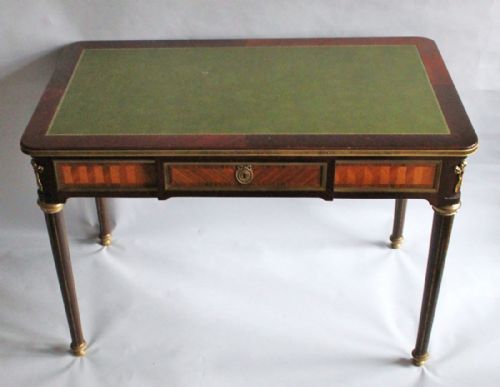
These vintage mahogany bureau plat writing tables bring classical French elegance to a study with their leather tops and mounted brass.
Vintage Mahogany Bureau Plat
A vintage mahogany bureau plat functions primarily as a freestanding writing table rather than a standard wall-backed desk. The form draws heavily on French historical aesthetics, with Louis XV, Louis XVI, Directoire, and Empire styles appearing across the selection.
Most examples found here date from the nineteenth and early twentieth centuries, spanning periods from the Regency era to the Edwardian years. These tables range from decorative library pieces to more formal gilt-mounted writing desks.
Buyers will encounter various interpretations of the French aesthetic, executed in mahogany often accented with contrasting veneers and side table formats.
Materials and Construction
Makers built these writing tables using a mahogany primary wood, frequently enhanced by decorative veneers such as kingwood and burr wood. This timber choice provided a stable and attractive carcass for intricate French revival designs.
Surface details typically include inset leather writing panels combined with cast brass and ormolu mounts. These metal embellishments define the corners, drawer fronts, and legs, reflecting Louis XV and Louis XVI decorative traditions.
The listings span multiple periods from the Regency era through to the 1920s, dominated by nineteenth-century French revival designs.
Assessing Quality and Execution
Quality in a bureau plat rests upon the crispness of the cast ormolu mounts and the precision of the timber veneer work. Finer pieces demonstrate careful selection of mahogany grain and harmonious integration of brass detailing.
The refinement of the carving and the fidelity to historical French styles distinguish standard writing tables from exceptional library desks. Structural integrity in the joints and drawers remains essential across all periods.
The Vintage Mahogany Bureau Plat Glossary
- Bureau plat
- A freestanding writing table, typically featuring drawers beneath the top and standing on four legs. This form originated in France and remains popular for central room placement.
- Ormolu
- Gilded bronze used for decorative mounts on furniture. It provides a bright golden contrast against dark mahogany and walnut surfaces.
- Directoire style
- A transitional French style bridging Louis XVI and Empire, characterised by neoclassical restraint and simpler geometric lines. It reflects the political shift of the late eighteenth century.
- Kingwood
- A dense, richly figured timber often used for contrasting banding and inlay on nineteenth-century desks. Its dark purple-brown tones suit formal revival pieces.
- Library table
- A large freestanding table designed for books and papers, similar in form to a bureau plat but often finished on all sides for central room display.
Vintage Mahogany Bureau Plat: Frequently Asked Questions
Where should I place a bureau plat?
These tables are designed to stand away from walls because their backs are finished to match the front. They suit the centre of a study or library.
Positioning them centrally allows full appreciation of the mahogany grain and any ormolu mounts from all angles.
How do I care for the leather top?
The leather writing surface benefits from occasional dusting with a dry cloth and minimal moisture. Avoid using harsh chemical cleaners that might dry out the hide.
Applying a neutral leather cream helps preserve the suppleness and colour of the inset panel over years of use.
Are these desks suitable for daily work?
Most historical bureau plat designs offer comfortable knee clearance and usable surface area for modern writing or laptop use. The drawers provide storage for stationery.
Checking the writing height and drawer depth ensures the desk meets your practical daily requirements.