


European Street Scene Painting
These european street scene painting works capture lively urban thoroughfares, bustling markets and historic townscapes across centuries.
European Street Scene Painting
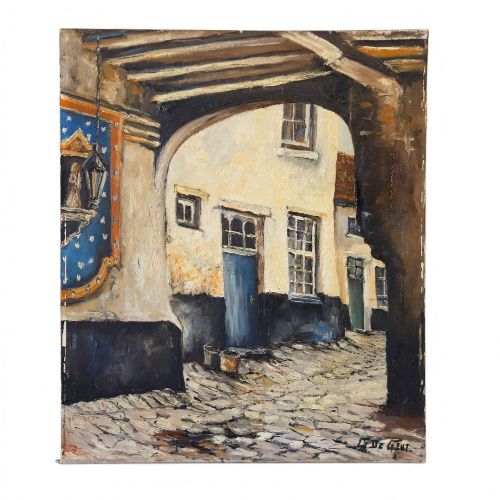
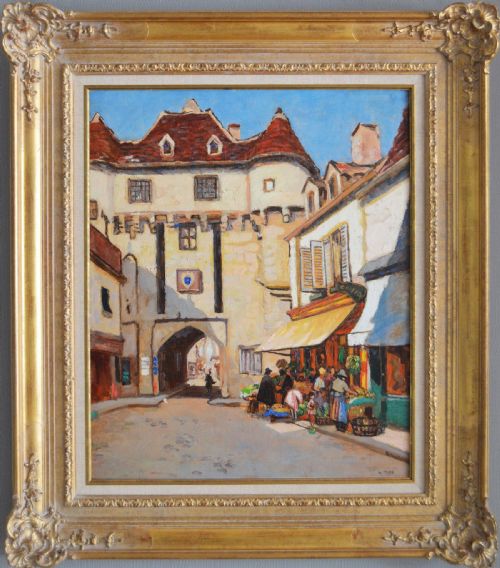
When you search for a european street scene painting, you encounter framed depictions of continental towns, architectural views, and market squares executed by various artists. These artworks document past urban life through varied regional perspectives, capturing daily routines alongside notable buildings and historic cathedrals.
The selections available here range widely across periods, including Georgian urban landscapes, Victorian architectural views, and mid-century impressionist cityscapes. Oil paintings on canvas and board alongside watercolour paintings form the primary objects you will meet on this page, representing Flemish, French, and British artistic traditions.
How they were made
Artists typically applied oil paint or watercolour paint onto prepared canvas, wood panels, or paper supports to construct these urban views. The handling of medium varies from fluid watercolour washes to heavy impasto oils that build physical texture on the surface.
Many of these works are housed in traditional frames constructed from wood, finished with giltwood or gold leaf ornamentation that complements the composition.
Several artists packed their watercolours and oils to brave continental weather, returning with bustling markets and damp cathedral stones.
What varies in quality
Quality in a european street scene painting rests upon the confidence of the brushwork, the management of perspective, and the handling of atmospheric light within the urban setting. Stronger pieces display a distinct command of colour and composition that brings architectural details and figures to life.
The support and framing also contribute to the overall character of the piece, with well-preserved canvases and period giltwood frames enhancing the visual presentation of the artwork.
L. De Gent·Cecil Rochfort D'Oyly-John·William George Meadows·Lewis J Wood·Joseph W. Milliken·Paul Paul·Christiaan Pieter Snyders·Henry Schafer·Letitia Marion Hamilton
The European Street Scene Painting Glossary
- Canvas
- A heavy woven fabric stretched across a wooden frame to serve as a support for oil painting. It provides a flexible and durable surface favored by artists across the nineteenth and twentieth centuries.
- Giltwood
- Wood carved and coated with a thin layer of gold leaf or metallic gilt. This material is commonly found framing traditional paintings.
- Impressionism
- An art style characterised by relatively small, thin yet visible brush strokes and an open composition. It emphasises accurate depiction of light and its changing qualities.
- Watercolour
- A paint wherein the colour pigments are suspended in a water-based solution. Works in this medium are typically executed on paper supports.
- Urban landscape
- A genre of art depicting cityscapes, street views, and architectural elements. These scenes focus on the built environment and human activity within towns.
European Street Scene Painting: Frequently Asked Questions
What periods do these paintings span?
The works span from the Georgian era through the nineteenth century and into the mid-twentieth century. Artists worked across several decades including the 1900s, 1920s, and 1960s.
Different stylistic movements such as impressionism and realism appear across these various periods, reflecting changing artistic approaches to urban subjects.
What materials were used?
Artists utilised oil paint and watercolour paint as the primary mediums for these compositions. Supports consist of canvas, wood panels, and paper.
Frames are commonly constructed from wood and frequently feature giltwood or gold leaf finishes.
Where do these scenes originate?
The views depict various continental locations including French towns, Flemish streets, and Belgian markets. British artists also travelled abroad to record these architectural subjects.
Signatures and inscriptions often record the specific town or region represented in the composition.
How should I hang an oil painting?
Secure the painting using appropriate wall fixings that match the weight of the frame and the canvas support. Ensure the piece hangs away from direct sunlight and excessive moisture.
Position the artwork at eye level to best appreciate the details of the street scene.