
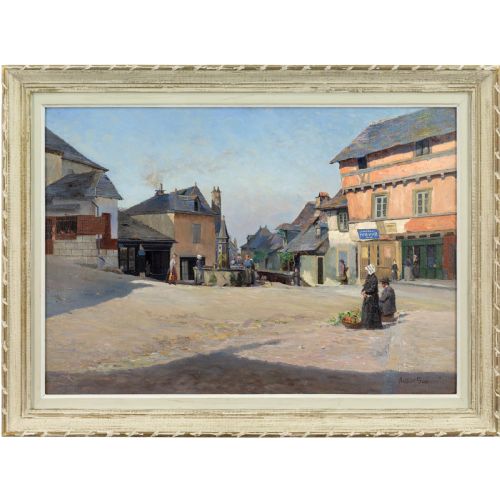
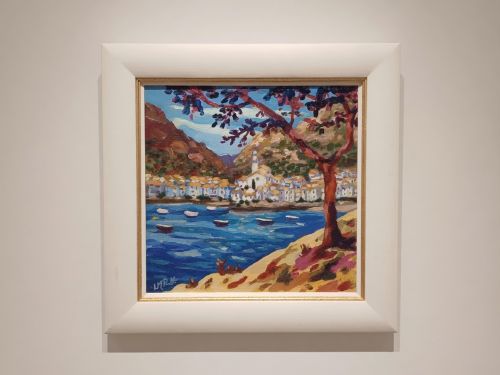
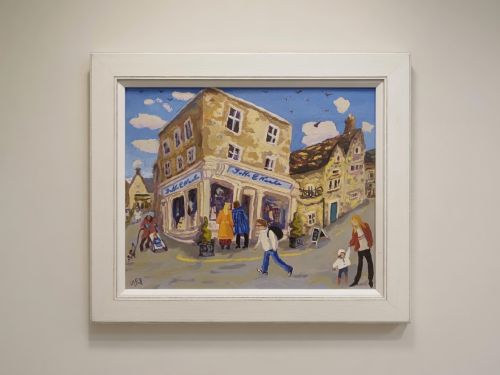
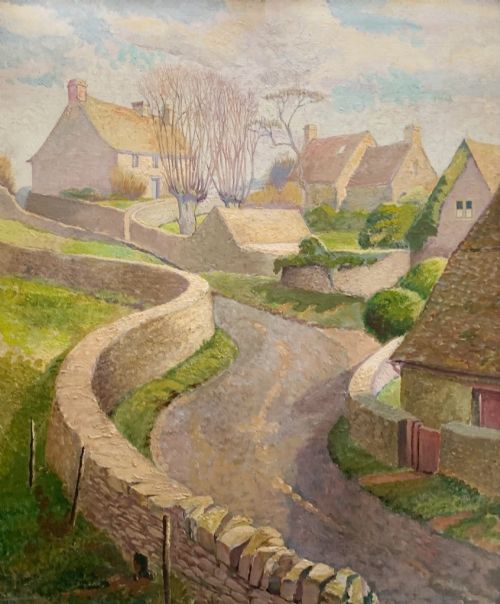



Impressionist Village Painting
When you search for an impressionist village painting, you are looking at works capturing rural life through light and brushwork.
Impressionist Village Painting
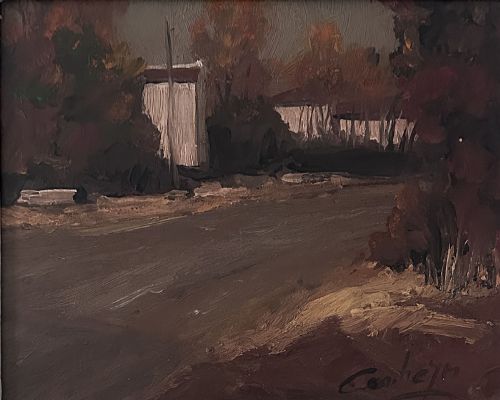
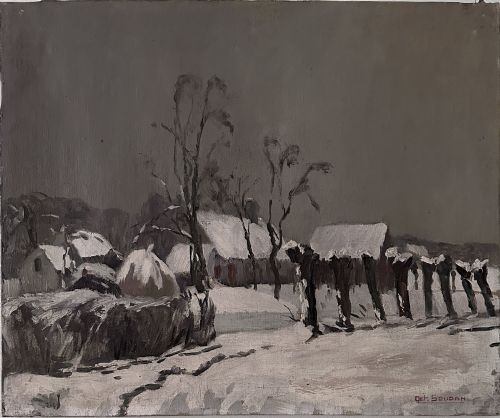
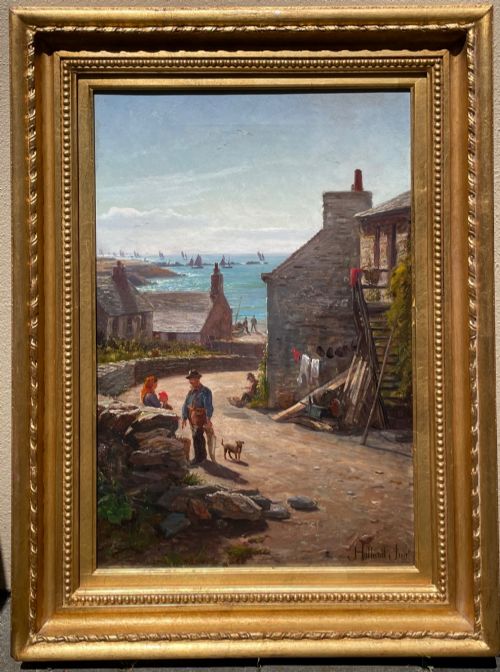
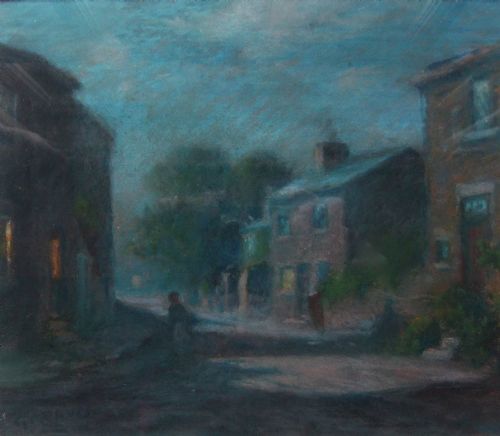
An impressionist village painting captures rural settlements, cottages, town squares, and country lanes through expressive brushwork and natural light. These works span from the Victorian period through the mid-twentieth century, encompassing regional British groups, French scenes, and international interpretations.
The most common examples on this page are oil paintings on canvas or panel, alongside watercolours on paper and pastel drawings. They record specific locations ranging from Yorkshire and Cotswolds villages to French provincial communes and coastal settlements.
Makers represented include named artists associated with the Newlyn School, Staithes School, and continental traditions, as well as works by unidentified English and European hands.
Materials and construction
Artists painted primarily with oil paint on stretched canvas or wooden panel, utilising fluid brush application to render outdoor light and atmosphere. Watercolours and gouache on paper were equally common for portable studies and finished topographical watercolours.
Supports frequently include canvas, gesso grounds, and wood panels, framed in period wooden mouldings that complement the palette of the composition.
Impressionist Village Painting Retail Price Guide 2026
Typical asking prices for impressionist village painting among the pieces listed under this phrase on Sellingantiques today, from the lower quarter to the upper quarter. They describe what is for sale here now, not the wider market.
Listings feature works spanning from the Victorian era through the mid-twentieth century, created in oil, watercolour, and pastel.
Qualities that distinguish works
Quality rests upon the confidence of the brushwork, the handling of natural light, and the accuracy of atmospheric perspective in rendering rural buildings and figures. Stronger works demonstrate a cohesive tonal harmony and a decisive command of medium, whether in oil or watercolour.
Lesser pieces rely on formulaic repetition without establishing the sense of place and shifting daylight characteristic of skilled impressionist practice.
Arthur Gué·Lucy Pratt·Paul-Élie Gernez·John Holland·William Greaves·Gaston Cornil·George Turland Goosey·Mario Pinetti·Arthur Tucker·James Watson·Joseph W. Milliken·Frederick Mayor·V. Zirakian·Ruth Prowse·Henry Sykes·William Lee Hankey·Robert McGregor·Kershaw Schofield·Herbert Royle·Maurice Asselin·Jeffrey Pratt·A. Michaelis·Fred Lawson·Henri Therme·Martin Lamotte
The Impressionist Village Painting Glossary
- Impressionism
- A nineteenth-century painting style characterised by relatively small, thin, yet visible brush strokes, open composition, and an emphasis on accurate depiction of light.
- Oil on Canvas
- Pigment mixed with drying oil applied to a woven fabric surface stretched across a wooden frame. This was the primary medium for durable, finished landscapes.
- Watercolour
- Paint made with water-soluble pigments applied to paper. It allows for transparent washes that capture bright, airy atmospheric conditions.
- Newlyn School
- An art colony based in Cornwall during the late nineteenth and early twentieth centuries. Artists produced plein-air paintings of local fishermen and rural life.
- Gouache
- An opaque water-based paint often combined with watercolour on paper. It provides solid blocks of colour and highlights in village scenes.
Impressionist Village Painting: Frequently Asked Questions
What subjects appear in an impressionist village painting?
These works depict rural communities, country lanes, village squares, harbours, and agricultural work. Artists focused on everyday rural architecture and local inhabitants.
Common motifs include winter scenes, harvest gatherings, churches, and coastal cottages captured under changing weather conditions.
How do I date an impressionist village painting?
Dating relies on stylistic evidence, artist signatures, framing materials, and inscriptions on the reverse of the canvas or panel. Works span from the late nineteenth century through the mid-twentieth century.
Many pieces carry specific dates in their titles or signatures left by the artist at the time of creation.
Where were these village scenes painted?
Locations range widely across British rural regions such as Yorkshire, the Cotswolds, and Cornwall, alongside continental European villages in France and beyond.
Artists often travelled to specific art colonies or rural retreats to paint en plein air.
How should I frame and display these paintings?
Most of these works suit traditional wood frames that match the period of the painting. Placing them away from direct sunlight preserves the pigments of oils and watercolours.
Ensuring stable indoor humidity protects both canvas supports and historic paper or wood panels.