





European Religious Wood Statue
These european religious wood statue pieces are devotional carvings spanning centuries of continental craftsmanship, prized by collectors for their spiritual presence and tactile age.
European Religious Wood Statue
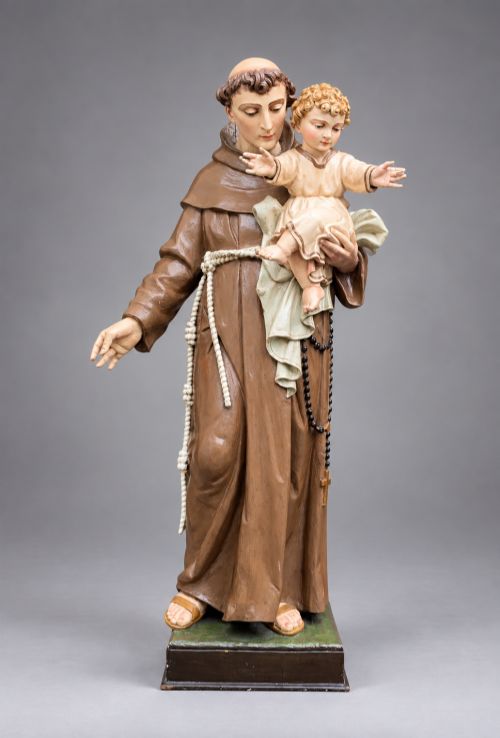
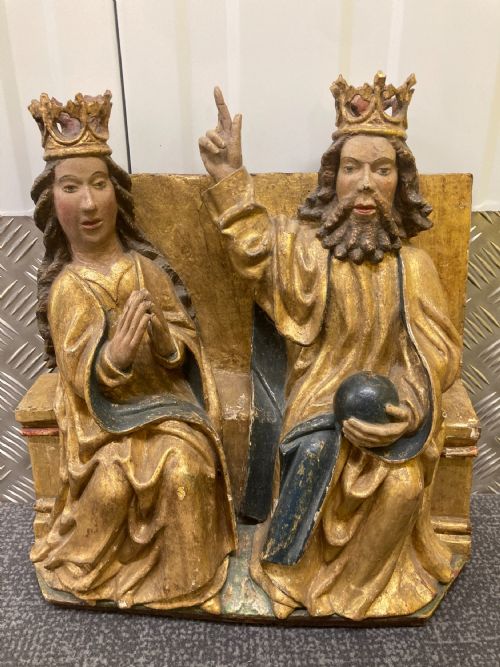
When you search for a european religious wood statue, you enter a domain of devotional figures carved from oak and various hardwoods, dating from the late Gothic period through to the nineteenth century. These sculptures take the form of saints, cherubs, donors, and biblical figures, often originating from regional European workshops in places like the Upper Rhine and Croatia.
The pieces you are most likely to meet on this page include sixteenth-century saints, eighteenth-century ecclesiastical statues, and striking folk art figures. They range from intimate busts and group carvings to life-size representations of Christ, reflecting the changing stylistic currents from Renaissance and Baroque to vernacular folk traditions.
How they were made
Polychrome paint and gold leaf were applied to bring the sacred figures to life, though centuries of time have often left these delicate surface layers weathered, crackled, or partially worn away down to the bare wood beneath.
European Religious Wood Statue Retail Price Guide 2026
Typical asking prices for european religious wood statue among the pieces listed under this phrase on Sellingantiques today, from the lower quarter to the upper quarter. They describe what is for sale here now, not the wider market.
Saint John is frequently accompanied by his traditional attribute of an eagle watching quietly from the base.
What varies in quality
The survival of original surface decoration, including polychrome paint and gold leaf, significantly influences the character of a piece. Statues that retain their early surface complexity offer a richer historical record than those stripped to raw timber or aggressively repainted in later centuries.
The European Religious Wood Statue Glossary
- Polychrome paint
- Decoration applied in multiple colours to the surface of wood sculpture. This technique was standard for medieval and baroque religious figures to enhance their lifelike presence.
- Gesso
- A plaster-like preparation mixture used as a smooth base for paint and gold leaf on wooden sculptures. It fills the grain of the wood and provides a bright foundation for gilding.
- Giltwood
- Wood that has been decorated with a thin layer of gold leaf. It is frequently found on church furnishings and devotional altarpieces from the Renaissance onwards.
- Late Gothic
- An artistic period spanning roughly the fifteenth and early sixteenth centuries. It is characterised by sharp, angular drapery folds and intense emotional expression in religious art.
- Continental Baroque
- A dynamic artistic style of the seventeenth and eighteenth centuries. It emphasises dramatic movement, grand gesture, and deep emotional resonance in sculpture.
European Religious Wood Statue: Frequently Asked Questions
How do I date a wooden religious statue?
Dating relies on stylistic clues such as the cut of the drapery, the tool marks left by the carver, and the types of wood used. Comparing the sculptural conventions to known period examples helps narrow down the century of creation.
Changes in painting technique and the composition of underlying gesso layers also offer strong chronological indicators for pieces produced across the Renaissance and Baroque eras.
Where were these religious statues originally displayed?
Most of these figures were created for churches, domestic shrines, or private chapels across Europe. Some functioned as part of larger altarpieces, while others stood alone as devotional objects for prayer.
Donor figures were often placed in churches to represent the patrons who funded the artwork or a specific chapel foundation.
How should I care for an antique wood statue?
Keep wooden sculptures away from direct heat sources, strong sunlight, and rapid changes in humidity to prevent the timber from splitting. Stable indoor conditions help preserve both the wood and any surviving surface paint.
Dust the surface gently with a dry, soft brush and avoid using chemical cleaning products or liquid polishes that might damage delicate historical finishes.
What is a donor figure?
A donor figure is a sculpture depicting the person who commissioned a religious work of art, often shown kneeling in prayer. These statues were traditionally included in church altarpieces or memorial monuments.
They provide a fascinating window into historical clothing and regional portraiture conventions of the late medieval and early modern periods.