



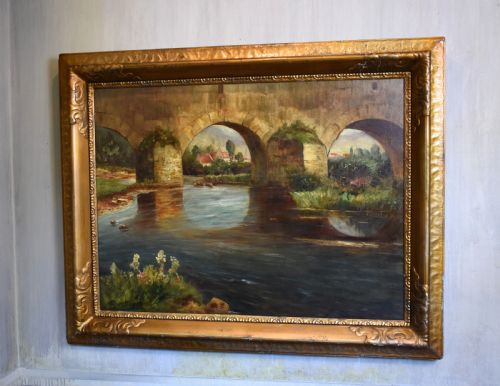
European Architectural Oil Painting
These european architectural oil painting works capture urban facades and cityscapes through brushwork.
European Architectural Oil Painting
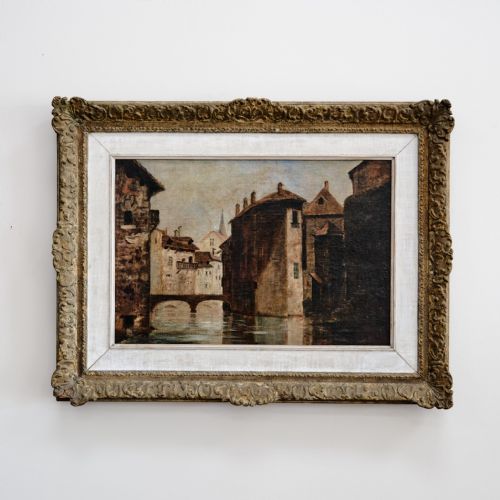
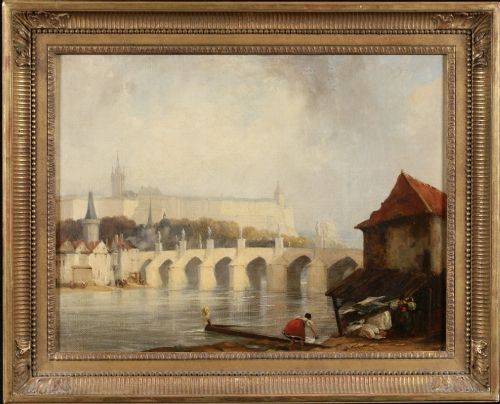
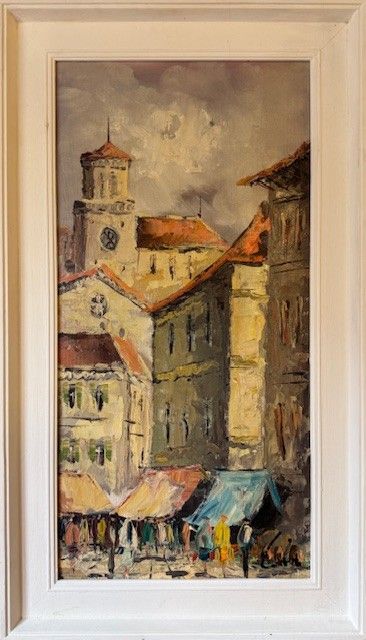
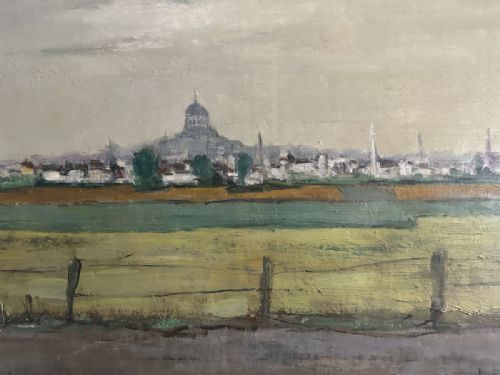
A european architectural oil painting focuses on urban street scenes, cathedrals, bridges, and markets across various continental settings. Buyers searching for a european architectural oil painting encounter works depicting specific locations like Prague, Padua, Bruges, and various French and German towns.
The selections span several periods, with nineteenth-century views and twentieth-century interpretations appearing most frequently. These range from late Georgian depictions and Victorian townscapes to mid-century impressionist and expressionist cityscapes.
Canvases and panels form the primary supports for these architectural subjects. Artists utilise oil paint to render stone facades, arches, and historic squares with varying degrees of abstraction and realism.
Materials and technique
Artists painted primarily in oil on canvas or wood panels, sometimes incorporating gesso grounds. Giltwood frames frequently house these works, occasionally adorned with gold leaf.
Brushwork varies from the tight detail seen in nineteenth-century academic and romantic works to the looser application characteristic of impressionism and German expressionism. Painters built up layers of pigment to describe light falling on masonry, bridges, and cathedrals.
One wartime canvas records resilience in nineteen-forty-three, proving even a cathedral can weather a gloomy winter.
Distinctions in quality
Quality rests upon the sureness of the brushwork and the artist's command of perspective when rendering complex architectural forms like cathedrals and bridges. Stronger examples demonstrate a confident handling of light and shadow across stone surfaces and urban spaces.
The strength of the composition and the coherence of the colour palette separate accomplished works from routine topographical records. Signed works by documented painters generally command greater interest than anonymous street scenes.
Paul Élie Gernez·Hein Hoppmann·Frederick Tully Lott·William George Meadows·Lewis J Wood·Franz Reder Broili·Christiaan Pieter Snyders·Henry Schafer·Letitia Marion Hamilton
The European Architectural Oil Painting Glossary
- Oil on Canvas
- Pigment mixed with drying oil applied to stretched woven fabric. This serves as the primary support for many urban landscape paintings.
- Oil on Panel
- Pigment applied to a wooden board rather than canvas. This solid support appears frequently in earlier and mid-century works.
- Impressionism
- A style focused on capturing the visual impression of a moment through shifting light and unblended brushstrokes. Artists applied this approach to cityscapes and street scenes.
- Expressionism
- A modernist movement prioritising emotional experience over physical reality through bold colours and distorted forms. German expressionist examples interpret urban subjects with heightened intensity.
- Giltwood
- Wood carved and covered with thin gold leaf or gilt powder. Many antique frames use this finish to complement the oil paintings.
European Architectural Oil Painting: Frequently Asked Questions
What periods do these paintings cover?
The available works span from the late Georgian era and the nineteenth century through to the mid-twentieth century. Dates include specific decades such as the 1920s, 1940s, and 1950s.
Creators worked across different stylistic movements, including romanticism, impressionism, and expressionism, reflecting changing approaches to urban and architectural subjects over time.
How should I display an oil painting?
Keep paintings away from direct sunlight and sources of extreme heat to protect the oil paint and canvas. Stable indoor humidity helps preserve both the wooden or giltwood frames and the canvas supports.
Ensure the hanging wall can support the weight of framed canvas or panel works securely. Proper placement allows the architectural details and brushwork to be viewed clearly under ambient lighting.
Are these paintings signed by artists?
Many works bear signatures or attributions to named painters, while others remain anonymous. Listed creators include nineteenth-century and twentieth-century European artists who specialised in townscapes.
Documentation on the reverse of the canvas or panel often provides further context regarding the location or the artist's active period.
What subjects appear in these artworks?
Common subjects include European cathedrals, market squares, bridges, and street scenes in cities like Prague, Bruges, and Padua. Artists recorded urban resilience, daily life, and distinct architectural styles across different countries.
Views range from realistic topographical records to abstracted mid-century interpretations of Spanish and French cities.