




Etched Shade Table Lamp
An etched shade table lamp brings period warmth to a room, combining substantial brass, porcelain or glass bases with decorative patterned glass work.
Etched Shade Table Lamp
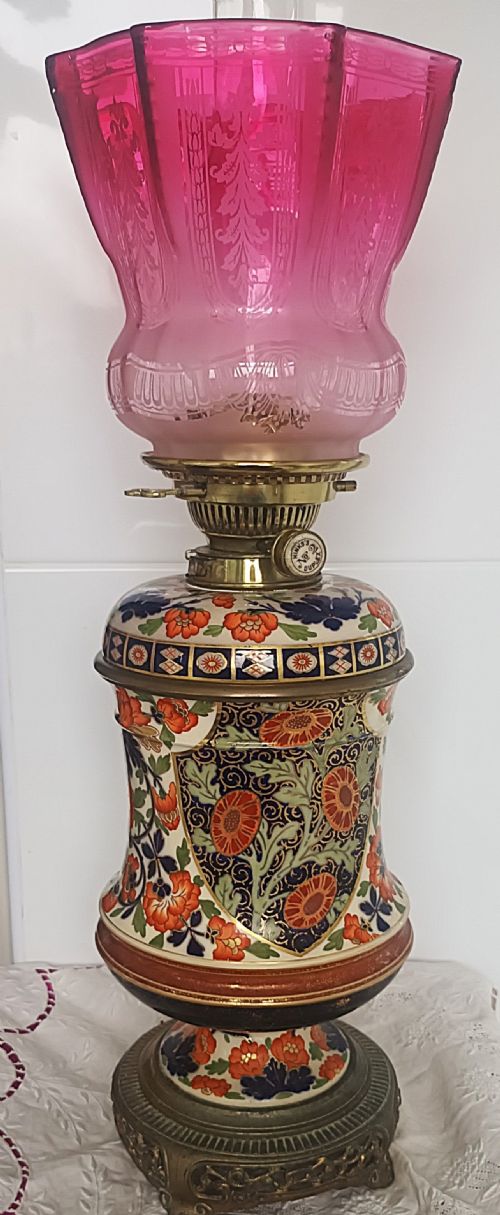
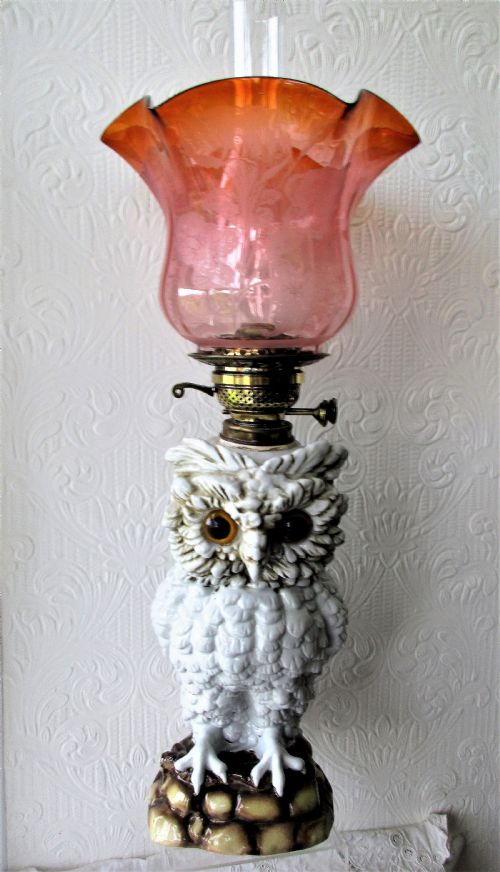
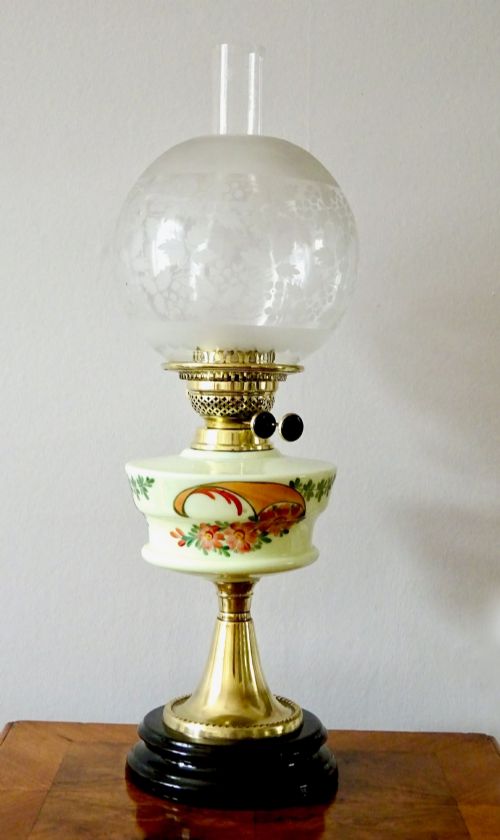
An etched shade table lamp unites a sturdy column or vessel with a patterned glass diffuser, predominantly emerging from Victorian and Edwardian periods. Collectors encounter tall floor-standing conversions, desk lamps, and substantial oil lamp bases adapted for modern illumination.
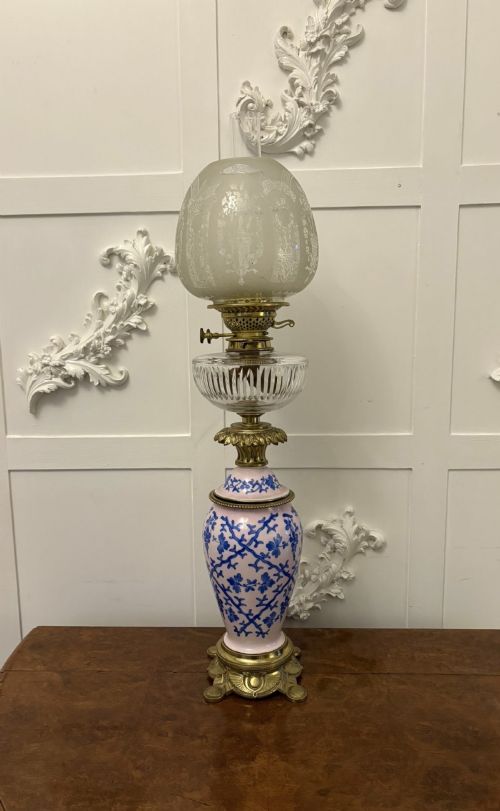
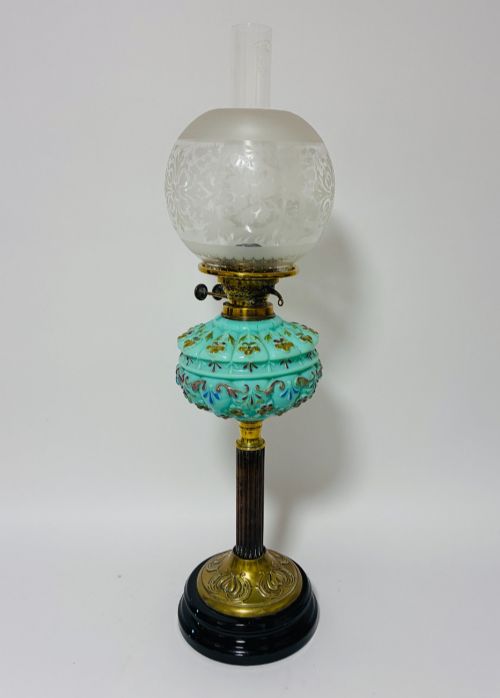
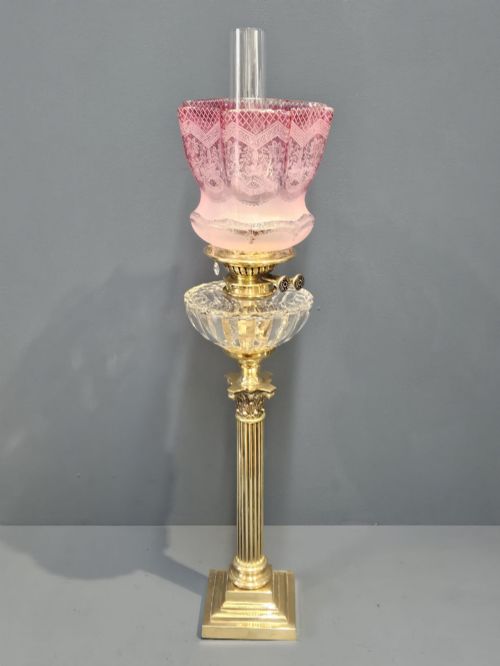
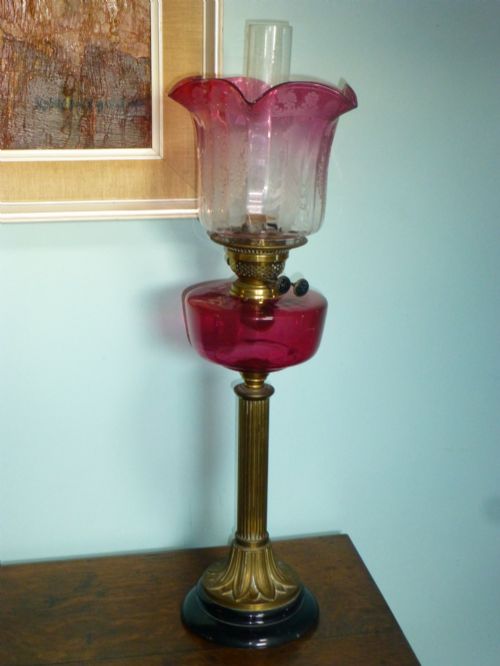
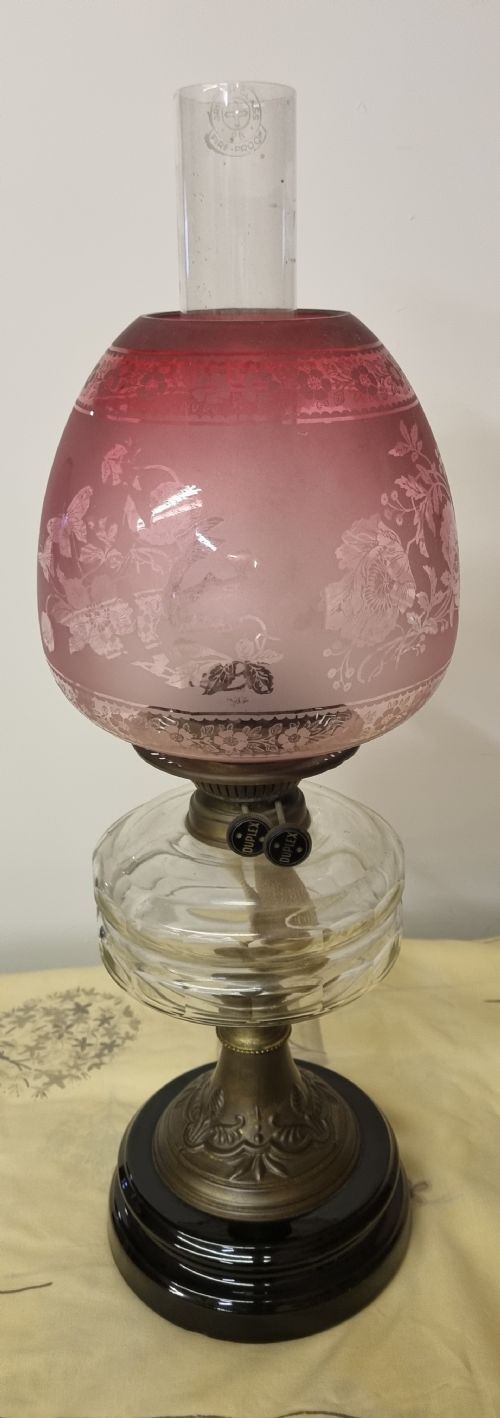
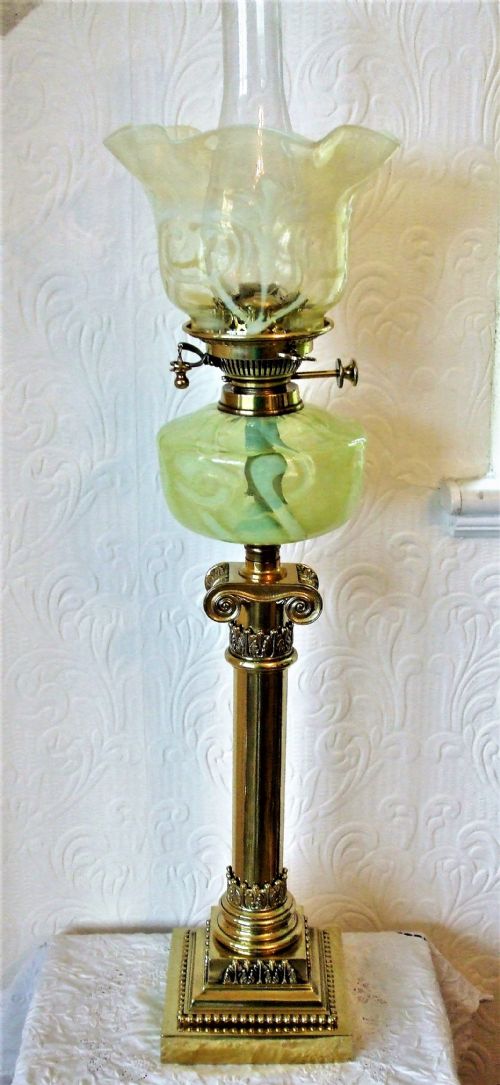
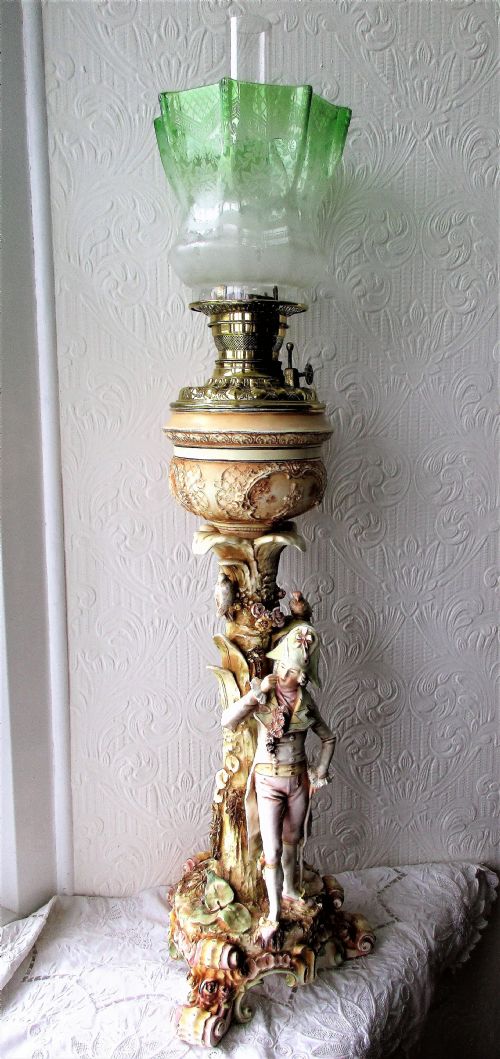
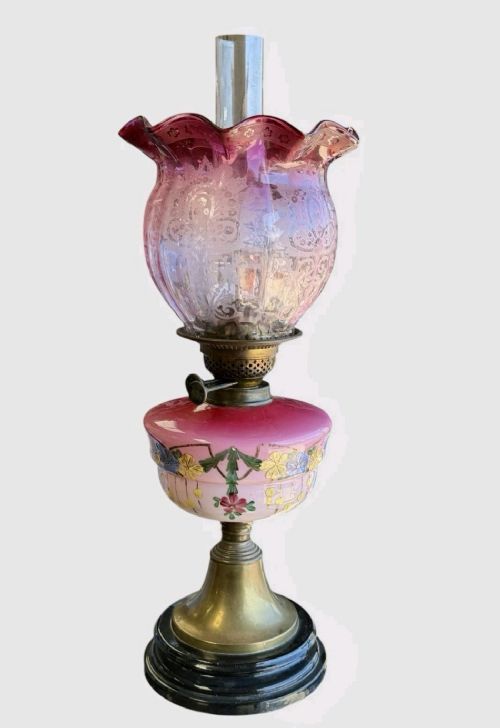
The prevalent forms on this page feature brass columns, ceramic fonts, and coloured glass vessels paired with delicate surface-etched glass shades. These pieces range from simple domestic lighting to large duplex double burner examples.
Origins span English, German, and continental workshops, reflecting late nineteenth and early twentieth-century domestic lighting trends. Buyers frequently find Corinthian or ionic brass columns alongside hand-painted porcelain bodies.
Materials and construction
Maker construction relies heavily on cast brass, silver plate, and heavy ceramic or porcelain bodies. Metal components often incorporate structural columns, stepped bases, and intricate burner mechanisms.
Shades utilise frosted, ruby, cranberry, or clear glass that undergoes acid etching or sandblasting to create matte surface patterns. This technique reveals white or translucent designs against coloured glass grounds.
Listings incorporate Victorian and Edwardian periods, utilising brass, cranberry glass, porcelain, and silver plate.
Assessment of quality
Quality differentiates through the crispness of the brass casting, the weight of the ceramic or porcelain body, and the depth of the glass etching. Superior pieces display finely detailed Corinthian capitals and robust, heavy metal collars.
The integration of the shade with the base dictates overall harmony, where matching period glasswork and undamaged burners elevate the piece. Finer examples retain original double burners, coloured fonts, and unchipped etched rims.
Hinks·Taylor Tunnicliff·Sitzendorf·Birks
The Etched Shade Table Lamp Glossary
- Duplex burner
- A double-wick mechanism designed to produce a brighter flame in larger nineteenth-century lighting. These burners often bear maker names or patent stamps.
- Cranberry glass
- Rich pinkish-red glass created by adding gold chloride to the molten batch. It appears frequently in Victorian fonts and shades.
- Corinthian column
- A classical architectural column style featuring ornate acanthus leaf capitals. This form heavily influenced Victorian and Edwardian brass lamp standards.
- Font
- The oil reservoir section of a lamp, sitting above the base and below the burner. Fonts are commonly rendered in brass, porcelain, or coloured glass.
- Etched shade
- A glass diffuser treated with acid to cut decorative patterns into the surface. The process turns the cut areas opaque against clear or coloured glass.
Etched Shade Table Lamp: Frequently Asked Questions
How do I clean an etched glass shade?
Wash the glass gently in lukewarm soapy water using a soft cloth, avoiding harsh abrasives that might scratch the surface.
Ensure the shade dries completely before placing it back onto the metal gallery.
Are these lamps safe for modern electrical use?
Many period oil lamps undergo professional conversion to electricity while retaining their original burners and collar assemblies.
Buyers should inspect the internal wiring or consult a qualified electrician to confirm safety standards.
How can I date a brass table lamp?
Examine the weight, casting sharpness, burner mechanism patents, and base construction styles typical of Victorian or Edwardian manufacturing.
Maker stamps on the metal collar often provide precise chronological markers.
What is a duplex double burner?
A duplex burner uses two flat wicks side by side to generate a wider flame and greater light output than standard single-wick designs.
This mechanism usually requires a wider gallery and a correspondingly large glass shade.