



Cut Glass Paraffin Lamp
These cut glass paraffin lamp examples bring a warm period glow to a room, combining heavy cut crystal reservoirs with sturdy metal bases.
Cut Glass Paraffin Lamp
A cut glass paraffin lamp is a domestic lighting fixture designed to burn lamp oil, featuring a glass reservoir mounted on a supportive base. When you search for a cut glass paraffin lamp, you encounter items primarily dating from the nineteenth century and the Victorian era.
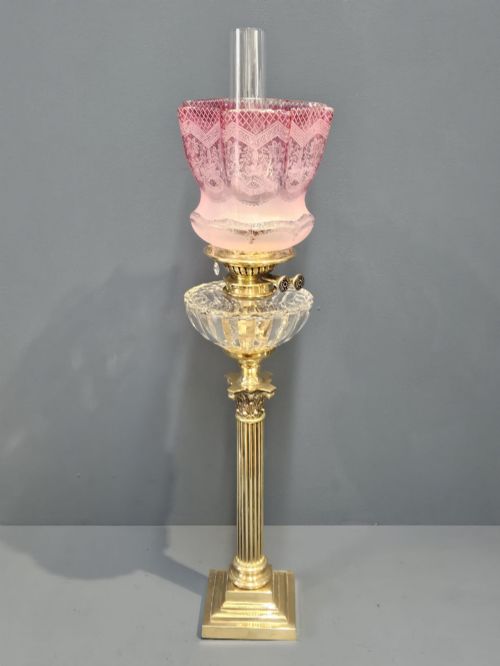
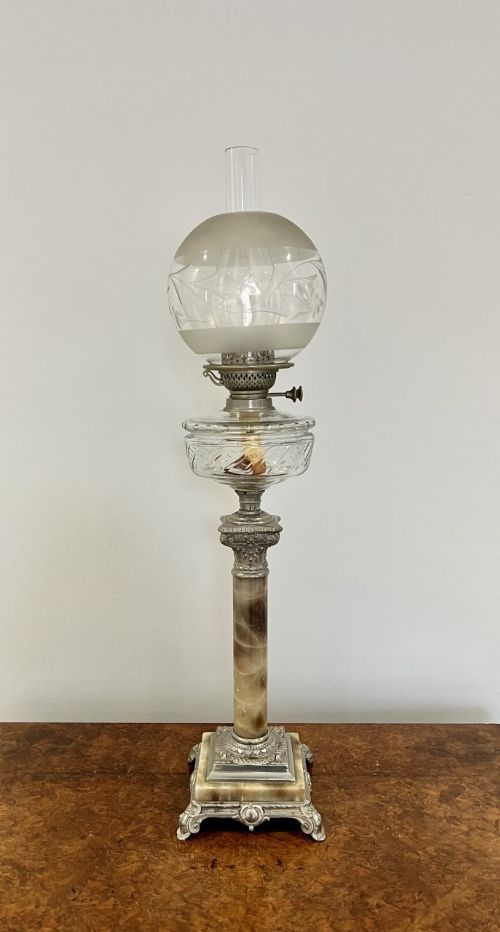
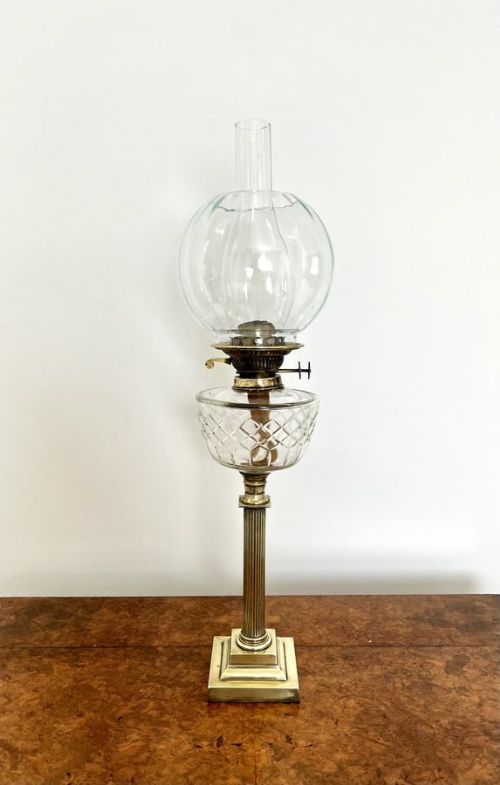
The standard examples on this page combine polished brass, silver plate, or onyx columns with heavily faceted glass fonts. Many incorporate contrasting elements such as cranberry glass shades or ornate metal burners associated with makers like Messengers.
Forms range from classical Corinthian column designs to flowing Victorian Art Nouveau shapes. These pieces reflect the domestic lighting technology of the period before electric illumination became universal.
Construction and Materials
Makers shaped the glass reservoirs through heavy moulding followed by hand-cutting to create deep geometric facets that catch the light. Clear glass and cranberry glass form the primary translucent components of the fuel fonts.
Metal components utilise cast brass, silver plate, and ormolu for the columns and burners. Onyx and crystal also appear as structural bases, screwed or threaded together to support the heavy glass fuel containers safely.
Cut Glass Paraffin Lamp Retail Price Guide 2026
Typical asking prices for cut glass paraffin lamp among the pieces listed under this phrase on Sellingantiques today, from the lower quarter to the upper quarter. They describe what is for sale here now, not the wider market.
Listings span the nineteenth century, including Victorian, Edwardian, and Art Nouveau styles.
Assessing Quality and Execution
Superior pieces display deep, crisp wheel-cutting on the glass font rather than shallow machine pressing. The clarity and weight of the crystal or glass reservoir set finer examples apart from simpler utilitarian versions.
The engineering of the metal mounts dictates the overall standard of the object. Heavy cast brass, substantial silver plating, and integrated onyx or ormolu bases indicate careful workshop production during the Victorian period.
The Cut Glass Paraffin Lamp Glossary
- Font
- The glass or crystal reservoir that holds the paraffin fuel. It sits atop the column and screws directly into the burner mechanism.
- Burner
- The metal mechanism at the top of the lamp that controls the wick and flame. Common period examples feature specialised brass fittings.
- Corinthian Column
- An architectural column style utilised for the stem of the lamp. This classical revival form mimics ancient Greek column capitals.
- Cranberry Glass
- A rich red-pink transparent glass created by adding gold chloride to the molten batch. It frequently forms the shade placed above the reservoir.
Cut Glass Paraffin Lamp: Frequently Asked Questions
How do I date my lamp?
Check the burner mechanism and metal casting styles for clues to the manufacturing decade. Victorian pieces often display registration marks or maker names stamped into the brass.
Compare the weight and hand-cutting style of the glass reservoir against documented examples from the nineteenth century.
Can I still burn oil in them?
Most buyers treat these lamps purely as decorative objects rather than functional household lighting. Using them safely requires checking the integrity of the glass font and replacing cotton wicks.
Ensure the burner threads tightly into the collar to prevent any paraffin leaks during handling.
What metal bases are common?
Brass and silver plate dominate the surviving inventory from the Victorian era. Onyx and ormolu also appear on more decorative examples.
These materials provide the necessary weight at the base to counterbalance the heavy glass reservoirs.
Are chimneys and shades original?
Many surviving lamps have lost their fragile glass chimneys or replacement shades over the decades. Finding a matching cranberry shade or correct-sized chimney requires matching the fitter gallery measurements.
Inspect the collar where the shade sits to determine the exact gallery diameter needed for replacements.