



Etched Globe Oil Lamp
These etched globe oil lamp examples combine brass and glass to bring period lighting to a room.
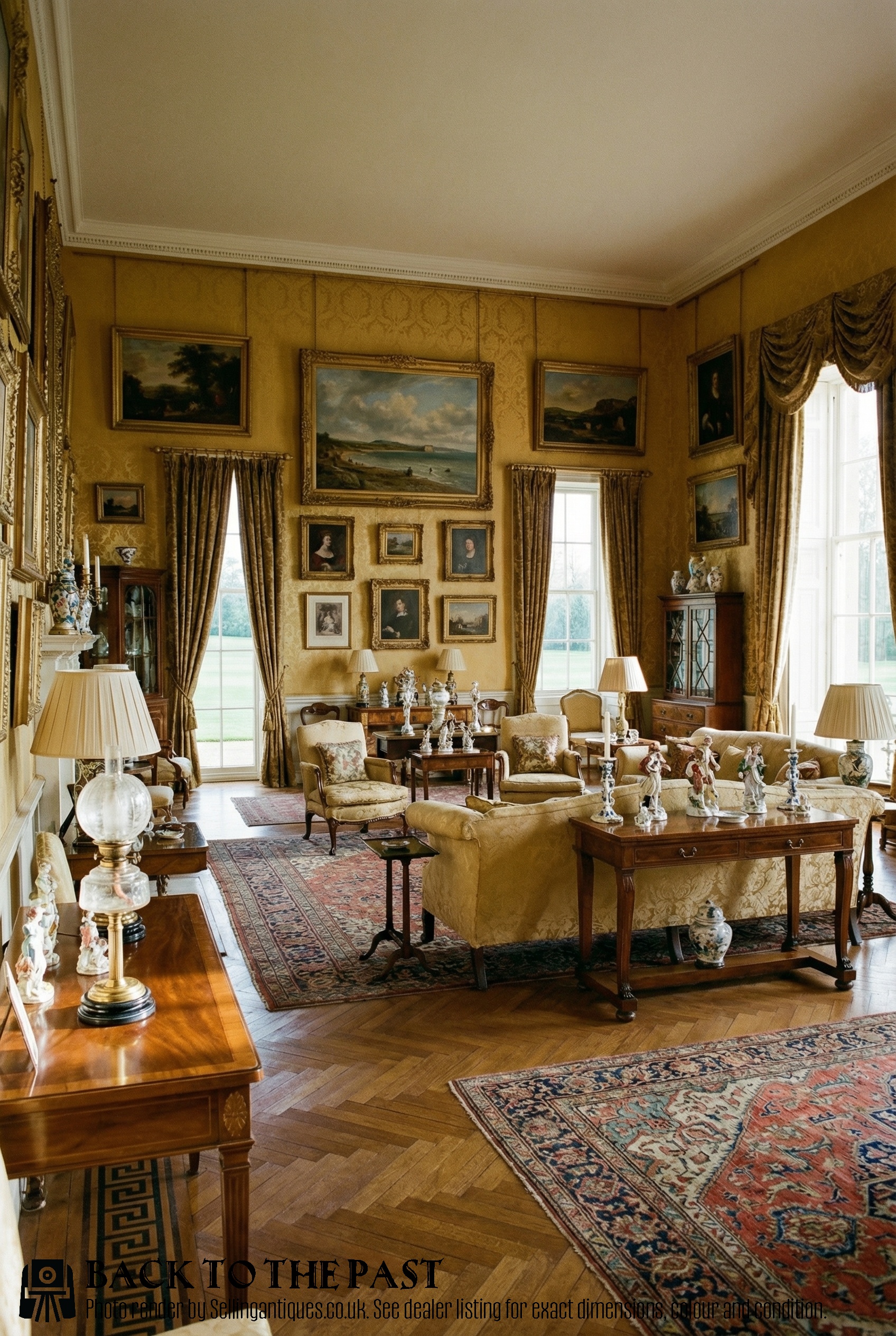
Etched Globe Oil Lamp
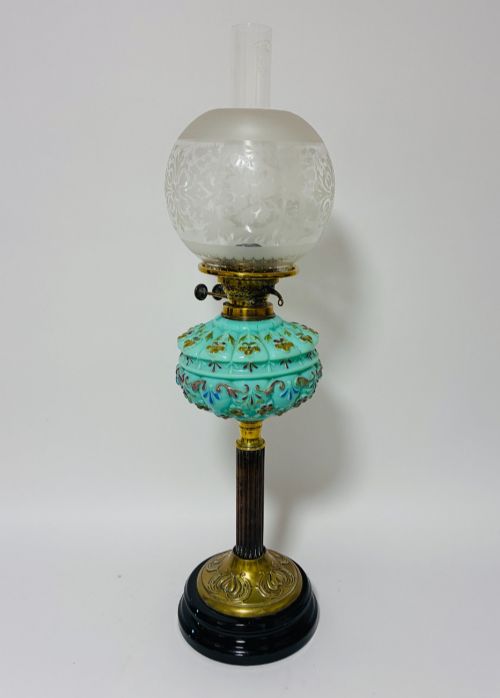
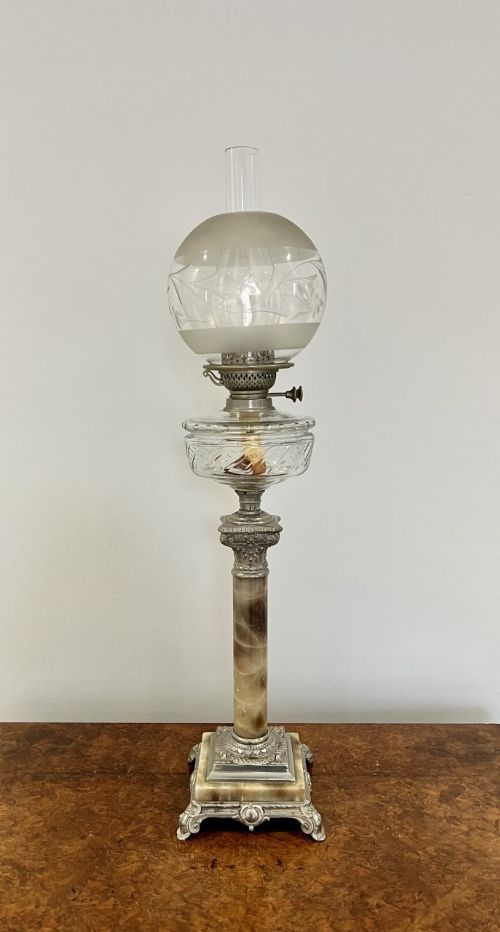
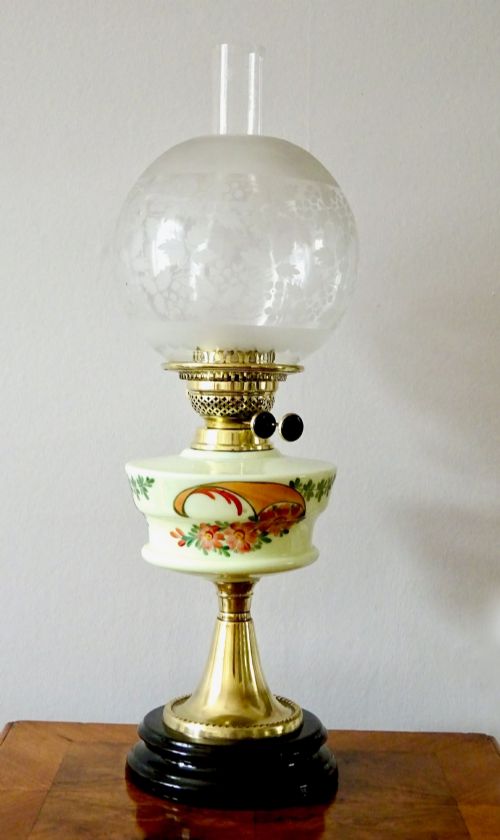
An etched globe oil lamp brings together a metal or ceramic base with an ornate glass shade, forming a standard lighting fixture of the nineteenth and early twentieth centuries. You will most frequently encounter Victorian and Edwardian examples on this page, often combining brass columns with coloured font reservoirs.
The objects span table lamps and individual globes or shades, referencing styles from Victorian Art Nouveau to French Chateau and Chinese Export. These pieces reflect domestic lighting methods before electric illumination became universal in homes.
How they were made
Makers shaped the structural components from cast brass, bronze, and ceramic, often mounting them on onyx bases or pairing them with ebonised wood. Metalwork involved casting and turning, while ceramic elements utilised traditional pottery techniques.
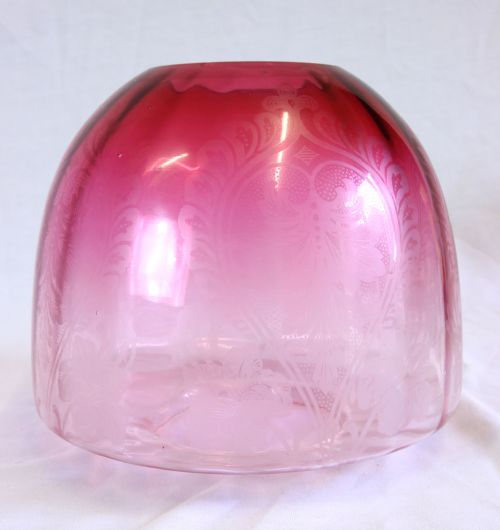
The characteristic shades and fonts relied on glassmaking methods, incorporating cranberry glass, pink glass, and blue glass. Craftsmen then applied surface decoration through acid etching or cutting to create the frosted patterns on the globes.
Etched Globe Oil Lamp Retail Price Guide 2026
Typical asking prices for etched globe oil lamp among the pieces listed under this phrase on Sellingantiques today, from the lower quarter to the upper quarter. They describe what is for sale here now, not the wider market.
Listings feature items spanning the Victorian era through to the 1930s, constructed from brass, bronze, onyx, and various coloured glasses.
What varies in quality
The distinction between standard domestic lighting and finer pieces rests on the weight of the metal casting and the crispness of the glass etching. Heavier brass and bronze mounts demonstrate superior foundational construction.
Artistic execution in the glass font and shade also dictates standard variations, with layered colours and detailed hand-finished motifs marking out the better examples across the periods.
Hinks of Birmingham·Messengers·Harrods
The Etched Globe Oil Lamp Glossary
- Globe
- The spherical or tulip-shaped glass shade enclosing the burner. These are frequently decorated with etched patterns to diffuse the light.
- Cranberry glass
- A rich red-pink transparent glass created by adding gold chloride to the molten batch. It appears frequently in Victorian lamp shades and vessels.
- Onyx
- A banded variety of chalcedony utilised for solid ornamental bases. It provides a heavy, decorative foundation for metal lamp columns.
- Faience
- Tin-glazed earthenware employed for the decorative body of certain continental lamps. This ceramic technique allows for painted surface designs beneath a glossy finish.
Etched Globe Oil Lamp: Frequently Asked Questions
What periods do these lamps come from?
The pieces span the nineteenth and early twentieth centuries, covering Victorian, Edwardian, and Art Nouveau eras. Most items date between the 1880s and the 1930s.
Design characteristics shift from heavy Victorian brass and coloured glass fonts toward lighter Art Nouveau and Edwardian styles. The selection also includes French and Chinese export variations from the same broad timeframe.
How were oil lamps used originally?
These lamps provided indoor illumination in domestic settings before electricity reached most households. They sat on tables or sideboards to light parlours and living spaces.
Fuel stored in the lower font fed a wick rising through the burner, while the glass globe protected the flame and diffused the light evenly across the room.
Can these lamps still burn oil?
Many surviving examples retain their original internal mechanisms, though numerous pieces have been converted for modern electrical use over time. Using them with oil requires checking the integrity of the burner and font.
Collectors often evaluate whether a piece retains its original working burner or if it has been adapted to house an electrical fitting for contemporary display.
How do I identify different glass shades?
Shades vary by colour, shape, and decorative technique, ranging from tulip forms to spherical globes in cranberry, green, blue, or pink glass. Acid etching creates frosted, opaque patterns against clear or coloured backgrounds.
Examining the weight, rim finish, and depth of the etched surface helps distinguish nineteenth-century production methods from later replacements.