



Etched Globe Lamp
An etched globe lamp brings warm, diffused illumination to a room through intricately carved glass shades paired with bases of brass, bronze, ceramic, and onyx.
Etched Globe Lamp
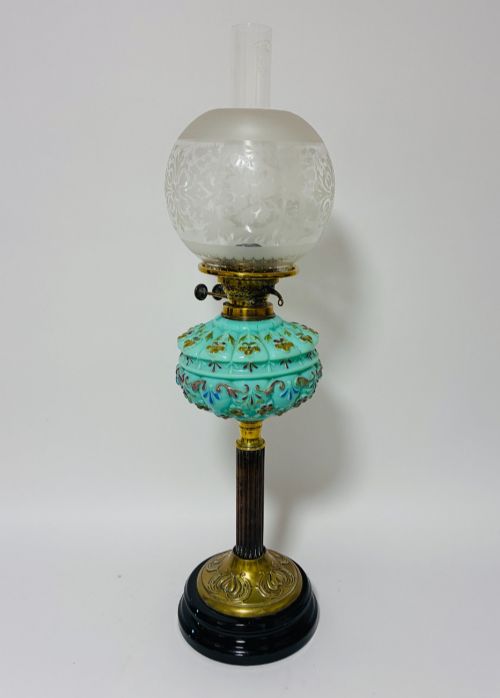
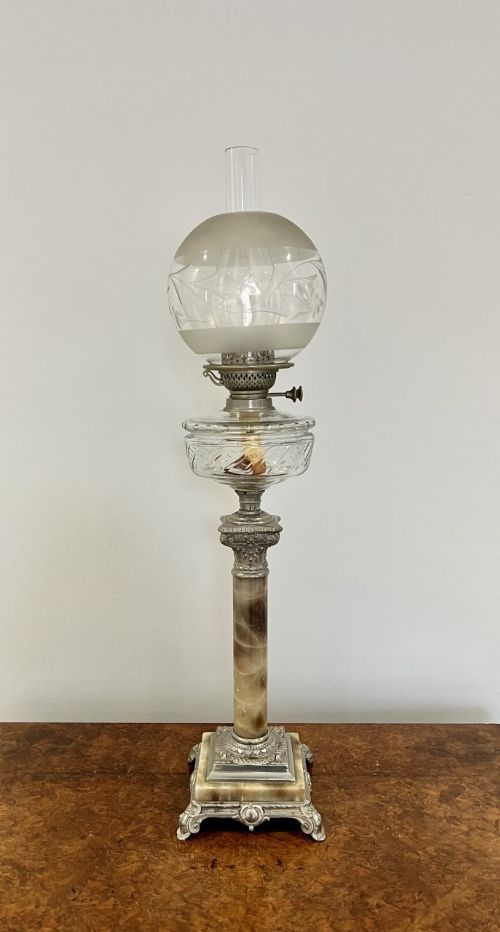
When searching for an etched globe lamp, you are examining lighting fixtures that predominantly combine decorative glass shades with substantial metal or ceramic reservoirs and bases. These pieces span the Victorian, Edwardian, and Art Deco periods, encompassing both table lamps and converted oil lamps alongside individual globes and shades.
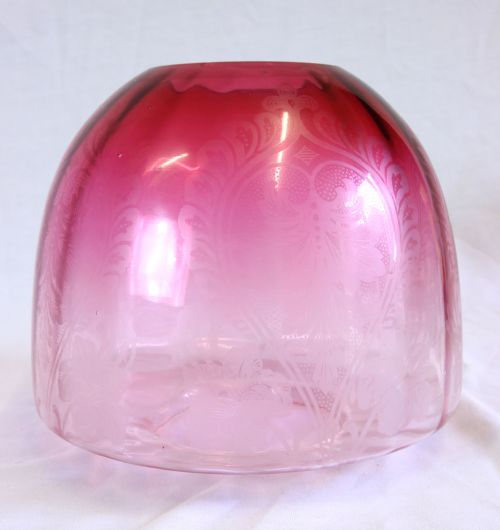
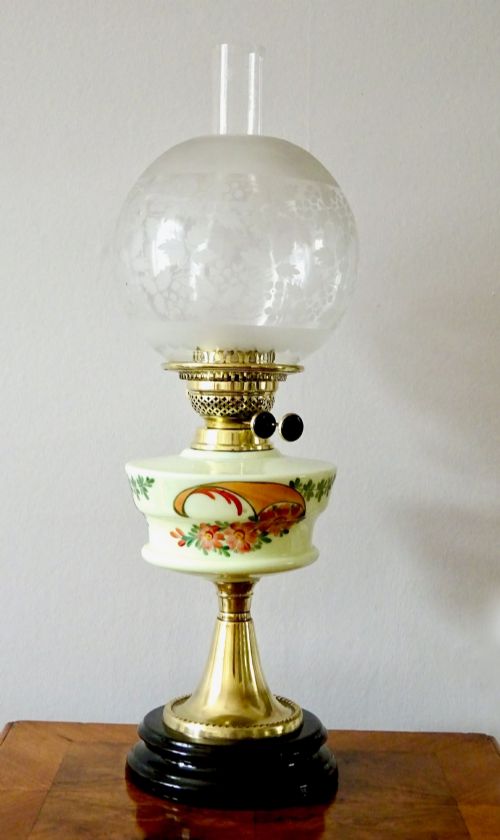
The most common examples on this page date from the late nineteenth century through to the early twentieth century. They frequently feature brass or bronze mountings paired with coloured glass fonts in shades of cranberry, green, blue, and pink, often complemented by frosted or acid-etched patterns.
Formations range from classic table lamps and oil lamps to French art glass domes and Chinese export porcelain conversions. Each piece reflects the domestic lighting technology and decorative tastes of its respective era, moving from functional oil burning to electrified home lighting.
How they were made
Makers shaped the distinctive globes of an etched globe lamp using blown or pressed glass techniques before applying decoration by hand or through acid-etching. Glassmakers utilised cased glass methods to layer different colours, such as cranberry or green over clear glass, allowing the etching process to expose contrasting tones beneath.
Bases and reservoirs combined cast brass, bronze, ceramics, and onyx, frequently joined by threaded metal collars and galleries designed to hold the glass shade securely. Metal components often received applied patination or polished finishes, whilst ceramic fonts displayed hand-painted enamels and floral motifs.
Several Victorian fonts boast such vibrant cranberry hues that they resemble giant glass berries resting upon brass pedestals.
What varies in quality
Quality in these lighting fixtures rests upon the crispness of the glass etching and the weight and substance of the mounting materials. Finer examples display deeply carved or finely frosted motifs on heavy, resonant glass globes rather than superficial surface scratches.
The choice of base materials also distinguishes the standard of manufacture, with solid cast bronze, substantial brass castings, and genuine onyx outperforming lighter sheet metals or simpler ceramics. Furthermore, the integration between the font, burner mechanism, and shade gallery demonstrates the original maker's attention to proportion and stability.
Hinks of Birmingham·Messengers·Harrods·Gaggenau
The Etched Globe Lamp Glossary
- Etched glass
- Glass decorated by the application of acid or abrasive materials to eat away the surface and create opaque designs. This technique allows for detailed floral or geometric patterns that diffuse light evenly.
- Font
- The oil reservoir of a lamp, usually positioned above the base and beneath the burner and shade. Fonts appear in various materials including coloured glass, ceramic, and brass.
- Cranberry glass
- A rich red or pink transparent glass coloured by the addition of gold chloride to the molten batch. It remains a hallmark of Victorian decorative lighting and glassware.
- Gallery
- The metal ring with thumb screws at the top of a lamp that holds the globe or shade in place. A well-fitted gallery ensures the glass sits securely above the burner.
- Onyx
- A banded variety of chalcedony quartz used frequently for decorative lamp bases during the Victorian and Edwardian periods. Its natural stratification provides a smooth, polished stone foundation.
Etched Globe Lamp: Frequently Asked Questions
How do I date an etched globe lamp?
Dating relies upon examining the materials, manufacturing techniques, and stylistic markers present in the mountings and glass. Victorian pieces often feature heavy brass castings and rich cranberry or green glass, whereas Edwardian and Art Deco examples tend toward lighter brasswork, French crystal, and geometric motifs.
Maker's marks stamped onto the burner mechanisms, brass collars, or metal bases provide the most precise chronological evidence. Comparing the structural fittings with known production periods helps narrow down the decade of manufacture.
Were these lamps converted from oil?
Many table lamps from the nineteenth and early twentieth centuries began as oil-burning fixtures before being adapted for modern electricity. This conversion process typically involved running wiring through the central burner assembly while retaining the original brass or bronze reservoirs and glass shades.
Such conversions allow contemporary homes to utilise antique lighting fixtures safely without altering their external appearance. The presence of original burners or galleries alongside modern wiring indicates a period adaptation.
How do I clean the etched glass shade?
Cleaning requires warm water and mild soap applied gently with a soft cloth to avoid damaging the delicate frosted or acid-etched surfaces. Harsh chemical cleaners and abrasive scouring pads must be avoided, as they can strip the original finish or scratch the glass.
Removable globes should be taken off the lamp body entirely before washing to prevent accidental drops against metal galleries. Allowing the glass to dry thoroughly before remounting preserves both the shade and the securing screws.
What styles are available?
The selection encompasses several distinct design movements, including Victorian, Edwardian, Art Nouveau, Art Deco, and French Chateau aesthetics. Each style introduces specific decorative vocabulary, from organic floral etchings on Victorian cranberry glass to geometric crystal domes from the 1920s.
Influences also extend to Chinese export pieces, such as Canton Famille Rose porcelain vases adapted into lamp bases. This variety reflects the diverse international tastes that influenced domestic interior design across the decades.