
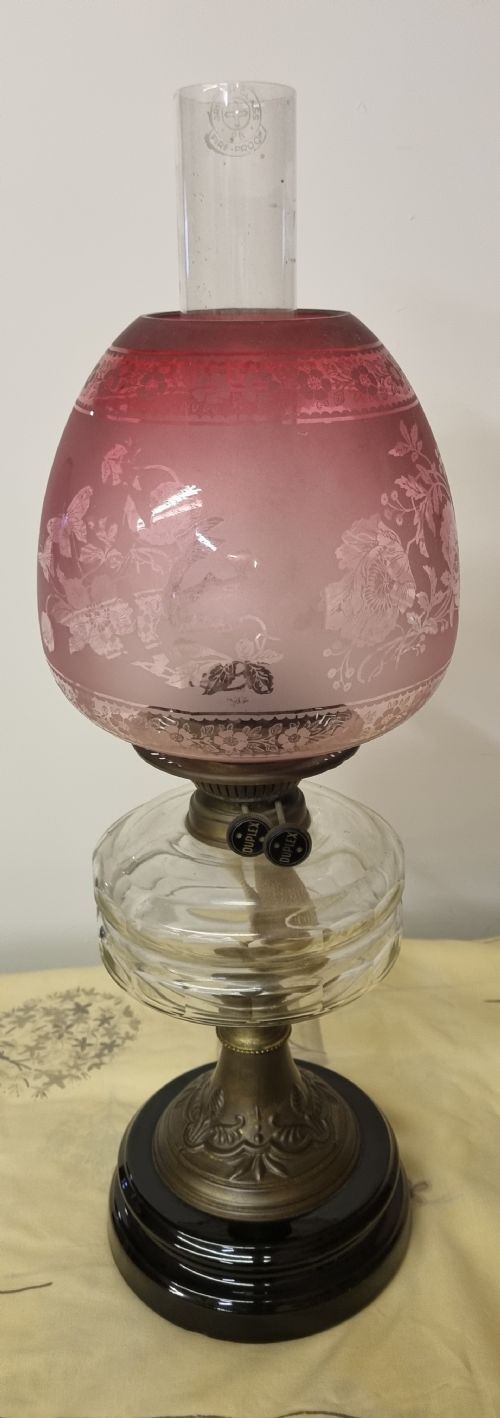


Clear Glass Reservoir
A clear glass reservoir brings a clean, luminous weight to a room, holding the lamp oil in style.
Clear Glass Reservoir
When you search for a clear glass reservoir, you are looking at functional Victorian lighting components and desk accessories shaped from transparent glass. The pieces listed on this page primarily take the form of oil lamps, table lamps, and inkwells dating from the nineteenth century.
You will most commonly meet oil lamps that pair a glass reservoir with a brass or ceramic base. Alongside these lighting forms, the selection includes desk items such as silver-mounted glass inkwells from the same period.
How they were made
These reservoirs combine blown or cut glass with structural elements of brass and sterling silver. Makers joined the transparent glass containers to metal collars and columns using traditional assembly methods.
Several examples incorporate ceramic sections and fabric elements to complete the composition of the lamp or inkwell.
Even a humble inkwell gets the full Victorian treatment with a sterling silver mount.
What varies in quality
Quality rests on the depth of the glass cutting and the precision of the metal mounts. Finer pieces show crisp facets on the glass and heavy, well-cast brass bases.
Named makers such as Hinks of Birmingham or Messengers elevate the standing of a piece through superior engineering and marked metalwork.
Hinks of Birmingham·Messengers·Harrods·Young
The Clear Glass Reservoir Glossary
- Reservoir
- The container that holds the lamp oil or ink. It sits above the base and below the burner or lid.
- Corinthian Column
- A classical architectural order featuring ornate capitals decorated with acanthus leaves. Table lamps often used this form for their brass columns.
- Art Nouveau
- A style characterised by flowing, organic lines that emerged towards the end of the nineteenth century. It appears in the decorative details of later oil lamps.
- Sterling Silver
- A silver alloy containing a high proportion of pure silver. It forms the decorative mounts on inkwells and select lamp collars.
Clear Glass Reservoir: Frequently Asked Questions
What is a clear glass reservoir?
It is the transparent glass container designed to hold fuel in an oil lamp or ink in a desk accessory. These items date primarily from the Victorian era and form the core of nineteenth-century lighting and deskware.
They allow the user to monitor the level of the liquid inside while providing a reflective, bright visual element to the object.
How were these lamps used?
Victorian households utilised these oil lamps for interior illumination before the widespread adoption of electric lighting. They stood on tables and desks, burning paraffin or lamp oil through a cotton wick.
The clear glass reservoir held the fuel safely beneath the brass burner mechanism while letting light pass through.
How do I identify a Victorian piece?
Victorian items display characteristic material combinations such as heavy cast brass paired with hand-finished glass. Many feature Neoclassical motifs like Corinthian columns or later Art Nouveau curves.
The construction methods and metal stamps of firms from the nineteenth century help confirm the period of manufacture.
Can these lamps still burn oil?
While many retain their original burners and reservoirs, collectors often treat them primarily as decorative objects or convert them for modern electrical use. Using antique glass vessels for burning fuel requires careful inspection of the seals and collars.
Consulting a specialist helps ensure that any functional use meets safety standards.