
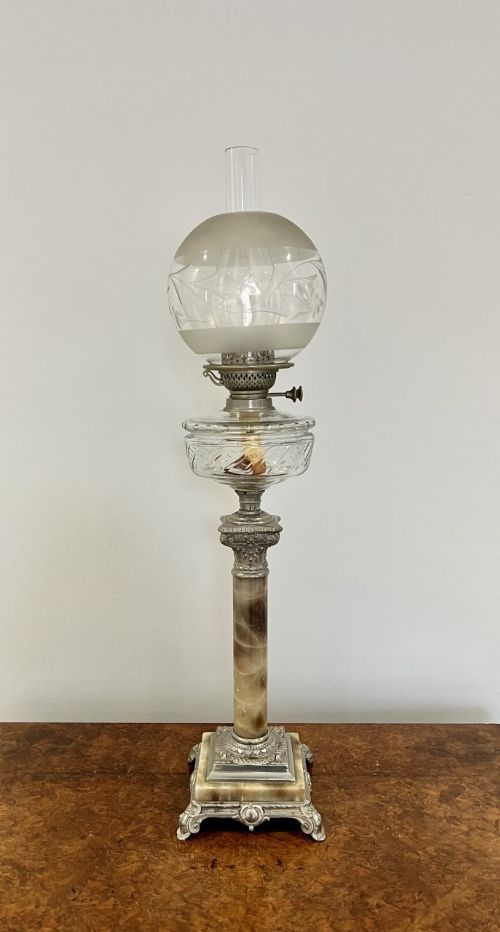
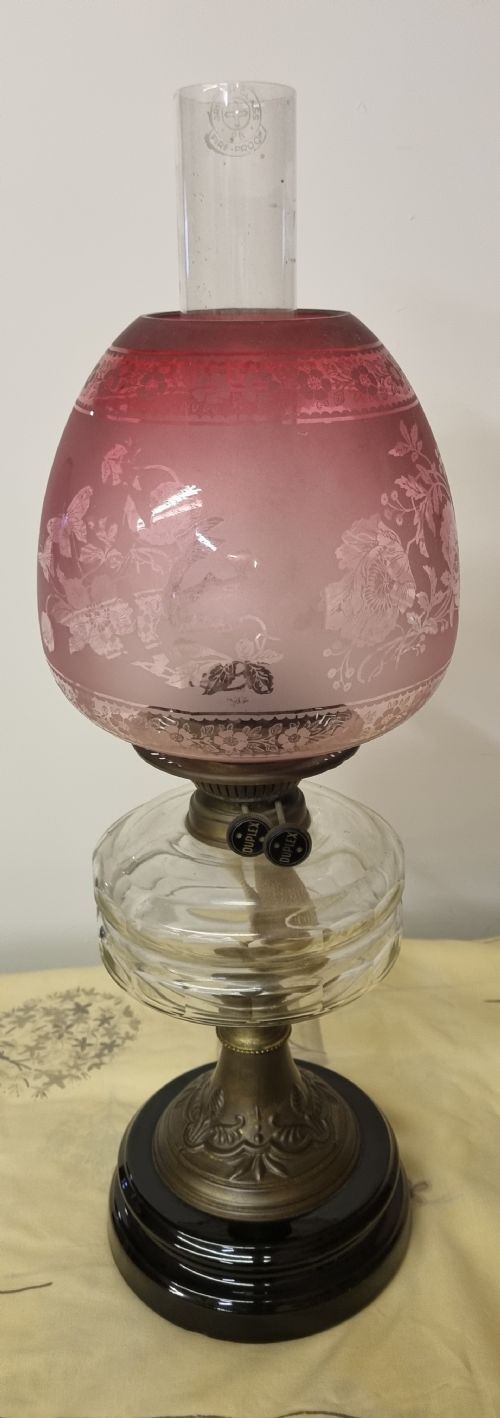
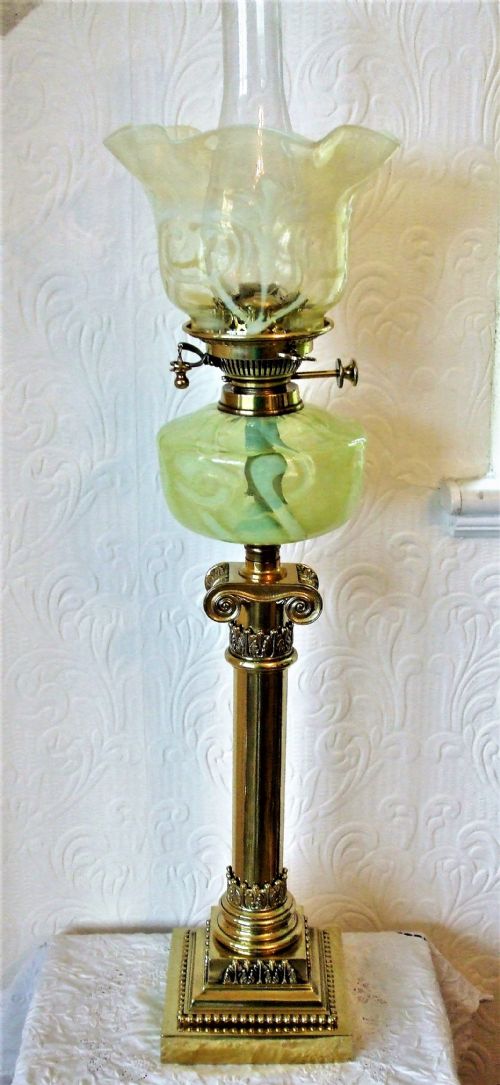
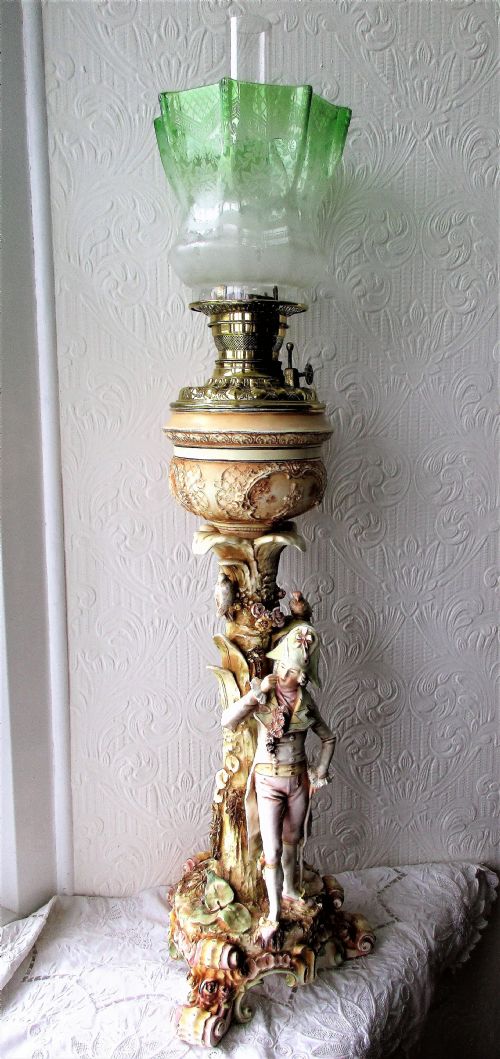



Etched Glass Table Lamps
Etched glass table lamps bring together period brass columns and decorative glass shades to provide warm illumination and Victorian character.

Etched Glass Table Lamps
Etched glass table lamps combine functional nineteenth-century lighting designs with decorative glasswork, often taking the form of converted oil lamps and column lamps. These pieces originate primarily from the Victorian and Edwardian eras, spanning the nineteenth and early twentieth centuries.
Buyers encounter standard table lamps alongside taller floor lamps, desk lamps, and hurricane lamps. The most common examples on this page pair a substantial metal base with a patterned glass shade or font.
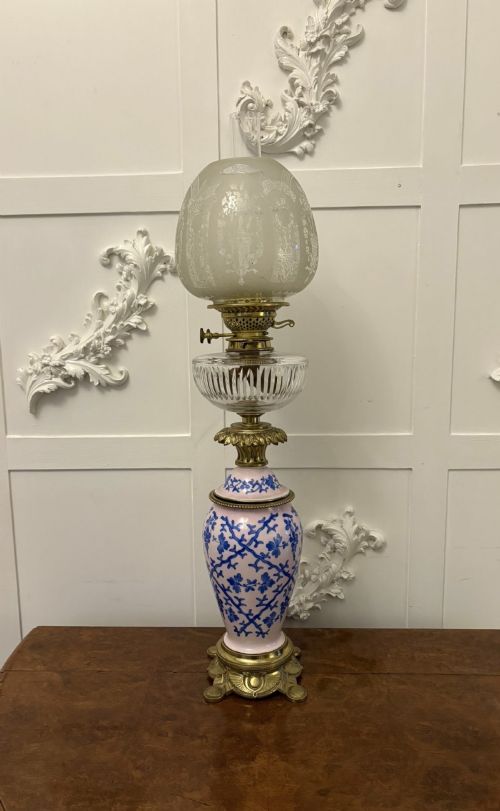
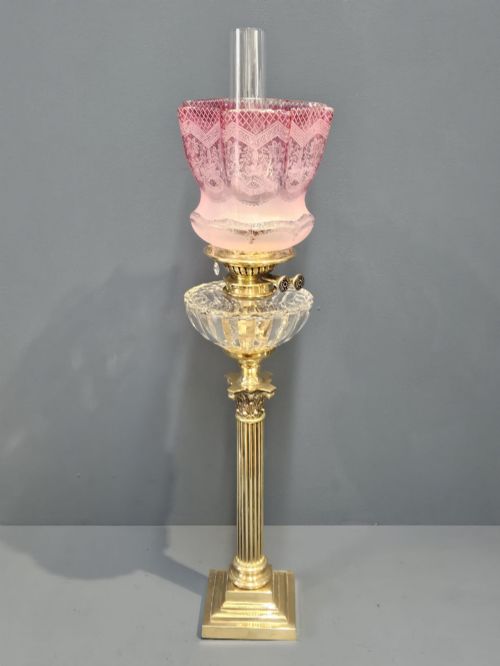
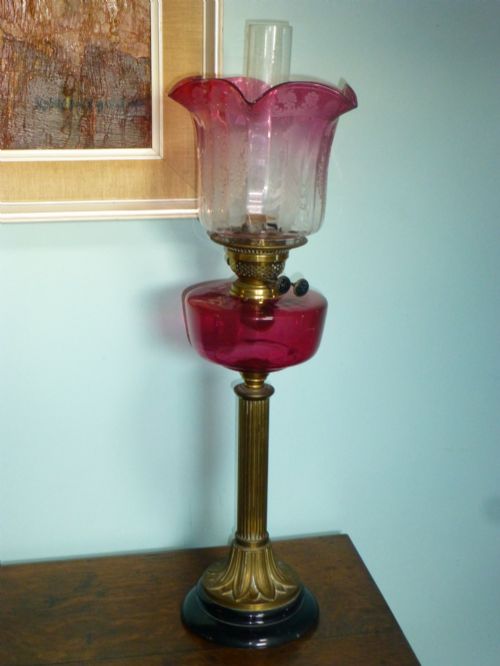
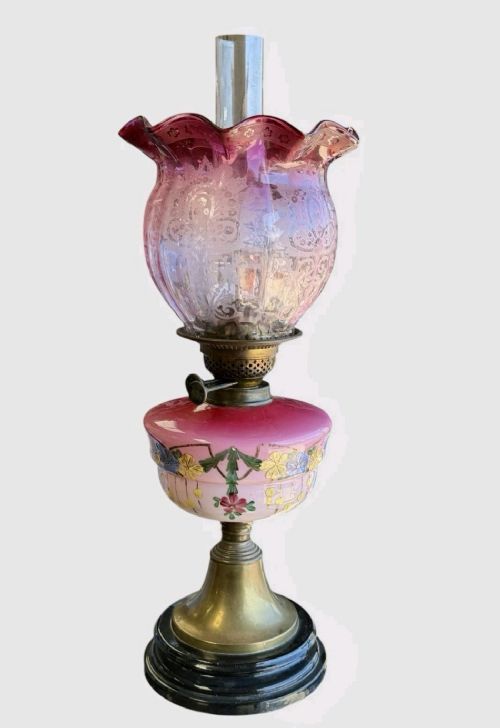
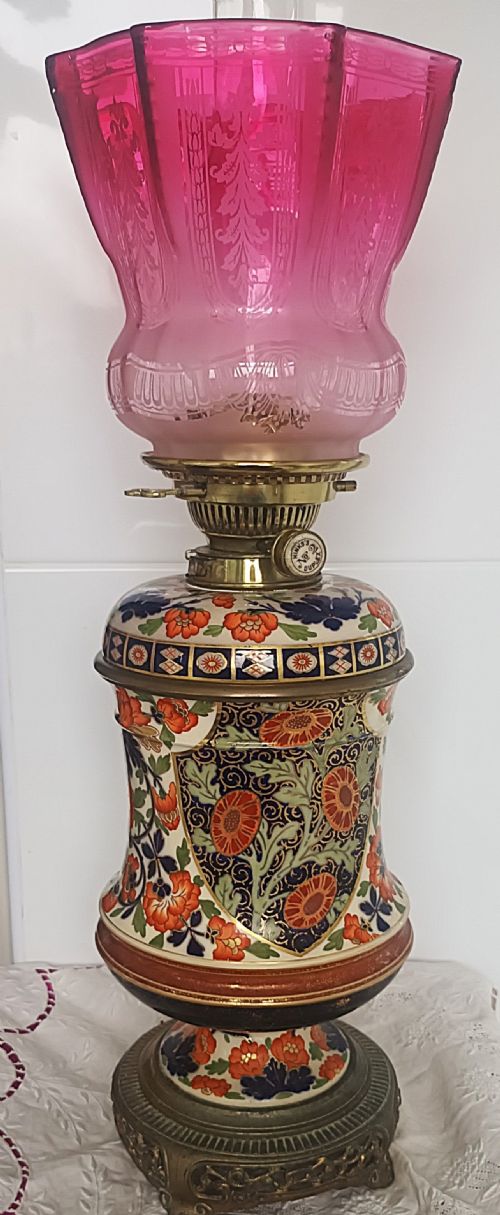
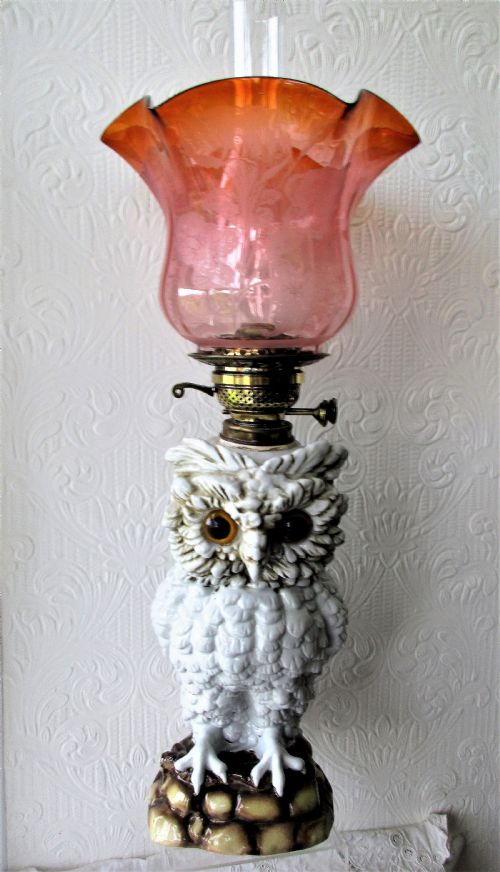
The style ranges from plain brass columns to ornate porcelain figural mounts and rich cranberry glass vessels. Many incorporate classical motifs such as Corinthian columns alongside etched floral or botanical patterns.
How they were made
Makers built these lamps using heavy base metals such as brass, copper, and silver plate to support the upper fittings and glass reservoirs. Brass components often feature cast detailing, turned columns, or structural stepped pedestals.
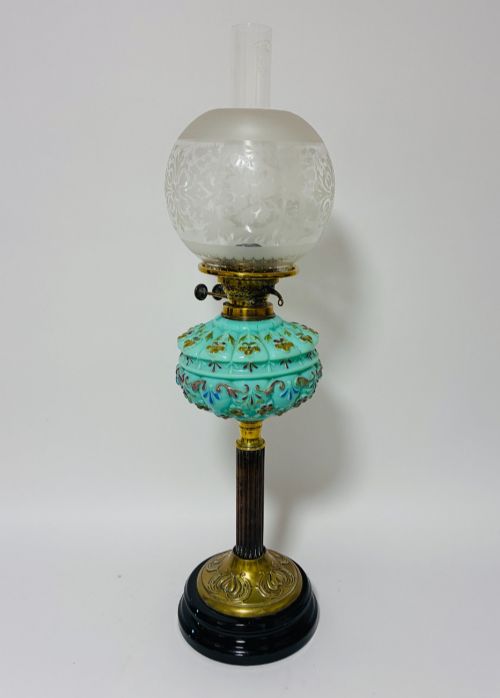
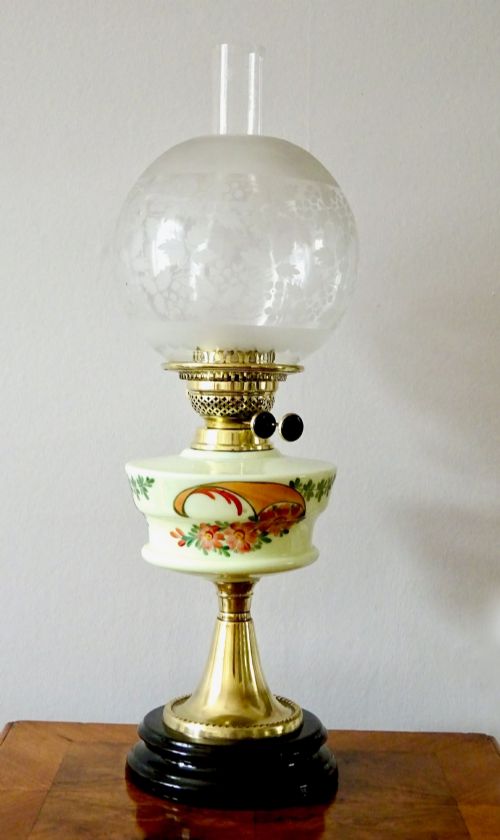
The upper portions rely on blown and moulded glass, frequently utilising cranberry glass, ruby glass, or frosted finishes. Artisans applied surface decoration through acid etching or hand painting to create floral bands and scenic panels on shades and fonts.
Listings feature 19th Century, Victorian, Edwardian, and Art Deco periods, employing brass, cranberry glass, porcelain, and onyx.
What varies in quality
Quality rests in the crispness of the metal casting and the weight of the base materials. Superior examples feature heavy gauge brass, finely detailed capitals on columns, and robust burner mechanisms.
The glass elements distinguish finer items through depth of colour, precise etching lines, and proportion relative to the metal stand. Hand-painted accents and well-balanced shade proportions separate standard production pieces from finer studio and maker-marked lighting.
Hinks·Taylor Tunnicliff·Sitzendorf·Daum·Birks
The Etched Glass Table Lamps Glossary
- Duplex burner
- A double-wick mechanism found on nineteenth-century oil lamps that provided increased illumination. This fitting sits atop the glass font and usually bears maker stamps.
- Font
- The oil reservoir portion of a lamp, often rendered in coloured, cranberry, or cut glass. It holds the fuel beneath the burner assembly.
- Corinthian column
- An architectural column style featuring ornate acanthus leaf capitals, frequently utilised for the brass stems of Victorian lamps. This classical form adds height and stability.
- Hurricane lamp
- A lamp design featuring a protective glass shade enclosing the flame to prevent flickering. These pieces often include convertible mounts for electrical use.
- Etched glass
- Glass decorated by applying acid to eat away exposed surfaces, creating opaque patterns against clear or frosted backgrounds. Floral and geometric motifs appear frequently.
Etched Glass Table Lamps: Frequently Asked Questions
How do I wire an old lamp?
Conversion from oil to electricity involves running modern flexible cord through the original burner or stem cavity. Professional electricians typically preserve the exterior brass and collar components while updating internal fittings for safety.
Many antique lamps arrive already converted for modern domestic use. Retaining the original switch placement and burner gallery helps maintain the authentic appearance of the piece.
Are these glass shades original?
Shades on nineteenth-century lighting often suffered breakage over decades of use, leading to period replacements. Matching the collar fitter size to the gallery ensures the shade sits securely upon the brass mount.
Examine the glass closely for consistency in colouration and matching etching styles. Subtle variations in age between shade and base remain common in antique lighting.
What is cranberry glass?
Cranberry glass is a red-pink transparent glass created by adding gold chloride to the molten batch during production. This rich hue proved popular for Victorian tableware and decorative lamp fonts.
The intensity of the pink shade varies depending on the gold content and firing temperature. It pairs distinctively with polished brass columns and frosted glass elements.
How do I date these lamps?
Dating relies on burner patents, manufacturer marks stamped into the brass brasswork, and stylistic clues from the base design. Victorian pieces often display registration marks or maker names like Hinks near the wick adjusters.
Materials also offer chronological markers, shifting from heavy classical brass columns in the mid-nineteenth century to lighter art nouveau and art deco forms by the early twentieth century.