



Victorian Ruby Glass Lamps
Victorian ruby glass lamps are vibrant nineteenth-century domestic light fittings combining rich red glass with brass, silver plate, or wrought iron.

Victorian Ruby Glass Lamps
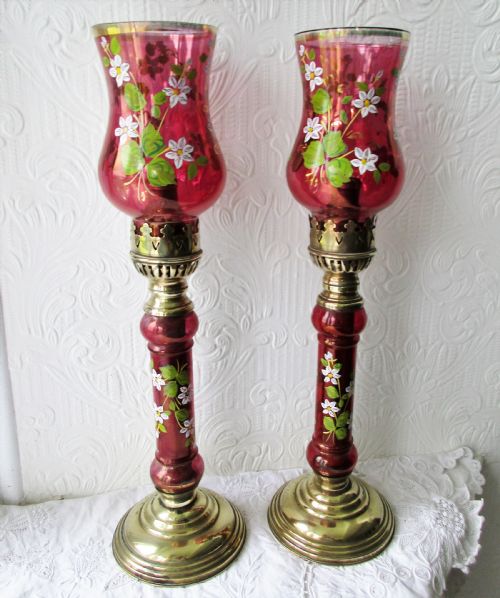
Victorian ruby glass lamps encompass oil lamps, table lamps, candle lamps, and pendant lights produced during the nineteenth century. These pieces frequently pair deep red glass fonts or shades with metal bases in brass, silver plate, or wrought iron.
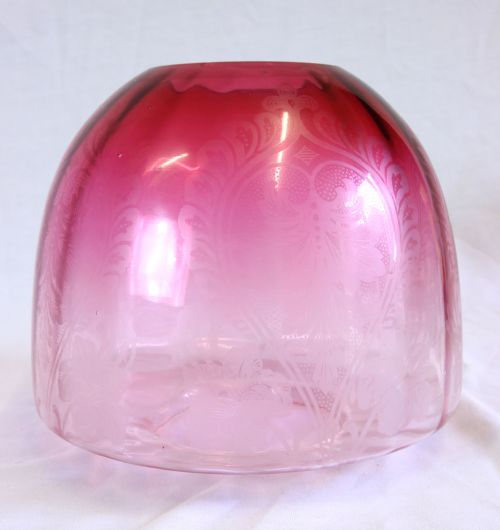
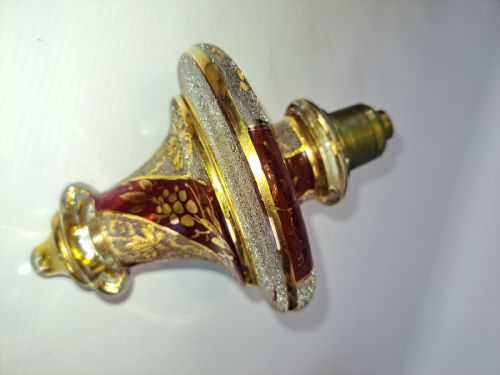
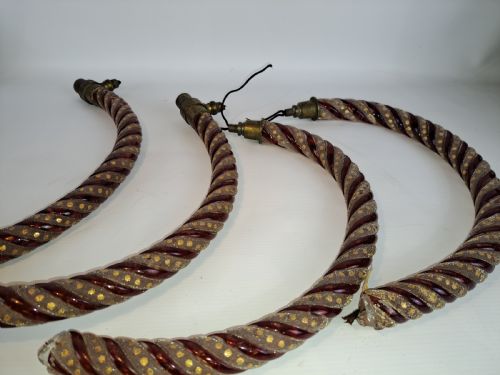
The selections on this page highlight both complete lighting fixtures and individual components such as lamp shades, peg lamps, chandelier arms, and finials. Pieces emerge from English and Bohemian traditions, occasionally incorporating later conversions to electricity.
Oil lamps and table lamps dominate the available forms, often featuring matched pairs with decorative motifs like hunting scenes or gilded and etched patterns. Dating spans from the Victorian period through to Edwardian examples and nineteenth-century Gothic designs.
How they were made
Makers shaped the distinct red vessels using ruby glass and cranberry glass, frequently applying surface decoration through etching, enamel, and gold leaf gilding. Glass components were then combined with structural metalwork in brass, wrought iron, and silver plate.
Many glass elements, particularly Bohemian pieces, received meticulous surface treatment where artisans cut through layers or painted decorative details in gold. Metal components were cast, turned, or forged to support the heavy glass reservoirs and shades securely.
Hunting scenes gallop across matching ruby peg lamps, proving that nineteenth-century Victorians loved outdoor sports even while reading indoors by oil light.
What varies in quality
Quality separates simple utilitarian lighting from sophisticated decorative works through the depth of the ruby glass colour and the crispness of any etched or gilded detailing. Hand-painted motifs, such as hunting scenes or angelic capitals, show varying degrees of artistic refinement.
The integrity of the metal mounts, whether brass, silver plate, or wrought iron, influences the overall standard of a piece alongside the survival of matching original components like peg lamps and shades.
The Victorian Ruby Glass Lamps Glossary
- Ruby glass
- A deep red glass created by adding gold or copper compounds to the molten batch. It forms the primary visual body for many nineteenth-century lamps and shades.
- Cranberry glass
- A transparent pinkish-red glass variant often utilised for Victorian lamp shades and smaller fonts. The shade derives its lighter tone from a specific gold-based chemical recipe.
- Peg lamp
- A small oil lamp fitted with a narrow lower peg designed to drop directly into the top socket of a candlestick or base. This format allows a candlestick to serve as an oil lamp.
- Phinial
- A decorative terminal element, also spelled finial, used to secure parts of a lamp or lighting fixture together. They appear in carved or decorated glass forms.
- Chandelier arm
- A curved branch designed to hold a light source away from the central pendant shaft. These components are frequently found in matching sets of ruby glass.
Victorian Ruby Glass Lamps: Frequently Asked Questions
Were all victorian ruby glass lamps used for oil?
Many pieces were designed specifically for burning oil, featuring glass fonts paired with brass burners and chimneys. Other examples served as candle lamps, table lamps, or hanging lights.
Over time, numerous surviving examples underwent conversion to electricity to suit modern domestic requirements while retaining their original glass and metal bodies.
What is the difference between ruby glass and cranberry glass?
Ruby glass exhibits a deeper, saturated red tone due to specific mineral inclusions during the melting process. It forms the basis of heavy etched and gilded Bohemian table pieces.
Cranberry glass tends to display a lighter, translucent pinkish-red hue commonly selected for functional oil lamp shades.
Can electric conversions be reversed?
Many wall-mounted and table-standing units show evidence of past wiring alterations where original oil burners were replaced for electrical wiring. The feasibility of returning a piece to its original state depends on whether the original brass burner assembly survived the initial conversion.
Careful inspection of the collar and font opening reveals if original components remain intact.
How should I clean etched glass shades?
Etched and gilded surfaces require gentle maintenance to preserve delicate gold leaf and surface decoration. Lukewarm water and mild soap applied with a soft cloth prevent damage to the decorative layers.
Harsh chemical cleaners and abrasive scouring pads must be avoided entirely to protect the historical finish.