




Ruby Glass Lamp
A ruby glass lamp brings a rich, warm glow to a room through deep red hues paired with brass, enamel or gilt metal.
Ruby Glass Lamp
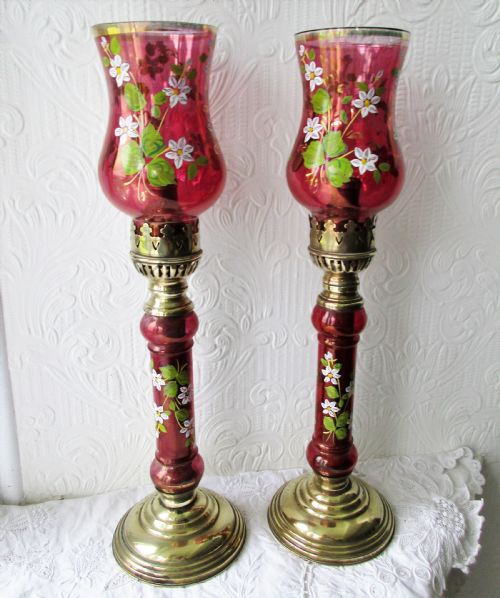
A ruby glass lamp encompasses a range of lighting forms from the eighteenth to the early twentieth century, including oil lamps, candle lamps, pendant lights and table lamps. These pieces combine deep red glass bodies or shades with materials such as brass, wrought iron and silver plating.
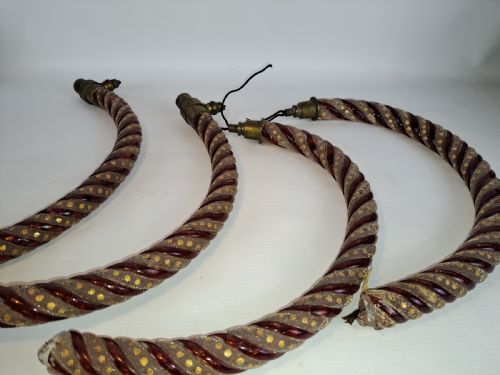
Victorian and nineteenth-century examples dominate the selections, often featuring detailed etching, gilding or enamel decoration. Buyers frequently encounter oil lamps, replacement shades, chandelier arms and wall-mounted lanterns originating from English and Bohemian workshops.
The aesthetic spans straightforward domestic lighting to ornate Gothic Revival and French Rococo Revival designs. Certain items retain their original mounting or burners, while others have been adapted for modern electricity.
How they were made
The distinctive red colour of the glass is achieved by adding gold or copper to the molten batch during production. Makers then shaped the glass by hand through blowing or moulding before applying surface decoration.
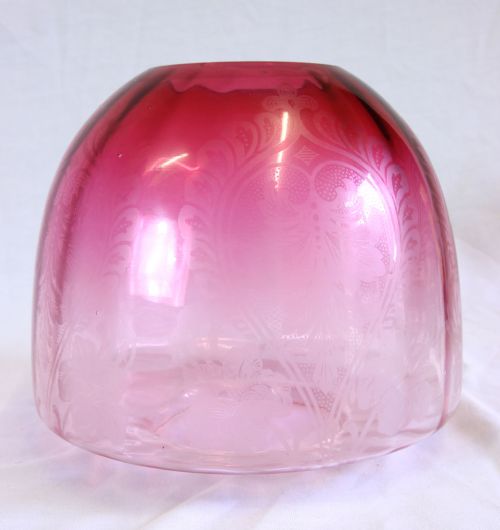
Decoration often involved wheel-etching through the outer ruby layer to reveal clear glass beneath, complemented by hand-applied gold leaf or enamel highlights. Metal components such as brass fonts, bases and wrought iron brackets were cast, turned and joined to support the heavy glass reservoirs.
Ruby Glass Lamp Retail Price Guide 2026
Typical asking prices for ruby glass lamp among the pieces listed under this phrase on Sellingantiques today, from the lower quarter to the upper quarter. They describe what is for sale here now, not the wider market.
Several pieces feature a dedicated hunting theme, bringing unexpected canine companionship directly to your tabletop illumination.
What varies in quality
Quality rests upon the depth and clarity of the ruby glass alongside the precision of the hand-cut or etched detailing. Superior pieces display crisp, refined motifs such as hunting scenes or angelic capitals rather than soft or shallow surface work.
The weight and finish of the accompanying metalwork set apart the finer examples. Solid brass castings and carefully applied gilding indicate higher-grade production compared to lighter, standard commercial mounts.
The Ruby Glass Lamp Glossary
- Ruby glass
- Glass coloured deep red through the addition of gold or copper oxides. It forms the primary body or shade of these lighting pieces.
- Cranberry glass
- A transparent pinkish-red glass variant often utilised in Victorian lamp shades. The shade derives its lighter tone from a lower concentration of gold chloride.
- Phinial
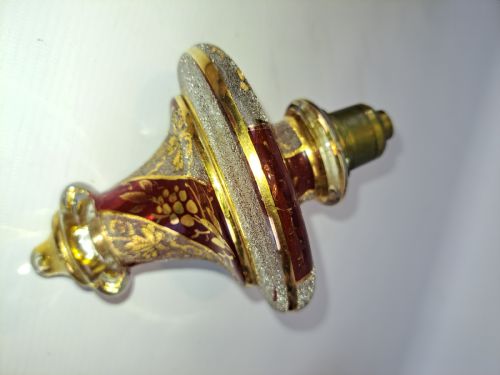
- An ornamental crowning element securing a lampshade or fitting in place. These components are frequently fashioned from matching etched ruby glass.
- Oil lamp
- A lighting device utilising a wick and a liquid fuel reservoir beneath a burner. Many surviving nineteenth-century examples feature distinct ruby glass fonts.
- Gothic Revival
- An architectural and decorative style drawing inspiration from medieval forms. Pieces in this manner exhibit pointed arches and structural ironwork.
Ruby Glass Lamp: Frequently Asked Questions
How do I date a ruby glass lamp?
Dating relies on examining the assembly methods, burner type and mountings. Victorian pieces often combine heavy brass casting with hand-etched glass ornamentation.
Later adaptations or Edwardian examples show lighter metalwork and simpler wiring conversions. Comparing the wear on the base and burner provides further clues to the manufacturing era.
What is the difference between ruby and cranberry glass?
Ruby glass exhibits a deep, intense crimson saturation created by specific metallic additives during the melting process. This darker hue suits formal Victorian and Bohemian decorative pieces.
Cranberry glass presents a lighter, translucent pinkish-red shade frequently seen in smaller domestic lamp shades. Both materials utilise gold content in their chemical recipe to achieve the red spectrum.
How should I clean my antique lamp?
Dust glass and metal components gently with a dry or slightly damp soft cloth to preserve surface finishes. Avoid harsh chemical cleaners that might damage hand-applied gilding or enamel work.
Brass bases benefit from minimal intervention to maintain their natural aged patina. Care must be taken around etched or gilded areas to prevent rubbing away the historic decoration.