

Etched Crystal Glasses
Etched crystal glasses bring weight and intricate pattern to the table, spanning Victorian opulence and Art Deco sharpness.
Etched Crystal Glasses
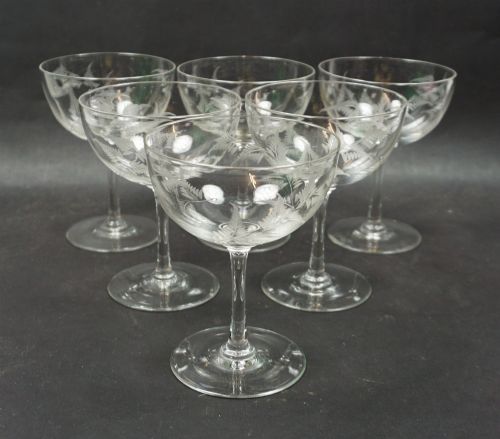
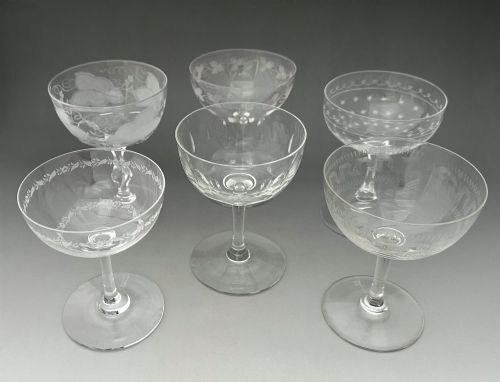
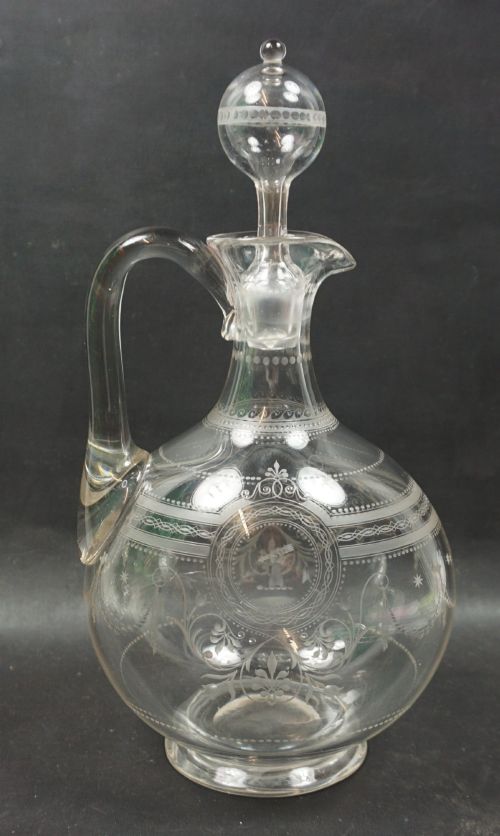
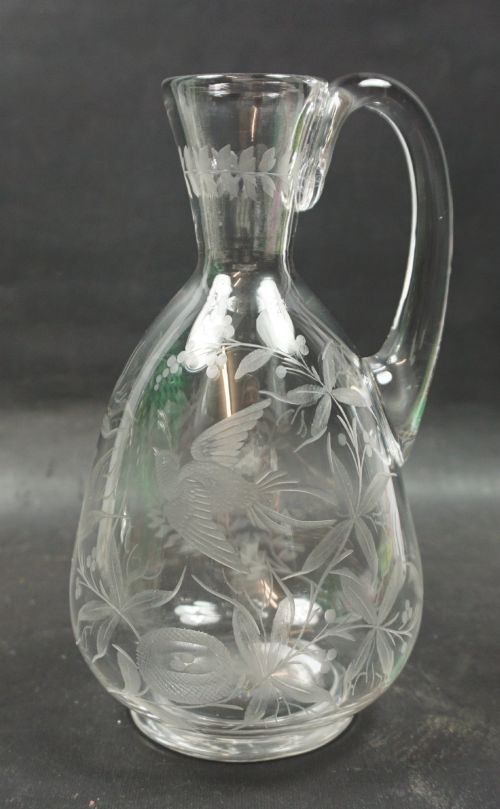
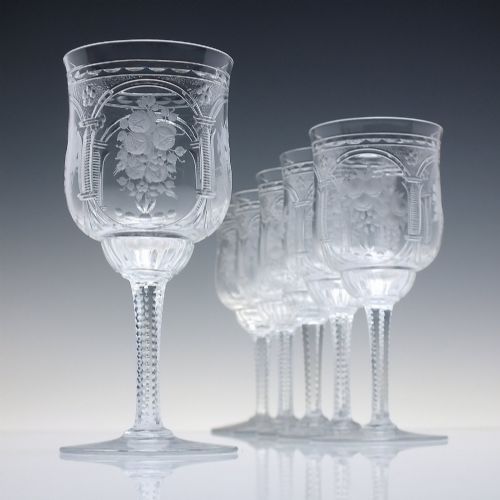
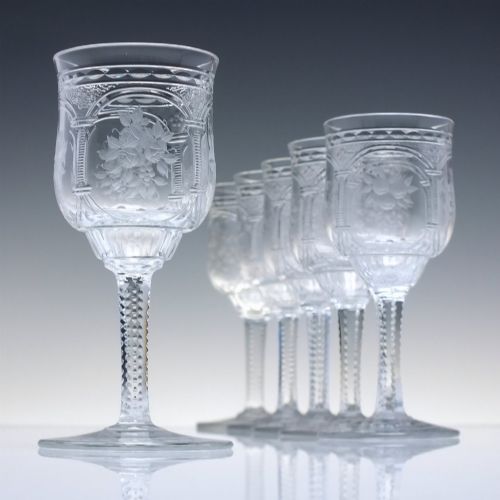
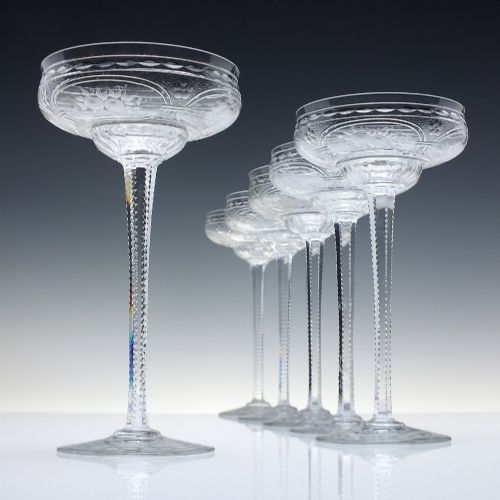
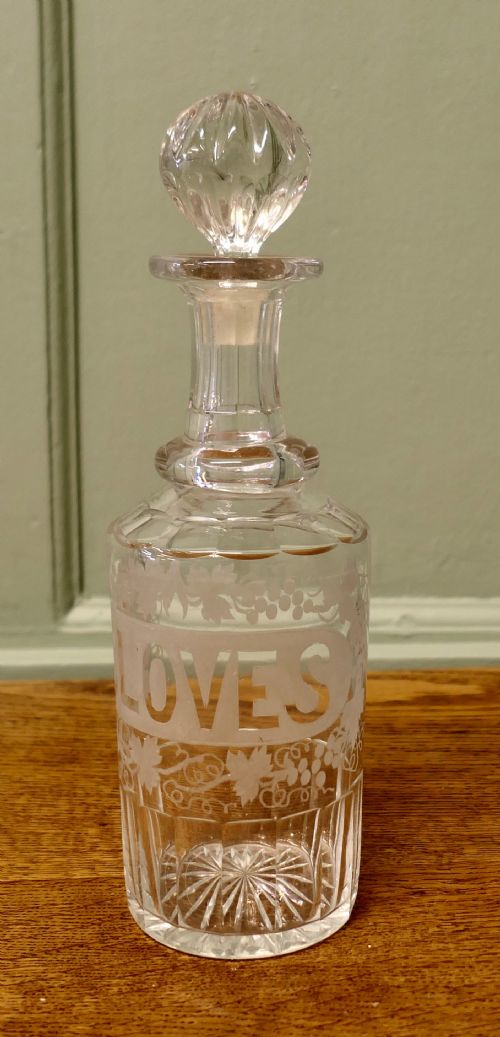
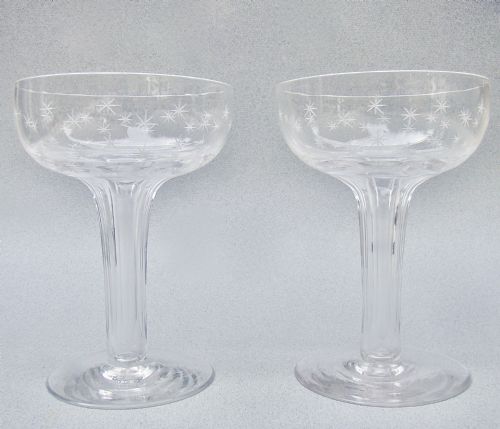
Etched crystal glasses take several distinct forms across the inventory, ranging from tall champagne glasses and white wine sets to dram glasses and cordials. These drinking vessels often arrive in matched sets or harlequin groups, showing the shift in dining customs from the Georgian era through to the 1930s.
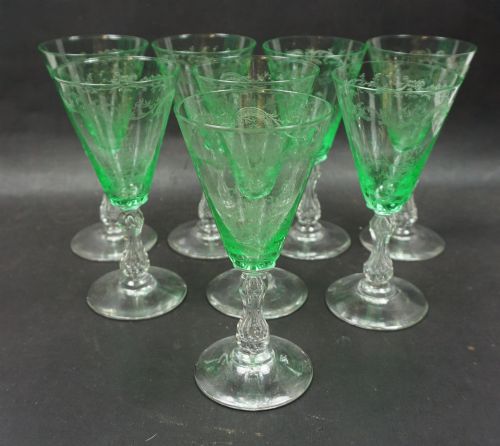
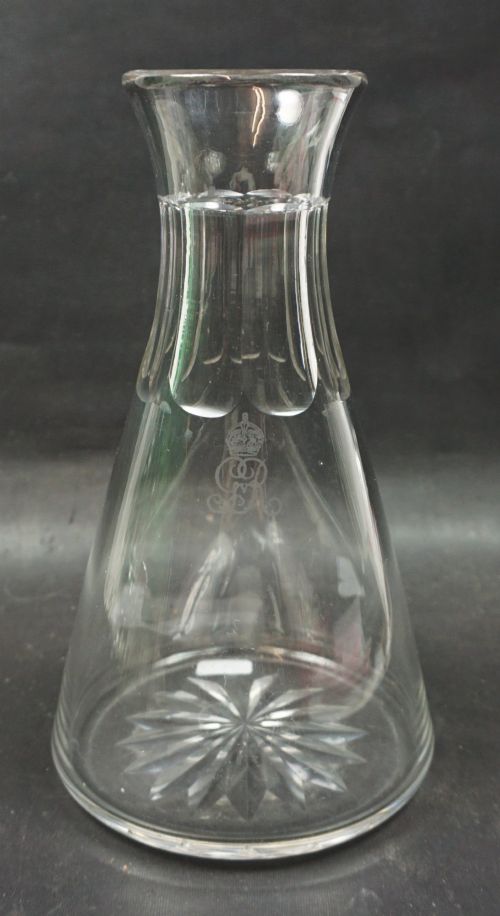
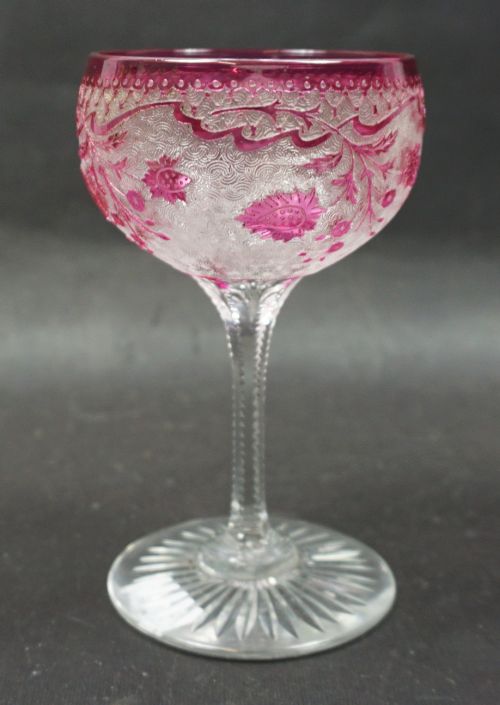
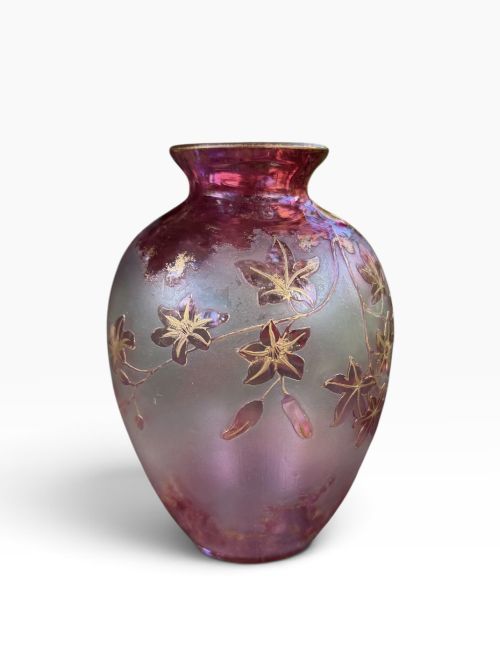
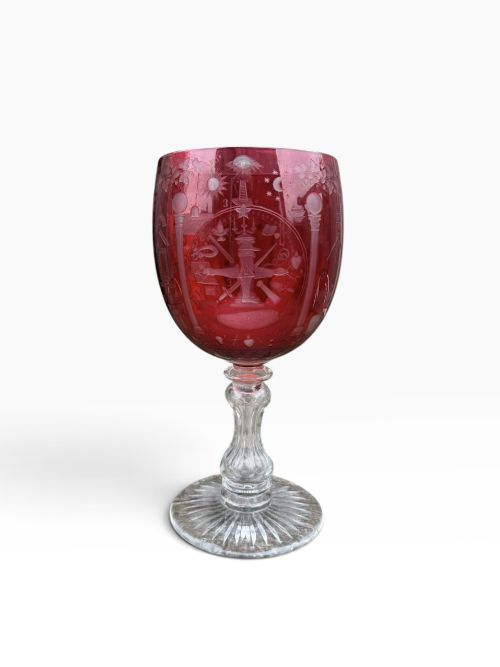
The material vocabulary moves beyond simple clear glass to include lead crystal, frosted surfaces, and coloured glass such as cranberry, cobalt blue, and ruby overlays. Alongside stemware, the selection extends to decanters, finger bowls, rinsers, and larger vessels like claret jugs and vases.
Originating from English, French, and Bohemian workshops, these items capture distinct design movements including Art Nouveau curves, Edwardian refinement, and geometric Art Deco styling. Buyers encounter both utilitarian vessels and highly decorative display pieces designed for formal entertaining.
How they were made
Production relies heavily on clear glass and heavy lead crystal, shaped by blowing or moulding before secondary surface work takes place. Makers combined wheel-cutting, acid etching, and engraving to create deep relief patterns or delicate frosted motifs on the vessel walls.
Specialised techniques such as acid-cutting appeared on cameo glass and vases, while multi-layered colour over crystal hock decanters involved casing clear glass with coloured layers before cutting through to expose the contrast below.
Etched Crystal Glasses Retail Price Guide 2026
Typical asking prices for etched crystal glasses among the pieces listed under this phrase on Sellingantiques today, from the lower quarter to the upper quarter. They describe what is for sale here now, not the wider market.
The listings span from the late 18th century through to the 1930s, featuring lead crystal, coloured glass, and brass mounts.
What varies in quality
Quality rests upon the clarity of the crystal, the precision and depth of the wheel-cut or acid-etched ornament, and the overall balance of the piece in the hand. Crisp lines in geometric Art Deco motifs or fluid botanical stems in Art Nouveau designs separate masterwork production from standard commercial output.
The weight of the glass, the finish of the pontil mark, and the integrity of matched sets heavily influence the standing of an item. Pieces retaining original matching components or emanating from documented French and English ateliers command greater appreciation.
Baccarat·Rene Lalique·Karl Palda·Jean Luce·Stevens and Williams
The Etched Crystal Glasses Glossary
- Lead crystal
- Glass containing metal oxides that increase weight, brilliance, and resonance. This heavier material allows for deeper and sharper cutting without chipping.
- Pontil mark
- The rough scar left on the base of blown glassware where the pontil rod was attached during manufacture. Its presence or polishing indicates the production period and method.
- Hock decanter
- A tall, slender vessel traditionally used for white wine or hock. These often feature coloured overlays cut back to clear glass.
- Finger bowl
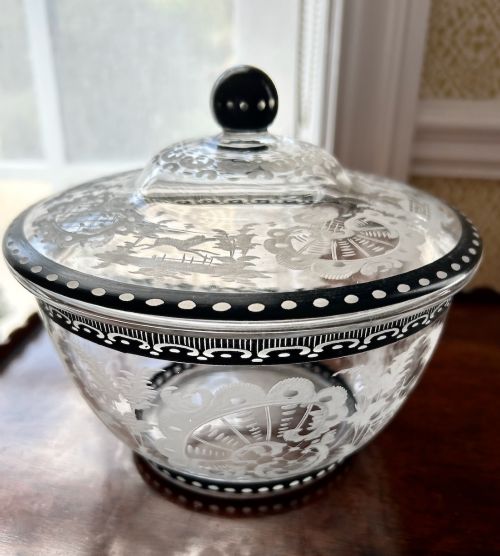
- A small bowl filled with water, placed before diners between courses for rinsing fingers. Victorian examples often combine cut and frosted glass surfaces.
- Rummer
- A large, heavy drinking glass popular in the Georgian and Victorian periods. They typically feature a wide foot base and robust stems for ale, wine, or punch.
Etched Crystal Glasses: Frequently Asked Questions
How do I clean antique crystal?
Wash these delicate items by hand in warm water using mild soap, avoiding sudden temperature changes that can crack old glass. Place a cloth at the bottom of the sink to cushion the heavy bases and stems during washing.
Dry them immediately with a lint-free linen cloth to maintain the clarity of the lead crystal and prevent water spots from settling on the etched or cut patterns.
What is the difference between cut and etched glass?
Cut glass involves grinding deep facets into the material using a rotating wheel, creating sharp geometric edges and heavy refraction. This technique adds considerable weight to pieces like decanters and rummers.
Etched glass uses acid or fine engraving tools to create shallow, precise surface patterns, often resulting in frosted textures or delicate floral motifs without deep physical grooves.
How do I identify Victorian glassware?
Victorian pieces often display robust forms, heavy lead crystal weights, and dense star-etched or cut patterns. Common shapes include rummers, finger bowls, and tall stemware designed for dessert wines.
Look for the manufacturing characteristics of the period, such as polished pontil marks on the base and rich colours like cranberry, cobalt blue, or ruby red.