




Etched Cranberry Glass
Richly hued and decorated, etched cranberry glass brings a warm, ruby glow to period lighting and table settings.
Etched Cranberry Glass
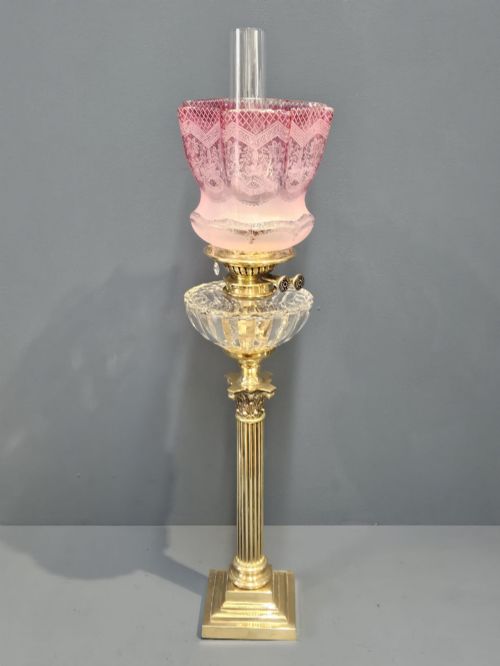
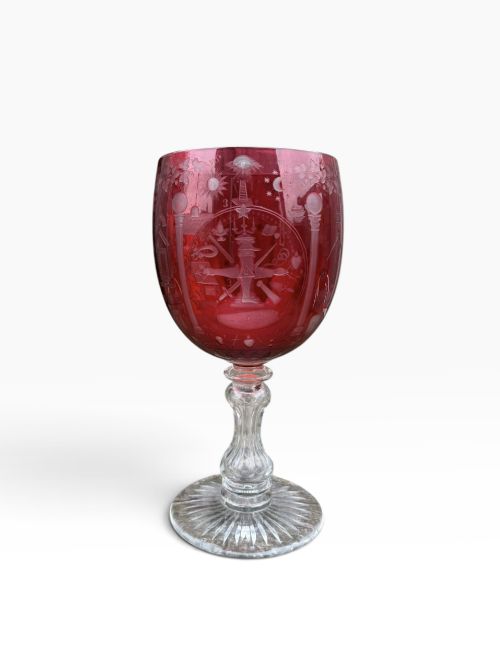
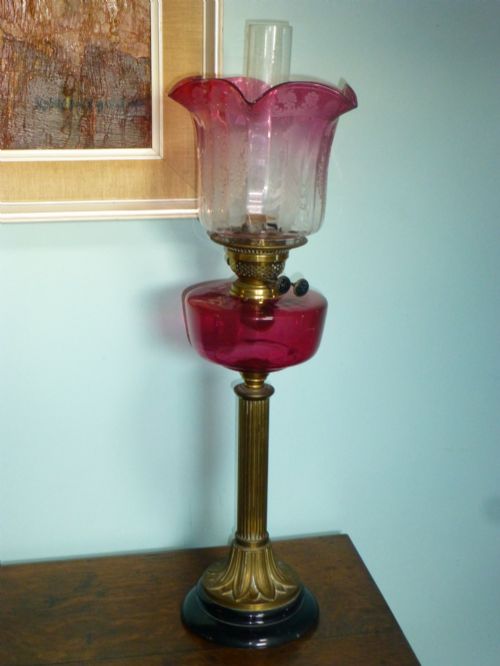
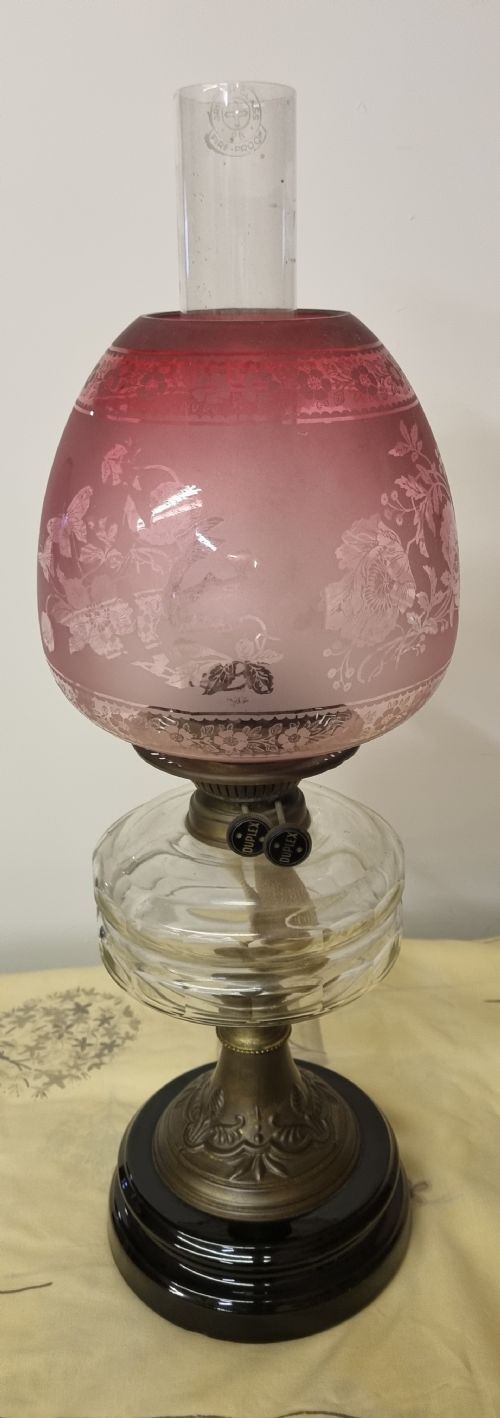
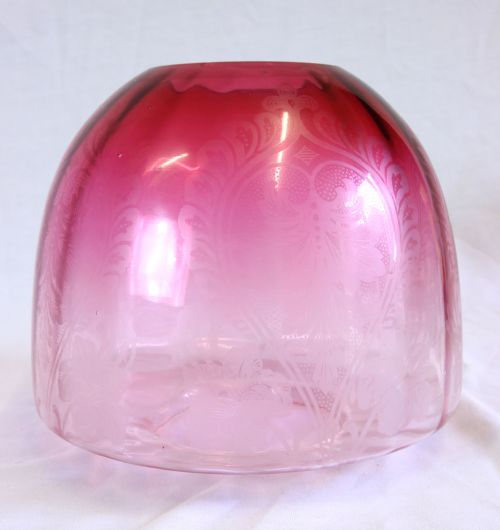
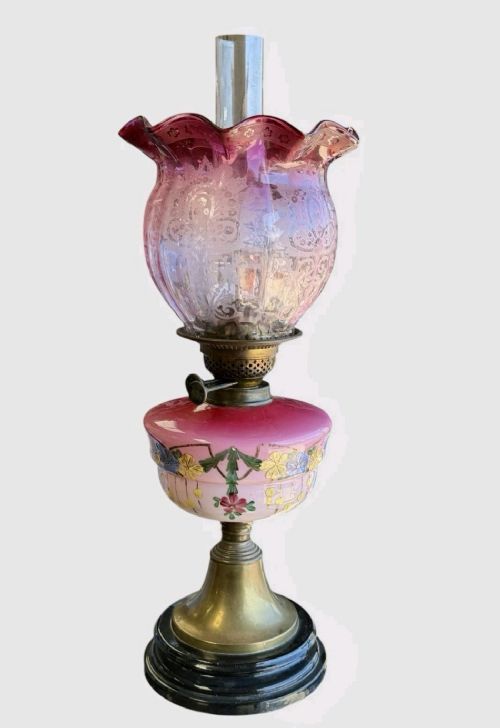
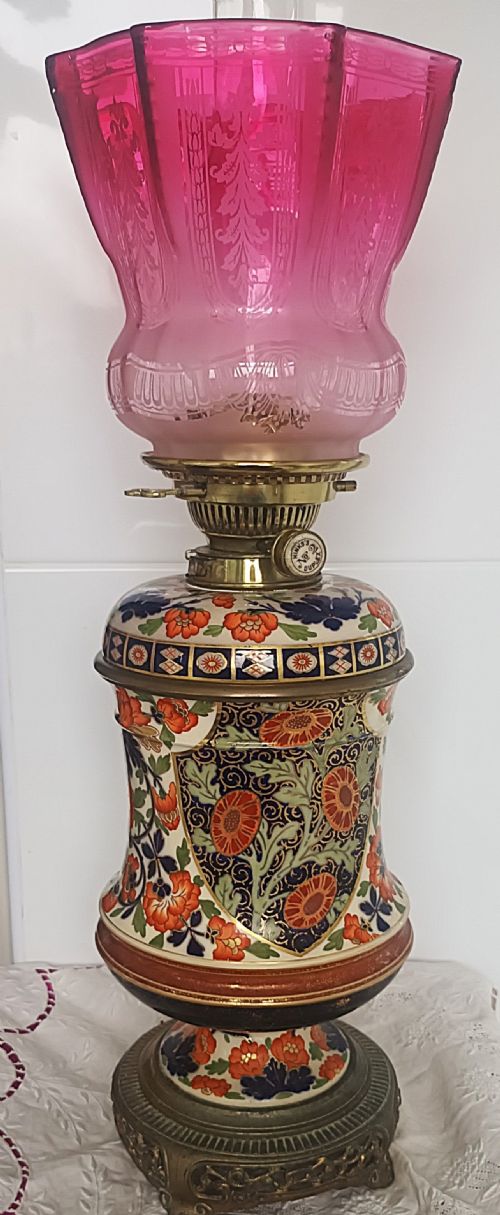
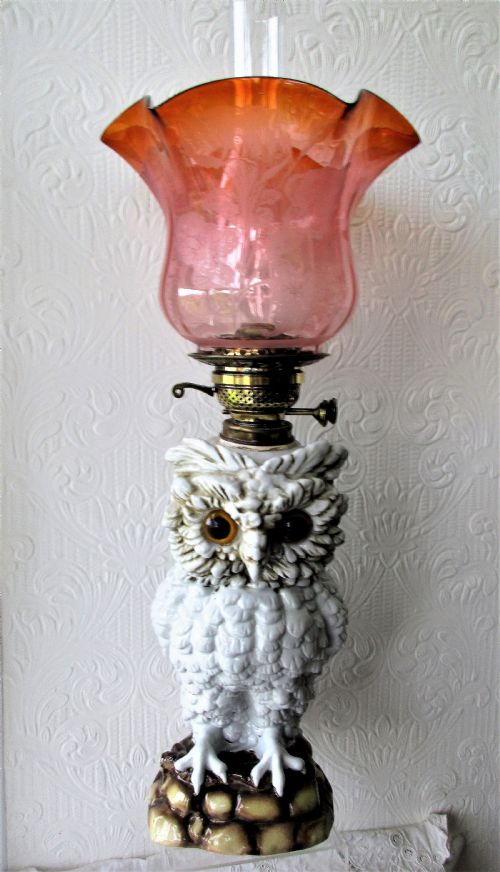
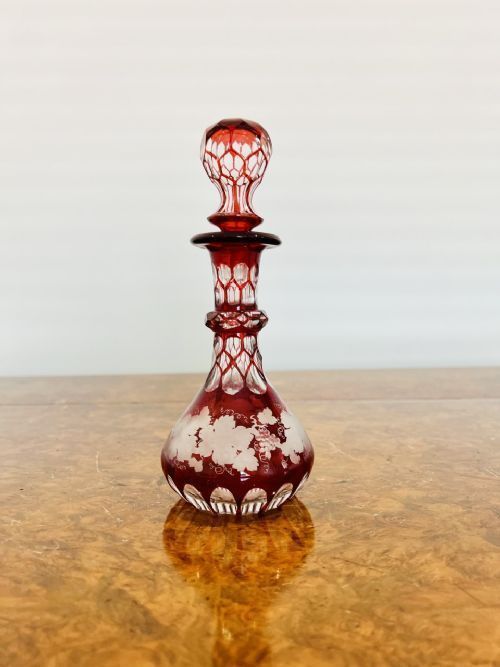
When you search for etched cranberry glass, you encounter deep pink and ruby vessels created primarily during the Victorian and 19th Century periods. These items most frequently appear on this page as oil lamps, decorative shades, decanters, and table glassware.
The selection ranges from tall Corinthian column oil lamps with cranberry shades to engraved tumblers, beakers, and wine decanters. Many surviving examples combine the rich red glass with polished brass fittings or clear glass elements.
Makers and manufacturers utilised this striking glass across various domestic objects, including scent bottles, ceiling lights, and candle holders. The pieces bridge functional Victorian lighting and decorative table ware.
Materials and production techniques
The distinctive colour relies on the addition of gold chloride to the molten glass batch, producing shades from pale pink to deep ruby. Craftsmen often layered this coloured glass over clear crystal or combined it with brass and porcelain components.
Decoration was achieved through wheel engraving, cutting, or acid etching to reveal the clear glass beneath or to create matte surface designs. Common motifs include botanical patterns, fruiting vines, and hunting themes.
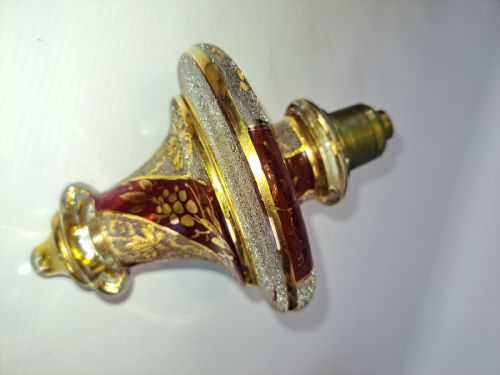
Many items incorporate structural brass mounts, ceramic fonts, or silver plating to support the fragile blown glass bodies.
The documented object types span table lamps, oil lamp shades, decanters, beakers, and intricate ceiling lights.
Assessing quality in cranberry glass
Quality rests in the depth and evenness of the colour saturation across the vessel, alongside the crispness of the wheel engraving or etching. Superior examples display sharply defined motifs without blurring or surface distortion.
The harmony between the glass component and its mount dictates the overall standard of oil lamps and decanters. Well-balanced proportions and original matching burners or stoppers elevate a piece considerably.
Thomas Webb And Sons·Hinks·Taylor Tunnicliff·Sitzendorf
The Etched Cranberry Glass Glossary
- Cranberry glass
- A transparent pinkish-red glass coloured by the addition of gold oxide to the metal batch. It gained immense popularity during the Victorian era for tableware and decorative lighting.
- Etched glass
- Glass decorated by exposing the surface to acid to eat away the unmasked areas, creating a frosted pattern. This technique allowed intricate floral and geometric designs to be applied without deep cutting.
- Oil lamp
- A domestic lighting device that burns liquid fuel via a wick raised through a metal burner. Victorian examples frequently paired brass columns with removable glass fonts and shades.
- Duplex burner
- A double-wick burner mechanism designed to produce a significantly brighter flame in late 19th-century oil lamps. It requires specific matching twin-wick winds to operate correctly.
- Peg lamp
- A small oil lamp featuring a protruding lower stem designed to fit directly into the socket of a candlestick or a dedicated base. They allowed existing candle holders to be converted for oil lighting.
Etched Cranberry Glass: Frequently Asked Questions
How do I date an oil lamp?
Dating relies on examining the burner mechanisms, collar types, and base materials alongside stylistic cues. Victorian examples often feature marked brass burners and heavy cast metal columns.
Changes in patent dates stamped onto the brass winding wheels provide precise chronological markers for assembly.
Were these lamps converted to electricity?
Many surviving oil lamps retain their original burners, fonts, and wick mechanisms rather than undergoing conversion. This preserves their authentic 19th-century mechanical configuration.
Collectors generally prefer examples that keep their original oil lamp hardware intact over electrified adaptations.
How do I clean cranberry glass shades?
Cleaning requires warm water and mild washing liquid applied with a soft cloth to protect the delicate etched surfaces. Harsh abrasives must be avoided entirely to prevent scratching the glass.
Brass mounts should be treated separately with appropriate metal polish while taking care not to stain the glass.
What is the difference between ruby and cranberry glass?
Cranberry glass typically displays a lighter, pinker hue reminiscent of fruit juice, whereas ruby glass offers a deeper, more saturated crimson tone. Both colours were achieved using similar metallic oxide additives during manufacture.
Victorian makers often used the terms interchangeably depending on the intensity of the molten batch.