


Ersari Woven Wall Hanging
An ersari woven wall hanging brings Central Asian tribal heritage into a room through rich wool work and traditional motifs.
Ersari Woven Wall Hanging
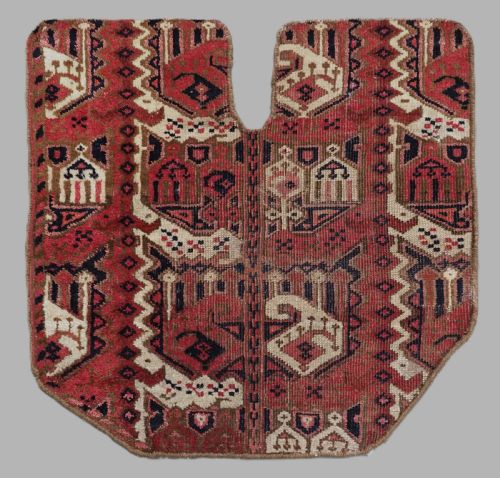
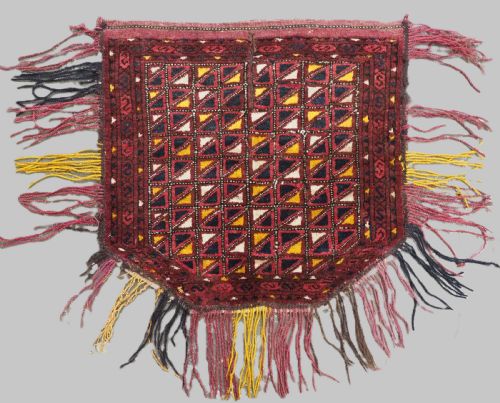
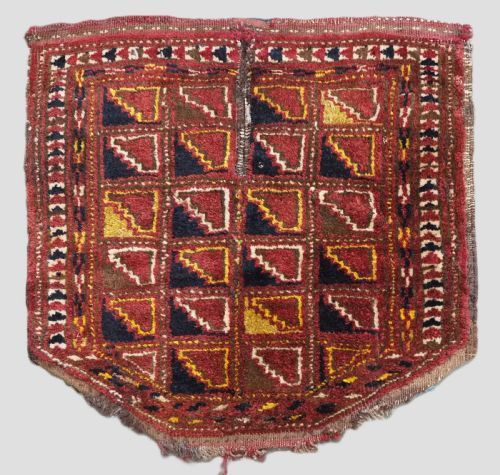
When searching for an ersari woven wall hanging, collectors encounter traditional Turkmen tribal textiles originating from the nineteenth and early twentieth centuries. These pieces typically take the form of utilitarian items such as torbas, saddle covers, chuvals, and door hangings which now function primarily as decorative wall art.
The selections available range widely in design, featuring classical elements like the gul motif, chodor ertum patterns, ikat designs, and curled leaf patterns. Many examples date from the 1870s up to the 1930s, reflecting the enduring craftsmanship of Central Asian weavers across multiple decades.
Materials and construction methods
The pieces listed rely heavily on hand-spun wool combined with natural dyes to create their characteristic palette. Selected items incorporate silk highlights, cotton foundations, or glass beads for added texture.
Weavers utilised flat weave techniques alongside pile knotting to construct storage bags and tent decorations complete with original tassels, backs, and embroidered faces.
Materials recorded across these listings include hand-spun wool, natural dyes, silk highlights, cotton, and glass beads.
Distinctions in quality and execution
Quality rests upon the clarity of the design and the richness of the natural dyes used throughout the wool. Pieces featuring complex patterns like ikat or specific gul layouts require greater skill from the weaver.
The preservation of original tassels, complete backs, and structural integrity elevates certain examples above standard utility items.
The Ersari Woven Wall Hanging Glossary
- Torba
- A small Turkmen wall hanging or storage bag used traditionally inside a yurt. These portable sacks often display intricate primary motifs on the face.
- Chuval
- A large tent storage bag designed for household goods. Collectors prize the multi-gul faces produced by various tribal groups.
- Gul
- A repeating medallion or floral motif central to Turkmen carpet and textile design. Each pattern often identifies a specific tribe or sub-group.
- Ikat
- A dyeing technique where yarn is tied and dyed prior to weaving to create blurred, intricate patterns. This method appears on several nineteenth-century pieces.
- Ensi
- A patterned tribal door hanging placed at the entrance of a yurt. These textiles typically feature a distinct cross design dividing the field.
Ersari Woven Wall Hanging: Frequently Asked Questions
What is an ersari woven wall hanging?
These items are historical Central Asian tribal textiles, originally created as functional storage bags, saddle covers, or door hangings by the Ersari Turkmen.
Today, collectors mount these woven pieces on walls to display their traditional patterns, natural dyes, and historical hand-spun wool construction.
How were these tribal textiles used originally?
Nomadic families utilised these woven pieces inside their tents for storing household belongings, bedding, and personal possessions.
Specific forms like torbas and chuvals served practical organisational roles before transitioning into decorative domestic objects.
How do I date an antique ersari hanging?
Dating relies on examining the materials, natural dye palette, and structural characteristics such as hand-spun wool and original tassels.
Most surviving examples date from the late nineteenth century through to the early decades of the twentieth century.
How do I care for a textile wall hanging?
Protect antique wool and natural dyes by mounting the textile away from direct, harsh sunlight to prevent fading over time.
Gentle vacuuming through a protective mesh screen helps remove dust without damaging the delicate flat weave or pile.