






Ernest Higgins Rigg
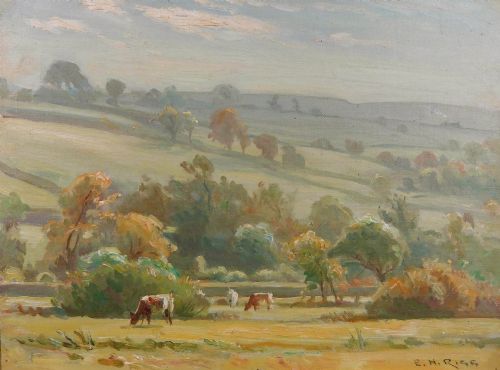
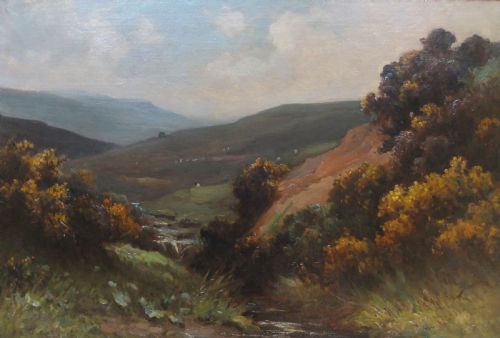
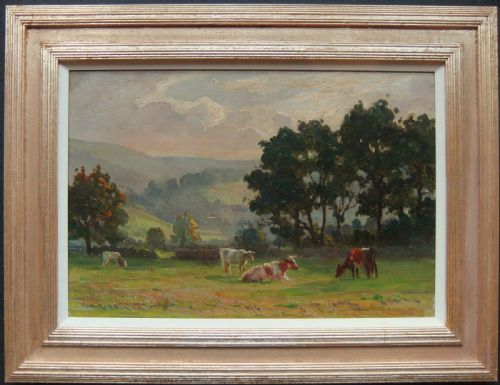
Ernest Higgins Rigg works capture the rustic charm of rural Yorkshire and British Impressionism through oils on canvas, panel, and board.
Ernest Higgins Rigg
When you search for Ernest Higgins Rigg, you enter the world of early twentieth-century British Impressionism, capturing rural landscapes, gardens, and village scenes. The pieces on this page span the decades from 1900 to 1920, reflecting a consistent focus on pastoral life, particularly in Swaledale and Yorkshire.
You are most likely to meet oil paintings depicting moorland streams, stone barns, and agricultural scenes such as ploughing horses and haymaking. Subjects also extend to floral still lifes and gardens, showcasing the varied palette of a Staithes Group artist.
The compositions present quiet country vistas, from Low Row and Gunnerside to Letchworth and Staithes, offering a window into British rural life at the turn of the twentieth century.
Materials and Techniques
The works rely upon oil paint applied to canvas, wood, board, or panel, utilising the textural qualities of these supports to build depth. Brushwork remains characteristic of the period and style, balancing loose impressionistic marks with recognizable topographical detail.
Timber frames typically house these pieces, complementing the earthy tones and natural subjects of the landscapes. The combination of oil on canvas or board allows for rich layering of pigment, particularly evident in depictions of sunlight and winter snow.
Several paintings reveal the stubborn charm of Yorkshire sheep stubbornly grazing through changing moorland weather.
Judging the Work
Quality rests in the handling of light and atmosphere, where stronger examples convey vibrant sunlight or atmospheric moonlight with assured brushwork. The strength of composition also dictates distinction, as works featuring structured elements like stone barns or working horses often hold the eye more firmly than simple expanses of moor.
Condition plays its part, particularly the preservation of the original paint layer on canvas or board without excessive craquelure or restoration. A clear, expressive touch in depicting foliage, skies, and figures separates the more compelling paintings from simpler topographical records.
Ernest Higgins Rigg
The Ernest Higgins Rigg Glossary
- British Impressionism
- A painting style developed in the late nineteenth and early twentieth centuries, focusing on light, everyday subjects, and loose brushwork rather than rigid academic finish.
- Staithes Group
- An association of artists working in the North Yorkshire fishing village and surrounding dales, known for plein-air painting and capturing coastal and rural scenes.
- Oil Paint
- A slow-drying paint made by combining pigments with a drying oil, commonly linseed, allowing artists to blend colours and build rich textures.
- Panel
- A flat piece of wood used as a rigid support for painting, often utilised before canvas became the dominant medium.
Ernest Higgins Rigg: Frequently Asked Questions
Who was Ernest Higgins Rigg?
Ernest Higgins Rigg was an artist associated with the Staithes Group, painting landscapes and rural scenes primarily in Yorkshire during the early twentieth century.
His works document local farmhouses, moorland streams, and agricultural labour with a distinct impressionistic sensibility.
What subjects did he paint?
The subjects focus heavily on Yorkshire landscapes, particularly Swaledale, featuring pastures, stone barns, sheep, and horses at work.
Other subjects include garden scenes, still lifes with roses, and views from travels to places like Letchworth and South Wales.
How should I care for these oil paintings?
Keep the paintings away from direct sunlight and dramatic fluctuations in temperature or humidity to protect the oil paint and canvas or board.
Dust gently with a soft, dry brush and avoid using any liquids or cleaning agents on the painted surface.
How do I date these works?
Dates can often be inferred from recorded exhibition periods, stylistic development, and occasional title documentation spanning from 1900 through the 1920s.
The handling of light and the specific rural Yorkshire locations also provide strong context for placing the creation period.