


Equestrian Country Scene Art
Equestrian country scene art captures the traditional relationship between horses, riders, and rural landscapes across nineteenth-century and early twentieth-century Britain.
Equestrian Country Scene Art
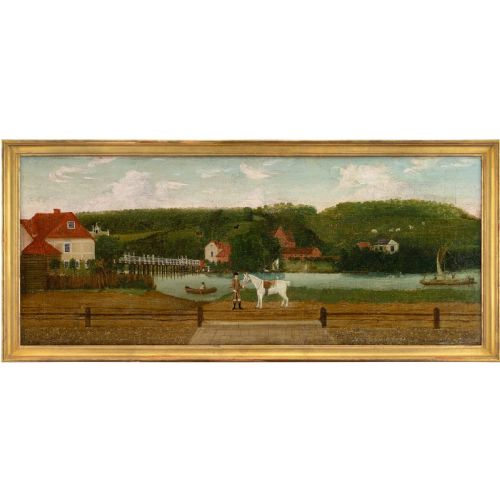
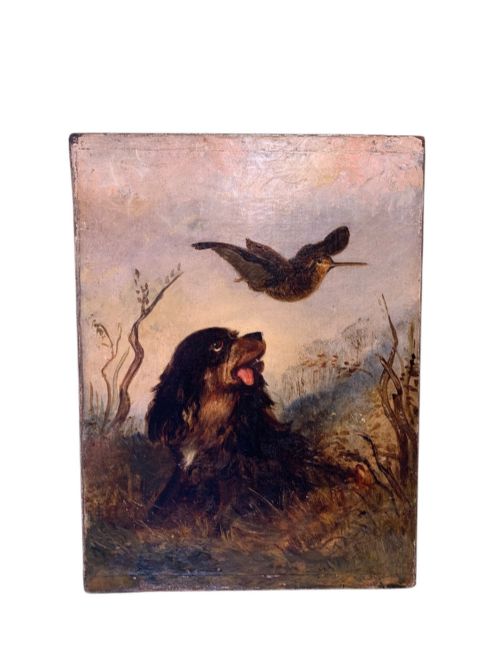
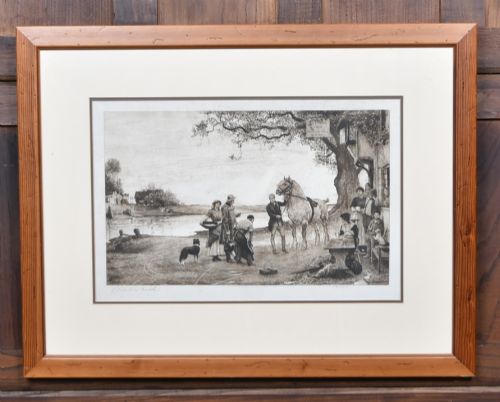
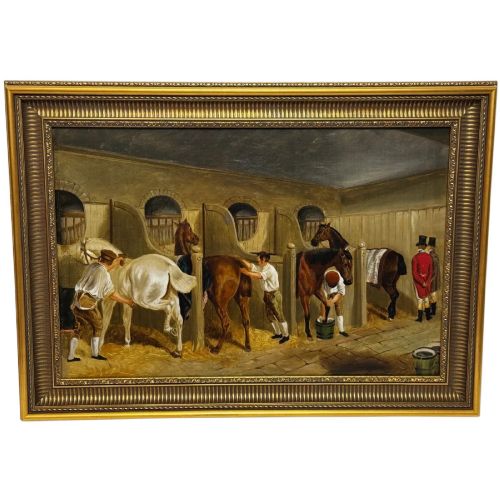
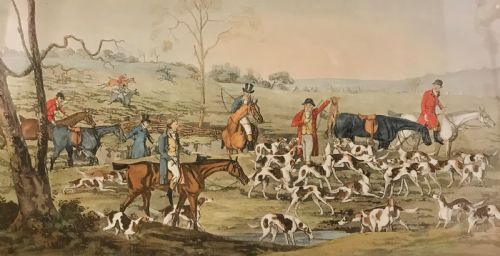
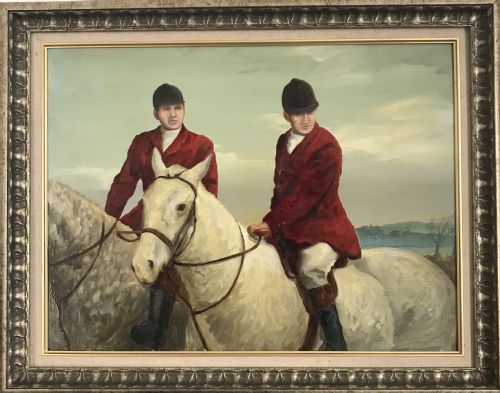
Equestrian country scene art encompasses framed oil paintings, watercolours, etchings, and hand-coloured engravings depicting horses, riders, hunting meets, and rural working life. These works record the visual history of the British countryside through sporting and pastoral subjects.
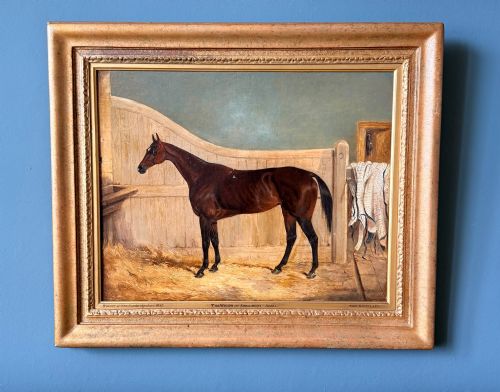
You will most commonly encounter nineteenth-century oil paintings on canvas alongside Victorian sporting prints and Edwardian watercolours. These pieces frequently feature hunters, coaching scenes, and farmyard environments executed by named artists and regional schools.
How they were made
Artists built these compositions utilising oil paint on canvas or board, watercolour pigments on paper, and printed graphic techniques including lithography and etching. Many period frames incorporate carved giltwood or gesso surrounds.
Painters applied pigment in layered glazes to capture the muscular form of horses and the atmospheric light of rural estates, while printmakers utilised copper plates and hand-colouring to produce multiple impressions of popular sporting subjects.
Several canvases manage to include disapproving farmyard ducks observing horses with considerable judgment.
What varies in quality
Quality rests upon the artist's anatomical accuracy in rendering equine form and movement, coupled with the vitality of the surrounding rural landscape. Master practitioners command superior brushwork that brings depth and texture to both horses and background foliage.
Condition and originality also determine the standing of a piece, separating works with untouched period surfaces and original gilt frames from those that have undergone extensive restoration or pigment loss.
Robert W. Macbeth·Thomas Walker Bretland·Herman S Melville·John Arthur Lomax·John Frederick Herring Jnr·Philip Henry Rideout·George E Sharpe·Michael Lyne·John Frederick Herring·Arthur Longley Vernon·Helena Maguire·Samuel Spode·Charles Faulkner·John Atkinson·Alfred Moginie Bryant·Samuel Henry Alken·John Charles Tunnard·John Sanderson Wells·Henri Schouten·John Charles Maggs·Heywood Hardy
The Equestrian Country Scene Art Glossary
- Sporting art
- Depictions of rural pastimes including fox hunting, horse racing, and shooting. This genre flourished in Britain throughout the eighteenth and nineteenth centuries.
- Oil on canvas
- Pigment suspended in a drying oil medium applied to a stretched woven fabric support. It allows for rich colour blending and textured impasto application.
- Giltwood
- Timber carved and surfaced with a very thin layer of gold leaf or metallic powder. It provides a reflective decorative border for traditional paintings.
- Etching
- A printmaking process where lines are bitten into a metal plate with acid before ink is applied and transferred to paper. It produces fine, detailed linear marks.
- Watercolour
- A painting method where coloured pigments are suspended in a water-soluble vehicle on paper. It creates luminous, translucent washes of colour.
Equestrian Country Scene Art: Frequently Asked Questions
What subjects appear in equestrian country scene art?
These works feature horses in various rural settings, including fox hunting meets, coaching journeys, farmyard scenes, and stable portraits. Artists also recorded rural workers, blacksmiths, and estate landscapes alongside the animals.
Such compositions reflect the central role of the horse in nineteenth-century transport, agriculture, and leisure across the British countryside.
How do I identify the period of a painting?
Dating relies upon stylistic markers, clothing fashions of the figures, framing techniques, and signatures or biographical dates of the artists. Nineteenth-century works often exhibit detailed realism and specific regional topography.
Examining the canvas backing, stretcher bars, and framing materials provides additional physical evidence of the object's age and history.
What is the difference between an oil painting and a print?
An oil painting is a unique, hand-painted artwork created directly on canvas or panel using brushwork and layered pigments. Prints such as lithographs, engravings, and etchings are mechanically or manually produced multiple impressions.
Prints often bear publisher details and publication dates in the margin, whereas oil paintings show physical texture and brush strokes under close inspection.
How should I display these artworks at home?
These pieces suit traditional interior settings, libraries, and studies where period furnishings complement their pastoral subjects. They require placement away from direct sunlight and excessive moisture to protect the canvas, paper, and gilt frames.
Ensuring stable room temperatures prevents warping in the wooden stretchers and protects watercolours from fading over time.