


Equestrian Boot Remover
An equestrian boot remover is a sturdy household implement designed to strip off tight riding footwear with minimal fuss.
Equestrian Boot Remover
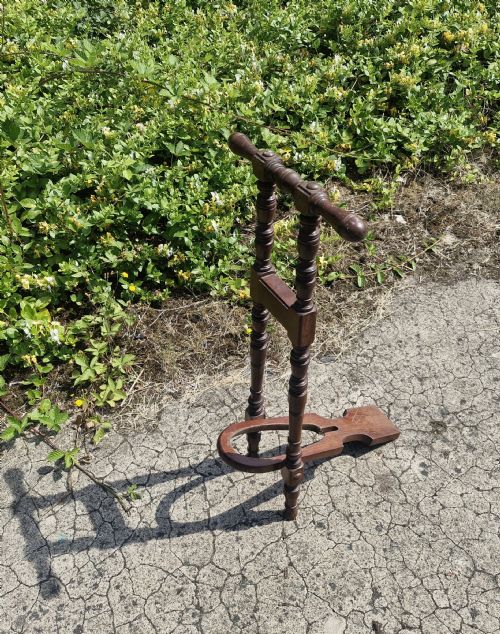
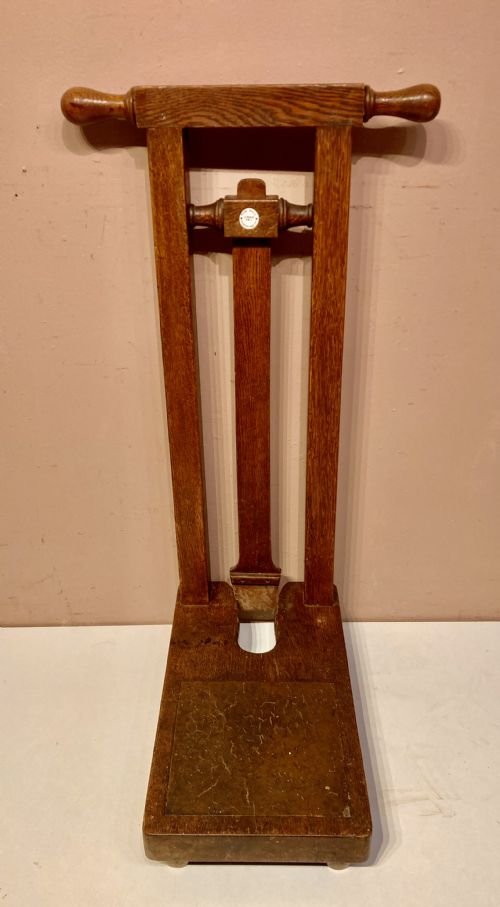
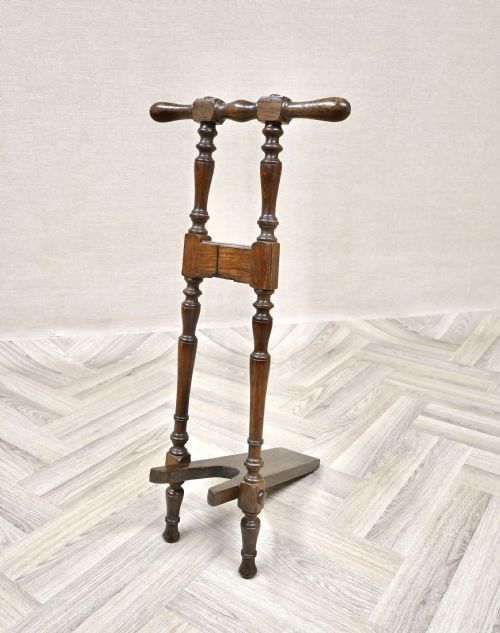
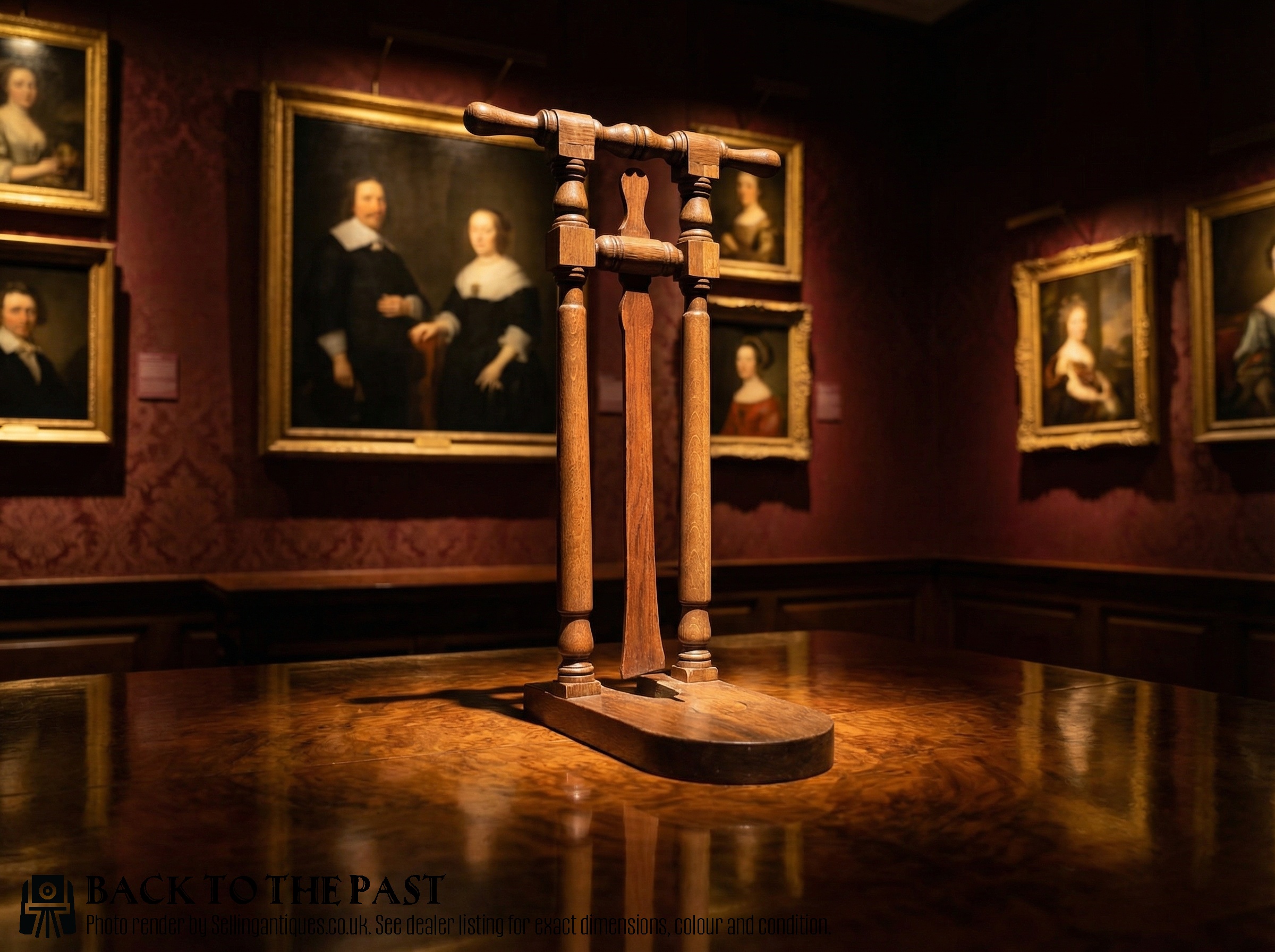
An equestrian boot remover serves as a practical device found traditionally in country houses, boot rooms, and entrance halls to ease off muddy riding footwear. When searching for an equestrian boot remover, a buyer encounters pieces primarily dating from the Georgian, Victorian, and Edwardian periods, reflecting the height of domestic equestrian life. Most examples on this page take the form of boot jacks, constructed to steady the heel while the wearer pulls the foot free.
The objects stem largely from English country house and military campaign traditions, where robust footwear required reliable removal aids. Examples range from simple fixed wooden frames to folding travel versions equipped with shoe pulls and tools. These items combine utility with traditional craftsmanship, often displaying the patination of long service in a hallway or tack room.
How they were made
Makers utilised dense hardwoods such as oak, mahogany, and walnut, selecting materials capable of withstanding daily leverage and pressure. Many pieces incorporate brass mounts, hinges, and folding hooks, adding structural strength and functional detail to the wooden body. Stained timber and leather elements also appear, reflecting the functional requirements of military campaign equipment and domestic utility.
Joinery methods vary from fixed household construction to hinged folding mechanisms designed for portability during travel or military service. The finish relies on polishing the natural grain of the wood, resulting in durable surfaces that age well with handling.
Equestrian Boot Remover Retail Price Guide 2026
Typical asking prices for equestrian boot remover among the pieces listed under this phrase on Sellingantiques today, from the lower quarter to the upper quarter. They describe what is for sale here now, not the wider market.
Some folding models include hidden hooks, proving that nineteenth-century officers still struggled with stubborn laces after a long ride.
What varies in quality
Quality rests upon the selection of timber and the precision of the brass hardware integrated into the piece. Solid construction in woods like oak or mahogany demonstrates superior endurance compared to simpler utility alternatives.
The presence of folding mechanisms, integrated shoe pulls, or dedicated campaign tools elevates the sophistication of the design. Finer examples retain intact original brass mounts and exhibit clean lines associated with country house and military commissioning.
The Equestrian Boot Remover Glossary
- Boot jack
- A device designed to hold the heel of a boot while the wearer steps out of it. This simple V-shaped notch forms the primary mechanism of most removers.
- Campaign furniture
- Portable furnishings designed for military officers on active service. These pieces frequently feature folding elements and robust brass reinforcements.
- Country house style
- An aesthetic reflecting the furnishings of large English estates. Pieces in this tradition prioritise utilitarian strength combined with classic domestic timber use.
- Shoe pull
- A folding hook or tool incorporated into travel boot removers. This feature assists in lacing or pulling on tight footwear before removal.
Equestrian Boot Remover: Frequently Asked Questions
What is an equestrian boot remover?
An equestrian boot remover is a mechanical device, usually shaped as a notched board, designed to strip off tight riding boots without bending down. These items served a practical daily purpose in hallways and boot rooms.
Most examples operate by holding the heel of the boot securely in a V-shaped aperture while the wearer steps backward out of the leather. They range from fixed domestic floor fixtures to portable folding pieces.
Where were these pieces used?
These implements belonged primarily in the boot rooms, entrance halls, and hallways of country houses. They provided a designated spot to remove muddy outdoor footwear before entering the main residence.
Campaign versions also accompanied officers in the field during military service. Their folding designs allowed easy packing into travel chests.
How do I date a boot remover?
Dating relies on identifying the timber species, the style of the brass hardware, and the construction methods. Georgian and Victorian examples often display heavier hardwood bodies and traditional joinery.
Later pieces from the Edwardian era or early twentieth century may incorporate more complex folding mechanisms and specific campaign tools. The presence of specific historical styles in the woodwork helps narrow the period of origin.
Are these items durable for daily use?
Most of these pieces were constructed from dense hardwoods like oak, mahogany, and walnut to withstand heavy daily leverage. Their original purpose demanded robust structural integrity.
While many survive in functional condition, collectors often balance active use against the preservation of antique patination and brass mounts.