
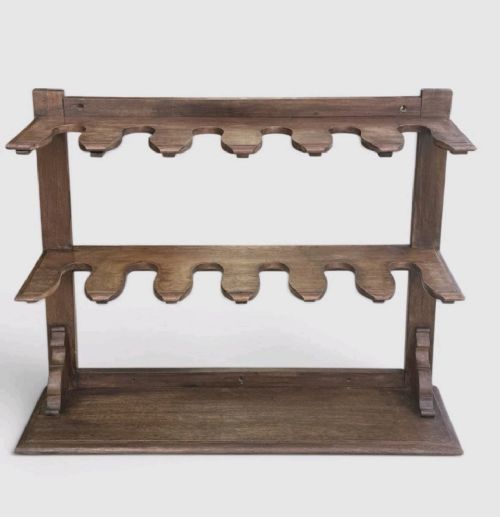
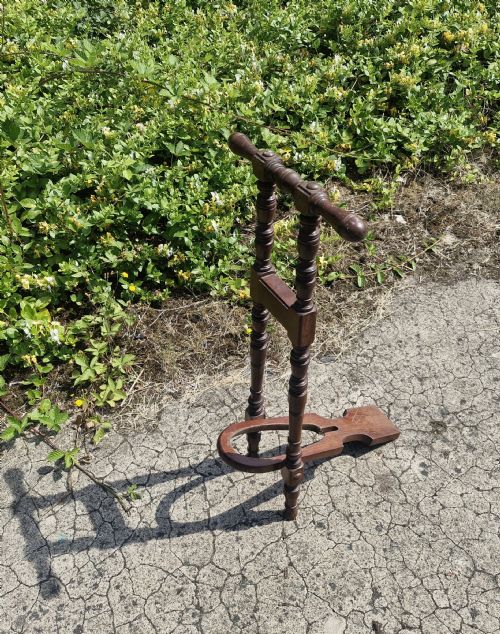
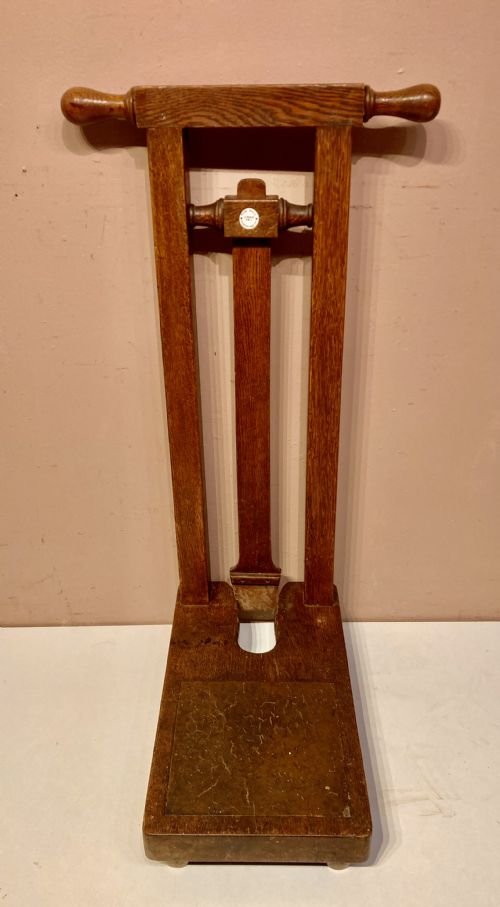
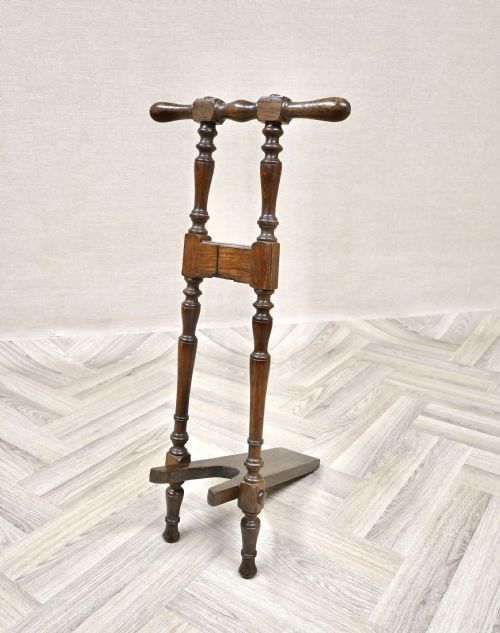


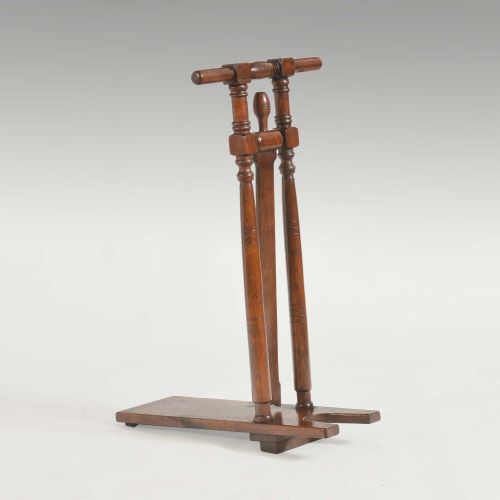
Standing Wooden Boot Jack
These standing wooden boot jack pieces are robust hallway essentials designed to pull off footwear without bending, combining practical utility with period character.
Standing Wooden Boot Jack
When you search for a standing wooden boot jack, you encounter utilitarian hallway accessories originating from the Georgian and Victorian eras. These items serve the straightforward purpose of removing boots cleanly and efficiently upon entering a country house or townhouse.
The versions most commonly met on this page span the 19th century and the Edwardian period, often reflecting English country house aesthetics. They range from simple folding shoe pulls to substantial hall furniture combining boot racks and shoe stands.
Forms include straightforward upright timber jacks and more complex pieces incorporating brass mounts, leather details, and integrated shoe storage. Oak, mahogany, and walnut appear frequently across these listings, providing sturdy support for daily use.
How they were made
Construction methods focus on mechanical stability, frequently incorporating brass hinges for folding elements and secure joints to endure daily stress. Polished finishes and brass mounting add refinement to the utilitarian timber frames.
Tom Hill left his name on an oak boot jack, ensuring his legacy involves hauling off muddy footwear for over a century.
What varies in quality
The distinction between standard examples and superior pieces rests on the choice of timber and the sophistication of the hardware. Solid walnut and figured mahogany with substantial brass mounts represent the more accomplished end of the spectrum.
Complexity of function also dictates quality, separating simple floor-standing foot-plates from multi-functional hall stands that integrate shoe racks and folding mechanisms. The presence of named makers or distinct country house provenance elevates an ordinary utilitarian object into notable hall furniture.
Tom Hill
The Standing Wooden Boot Jack Glossary
- Boot jack
- A device designed to hold the heel of a boot while the wearer steps out of the footwear. This piece avoids the need to bend down in a hallway.
- Shoe pull
- A folding mechanism or integrated handle found on certain variants to assist with footwear removal. It adds versatility to traditional standing designs.
- Brass mounted
- Featuring decorative or reinforcing fittings made of brass. This material provides both structural durability and visual contrast against dark woods.
- Country house
- A style descriptor associated with large English estates where practical, hard-wearing furnishings were standard. These items prioritise robust construction and utility.
Standing Wooden Boot Jack: Frequently Asked Questions
What is a standing wooden boot jack?
A standing wooden boot jack is a hallway accessory designed to help remove boots without bending down. It uses leverage against a V-shaped notch or grip.
These pieces typically date from the 19th century and early 20th century, serving as both practical tools and functional hall furniture.
How were they used in period homes?
Occupants placed them in entrance halls, boot rooms, and porches to manage muddy or tight footwear immediately upon entering the house. They allowed individuals to step out of boots cleanly.
Multi-functional variants also provided storage for shoes and boots, keeping hallways tidy and organised.
How do I date a piece?
Dating relies on timber choice, construction techniques, and stylistic markers such as brass mounts or folding mechanisms. Victorian and Georgian pieces often display characteristic joinery and patination.
Design influences range from plain utilitarian country styles to more refined Regency and Edwardian cabinet-making.