
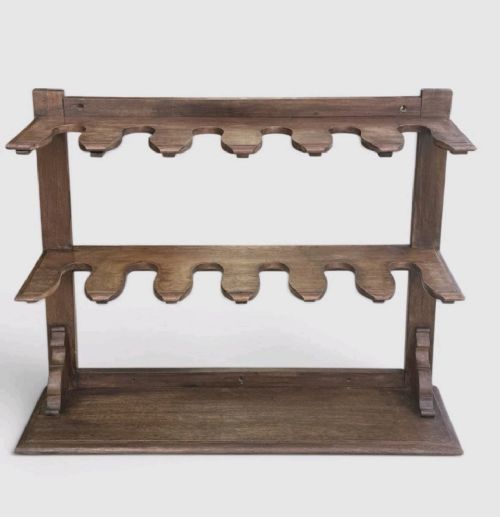
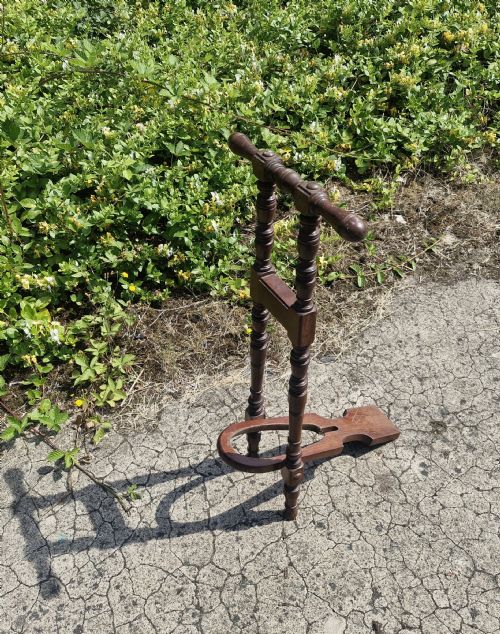
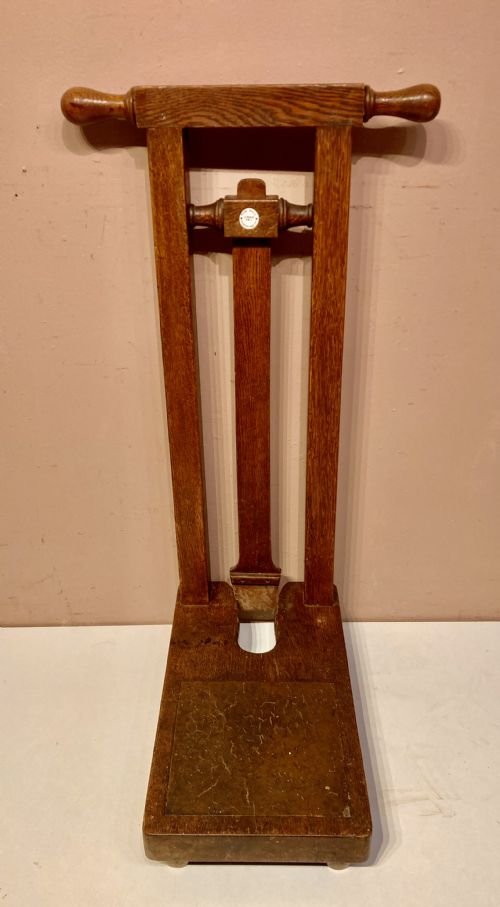
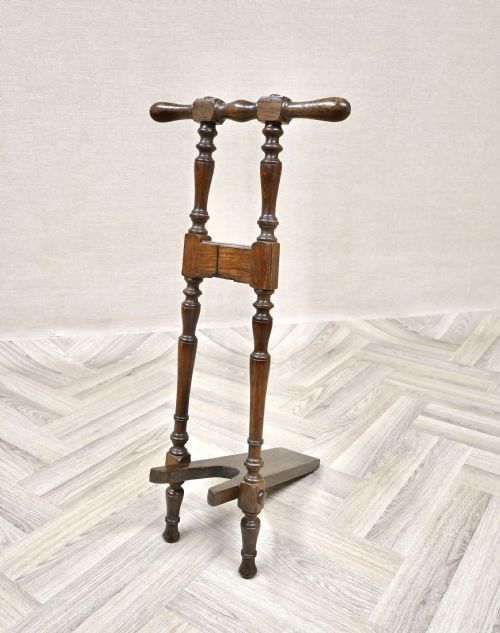


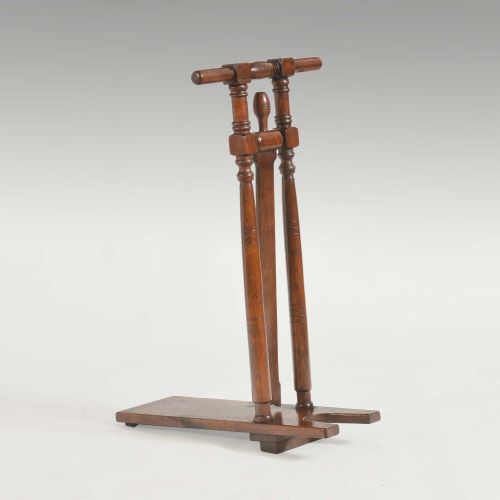
Antique Boot Jack
These antique boot jack pieces are robust hallway essentials designed to slip off muddy footwear with ease.
Antique Boot Jack
An antique boot jack is a practical domestic device designed to hold the heel of a boot whilst the wearer steps out of the footwear. These pieces range from simple domestic wooden boards to elaborate folding examples intended for travel.
The versions most commonly met on this page belong to the Victorian and Georgian periods, often associated with country houses and military campaign use. Examples appear in various timber forms alongside brass and iron adaptations.
Makers produced both stationary hall pieces and portable folding items incorporating tools like hook pulls. The selection includes oak, mahogany, and walnut iterations suited for hallway and boot room placement.
Materials and construction
Cabinet makers utilised dense hardwoods such as oak, mahogany, and walnut to withstand the physical pressure applied during use. Many pieces incorporate brass mountings, iron hinges, and leather elements to facilitate folding mechanisms.
Country house workshops fashioned these items from solid timber, sometimes combining oak and ash for increased durability. Folding military campaign versions required precise joinery to integrate folding shoe pulls and hooks safely into the frame.
Antique Boot Jack Retail Price Guide 2026
Typical asking prices for boot jack among the pieces listed under this phrase on Sellingantiques today, from the lower quarter to the upper quarter. They describe what is for sale here now, not the wider market.
Some folding military variants included hidden hooks for pulling tight laces, ensuring an officer could tackle muddy gear anywhere.
Distinguishing quality across examples
Quality rests on the integrity of the timber selection and the complexity of any folding mechanism. Simpler country house boards rely on solid wood thickness, whereas campaign pieces depend on the precision of brass fittings and integrated tools.
Finishing touches such as polished surfaces, brass mountings, and the inclusion of original folding hooks elevate an example from a basic utility item to a refined piece of hallway equipment.
Tom Hill
The Antique Boot Jack Glossary
- Boot jack
- A V-shaped device or notched board used for pulling off boots without bending down. It acts as a stationary lever against the heel.
- Campaign
- Portable furniture and equipment built for military officers on active service. These items typically feature folding parts and robust construction.
- Treen
- Small handmade wooden domestic objects. Collectors prize these items for their tactile surfaces and traditional craftsmanship.
- George IV
- The period of British history spanning the early nineteenth century. Furniture from this era often displays classic proportions and quality timber.
Antique Boot Jack: Frequently Asked Questions
How do you use a boot jack?
You place the heel of your boot into the V-shaped notch whilst standing with one foot on the base. Pull your foot upward to slip out of the footwear effortlessly.
This method prevents damage to the heel counter and keeps your hands clean from muddy mudguards.
Where were these placed in a home?
These items traditionally resided in entrance halls, boot rooms, and hallways of country houses. They offered immediate utility upon coming in from outdoor pursuits.
Today they serve a similar practical function near doorways while adding traditional character to an interior.
What is a campaign boot jack?
A campaign boot jack is a portable folding version designed for travel and military use. They often incorporate folding hooks or shoe pulls within a compact wooden body.
Officers carried these items on deployment to manage heavy leather riding boots away from home.
How do you date an antique boot jack?
Dating relies on timber choice, construction methods, and stylistic cues from periods like the Georgian and Victorian eras. Mahogany and walnut often point towards specific centuries of British cabinet making.
Hardware such as brass hinges and folding mechanisms also help establish the approximate production era.