


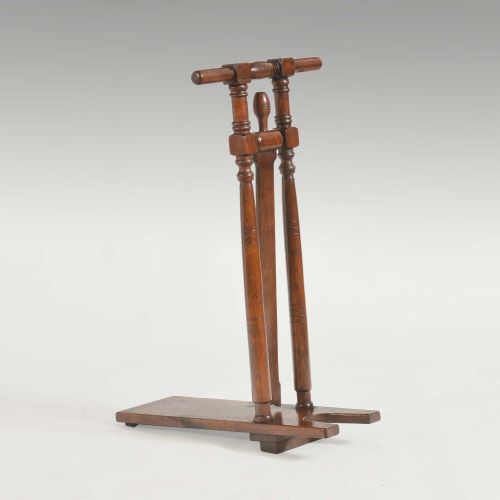
Standing Boot Jack
A standing boot jack takes the awkwardness out of removing tall footwear after a damp walk.
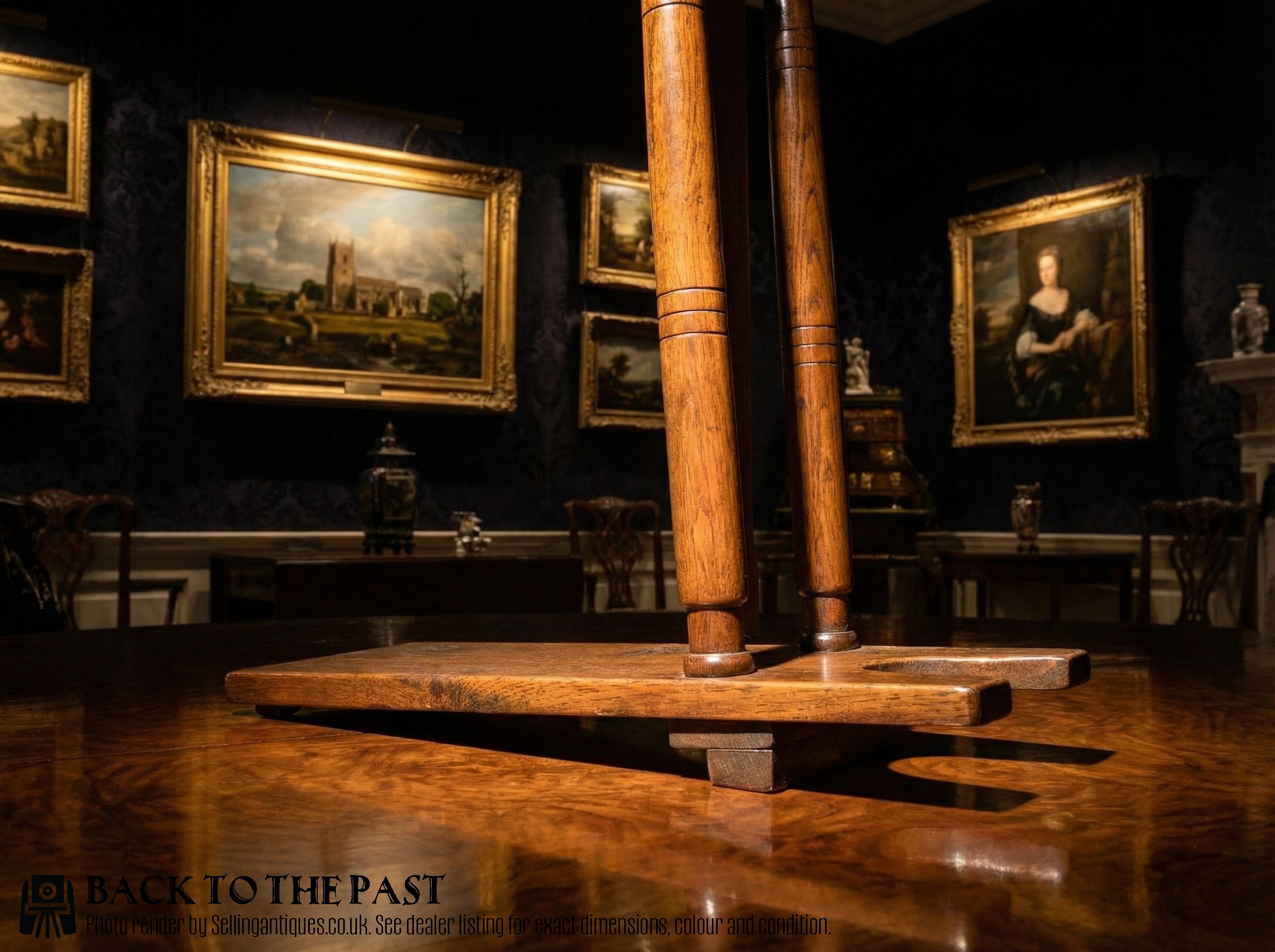
Standing Boot Jack
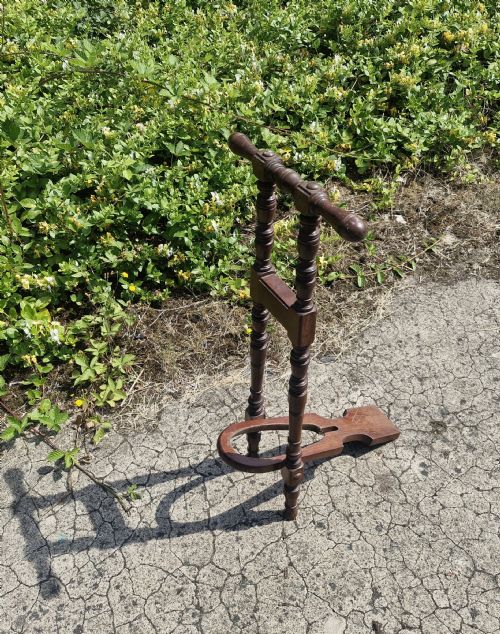
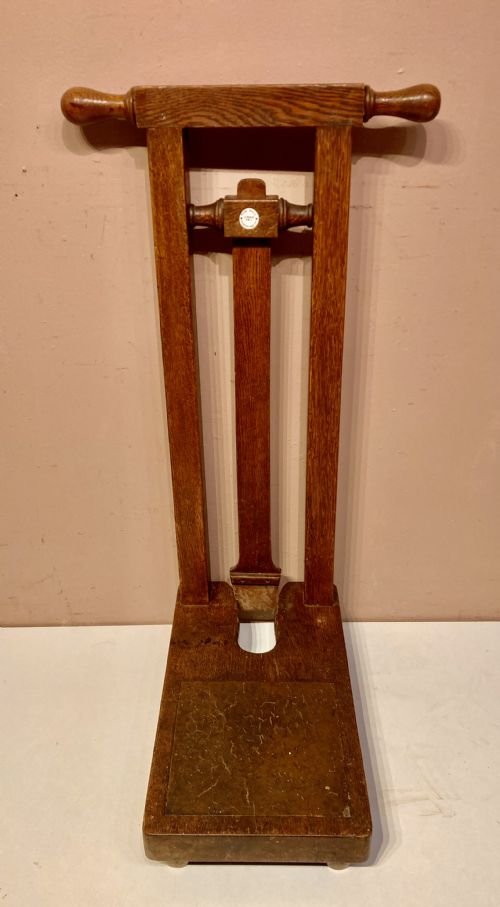
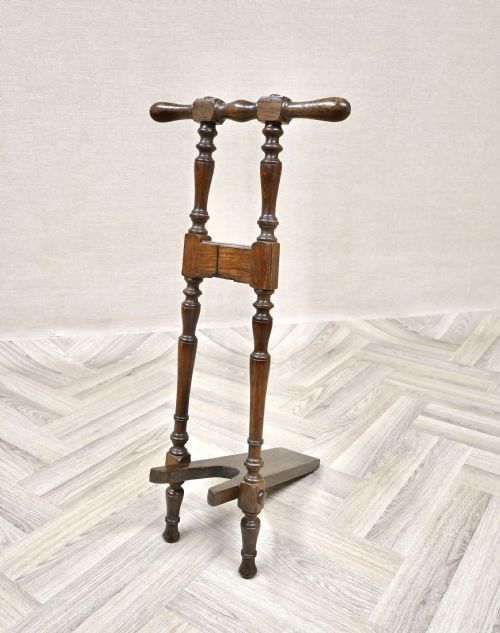
A standing boot jack is a practical piece of entrance hall equipment designed to hold a boot firmly by the heel while the wearer steps out. The pieces listed under standing boot jack encompass sturdy oak, mahogany, and walnut examples intended for hallway and boot room use.
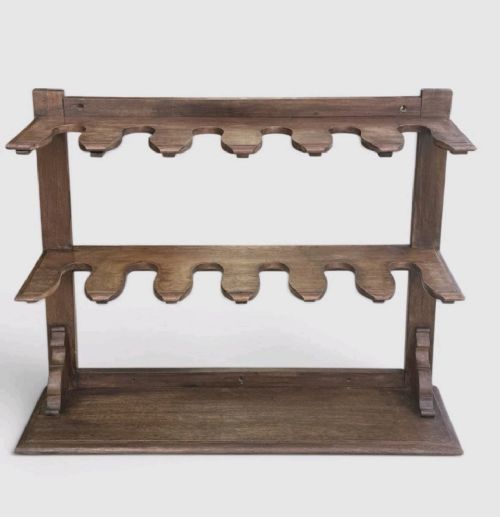
Most entries belong to the Victorian period or the wider nineteenth century, often reflecting English country house utility. They take the form of upright stands and dedicated boot racks that keep footwear organised and accessible near the door.
Variations range from plain ash and stained timber frames to brass-mounted mahogany designs and folding shoe pulls. Buyers searching for a standing boot jack will frequently encounter these robust wooden furnishings built for daily household service.
How they were made
Cabinet makers utilised dense hardwoods such as oak, mahogany, and walnut to withstand the repeated leverage and weight applied during use. These timbers were selected for strength and stability, ensuring the frames remained rigid on stone or wooden hallway floors.
Metal and leather components often reinforce the wooden structure, notably with brass mountings and fitted pulls that add durability to high-stress areas. Selected pieces combine oak and ash to balance structural heft with practical utility.
Materials paired with the timber include brass mounts and leather details.
What varies in quality
The distinction between standard utility items and finer examples lies in the choice of timber and the sophistication of the joinery. Mahogany and walnut models with brass mounts and folding mechanisms reflect more considered workshop attention than basic stained timber frames.
Proportion and stability determine the success of a standing boot jack, as heavier hardwoods prevent tipping when considerable force is applied. Finer country house iterations display disciplined construction designed to endure decades of heavy household traffic.
Tom Hill
The Standing Boot Jack Glossary
- Boot rack
- A hallway furnishing configured to hold multiple pairs of footwear upright or inverted. These structures keep boots tidy in entrance areas.
- Folding shoe pull
- A hinged mechanism incorporated into boot accessories to assist with footwear removal. This addition allows the apparatus to tuck away when not in use.
- Brass mounted
- Fitted with brass brackets, hinges, or wear plates. This metalwork strengthens structural joints and adds decorative contrast to the timber.
Standing Boot Jack: Frequently Asked Questions
Where should a standing boot jack be placed?
These pieces belong in an entrance hall, porch, or boot room where muddy footwear is removed after outdoor pursuits.
Positioning the stand near the main exterior door ensures practical access upon returning to the house.
How do you use a standing boot jack?
Place the heel of the boot into the V-shaped opening while standing upright or steadying against a wall. Step down gently with the other foot to hold the base steady as the boot slides off.
This method allows the wearer to remove tall footwear without bending down or pulling awkwardly.
What woods are typical for these pieces?
Workshop makers relied heavily on robust timbers including oak, mahogany, and walnut. These dense woods provided the necessary weight and durability for daily household use.
Some examples also incorporate ash elements or stained timber finishes suited to country house interiors.
How are Victorian examples identified?
Nineteenth-century pieces often display characteristic timber patination, traditional joinery, and brass hardware typical of the period. Descriptions frequently reference Victorian or Edwardian country house origins.
Examining the construction methods and wood ageing helps confirm the nineteenth-century timeline.