


Vintage Boot Pulls
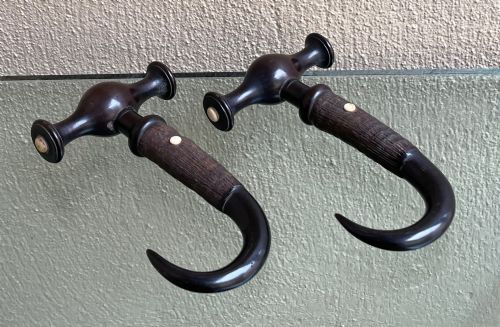
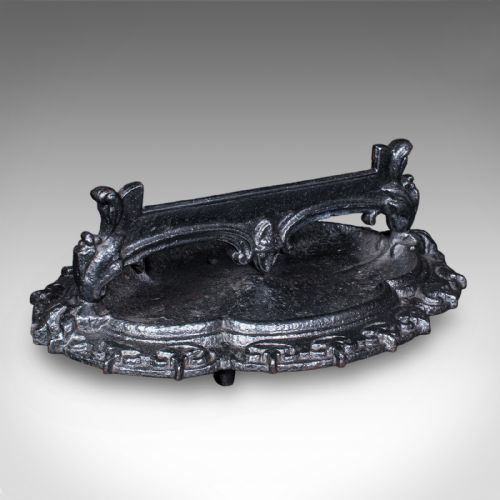
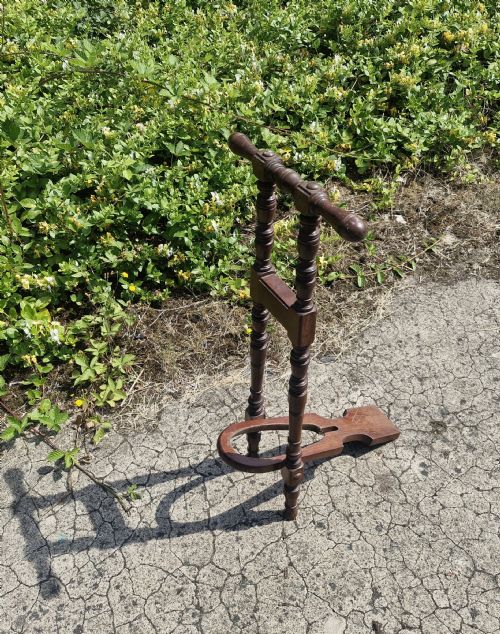
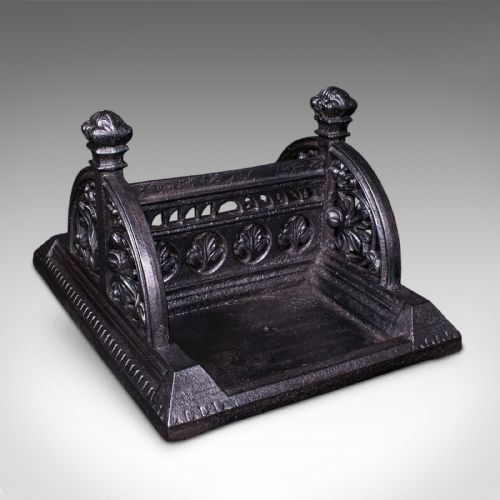
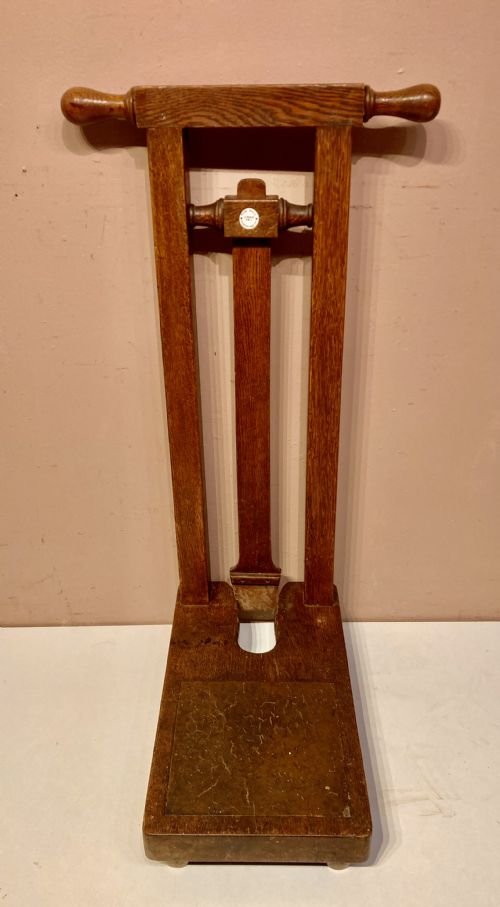
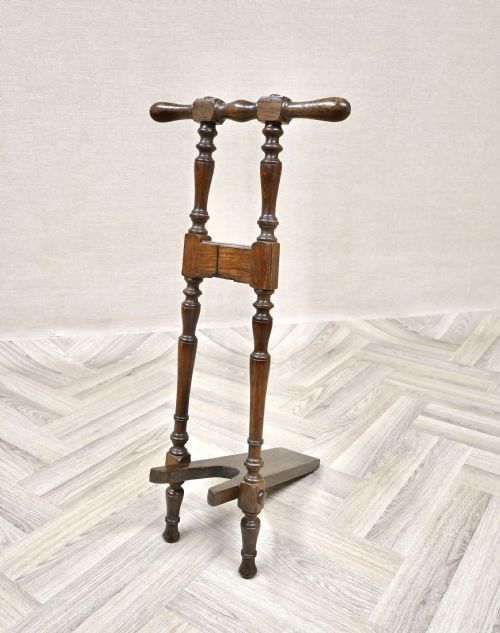
These vintage boot pulls and associated jacks offer a practical way to remove footwear cleanly, combining period craftsmanship with utility for the hall or boot room.
Vintage Boot Pulls
When searching for vintage boot pulls, you encounter a practical range of nineteenth and early twentieth century equipment designed to assist with footwear. These items span various forms from domestic spaces to military service, including boot jacks, foot scrapers, folding tools, and handled pulls.
The objects on this page predominantly reflect English country house and townhouse contexts, stretching from the Georgian period through the Victorian and Edwardian eras up to the 1930s. Oak, mahogany, and walnut provide the wooden framework for folding and fixed jacks, whilst cast iron and brass serve both heavy outdoor scrapers and indoor implements.
Handled tools in silver and horn appear alongside timber jacks, offering variety in how one tackles footwear. Whether you require a folding campaign piece for travel or a heavy oak country house bootjack, these selections ground utility in historical materials.
Materials and construction
Makers utilised durable hardwoods such as oak, mahogany, and walnut for the bodies of boot jacks, ensuring they withstood the leverage required to pull off tight leather boots. Brass fittings, steel hinges, and cast iron structures added necessary strength to folding mechanisms and stationary floor scrapers.
Metals were cast or forged, with silver and sterling silver reserved for the handles of smaller hand-held button hooks and pulls. Horn and ash also contributed specialised textures, whilst mounting techniques combined robust joining methods to support repetitive domestic use.
Indicators of quality
Quality rests in the selection of materials, from dense seasoned oak and figured mahogany to substantial cast iron and solid brass mounts. Finer examples display thoughtful joinery, robust folding hinges, and harmonious combinations of timber and metal.
Design sophistication also separates utilitarian items from finer country house or military campaign pieces, where portability, brass detailing, and secondary tool inclusions demonstrate superior execution. The integrity of the materials and the precision of the construction dictate the standing of each piece.
The Vintage Boot Pulls Glossary
- Boot jack
- A V-notched device placed on the floor to hold the heel of a boot whilst the wearer steps out of it. This saves bending down and protects the leather.
- Boot scraper
- An iron or metal blade fixed near a doorway for scraping mud off the soles of boots before entry. They are frequently found outside English townhouses and country houses.
- Campaign equipment
- Portable items made for military officers on active service, often featuring folding mechanisms or compact designs. These pieces utilise brass and sturdy timber for travel.
- Button hook
- A slender tool with a small hook used for fastening boots or shoes with fabric buttons. Silver-handled versions appear in Edwardian accessories.
Vintage Boot Pulls: Frequently Asked Questions
How do you use a boot jack?
You place the boot jack flat on the floor, anchor one foot on its base, and insert the heel of the opposite boot into the V-shaped notch. Pulling your foot upward allows the notch to hold the heel as the boot slides off.
This method prevents strain on the leather and allows you to remove tall riding or walking boots without bending over.
What is a military campaign boot jack?
A campaign boot jack is a portable, often folding version designed for officers on the move during periods such as the First World War or earlier nineteenth-century conflicts. They were built to pack flat into kit bags.
These pieces typically incorporate brass hinges and secondary tools to save space whilst maintaining sturdy construction.
Where were boot scrapers placed?
Boot scrapers were traditionally positioned at the thresholds of townhouses and country houses to clean heavy mud from footwear before entering the hallway. They were bolted to stone steps or set near doorways.
Cast iron and iron served as the primary materials for these outdoor fixtures to withstand weathering and heavy use.
What woods were used for boot jacks?
Cabinet makers and joiners utilised durable timbers such as oak, mahogany, and walnut to construct domestic boot jacks. These woods provided the density and strength needed for daily leverage.
Some examples also paired oak with ash or incorporated polished brass mountings for decorative country house interiors.