


Gentleman Sporting Antiques
Gentleman sporting antiques capture the pursuit of the field and the river, offering a direct link to historic equestrian and shooting life.
Gentleman Sporting Antiques
When you search for gentleman sporting antiques, you encounter works celebrating the pursuits of the field, the river, and the stable across several eras. These items capture the pursuits of the country gentleman through portraiture, accessories, and depictions of hunting, shooting, and fishing.
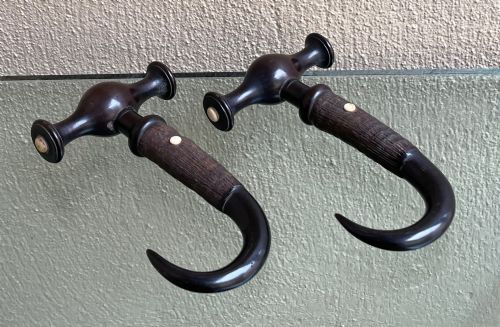
The pieces appearing on this page span the Georgian, Victorian, and Edwardian eras, reaching back to the eighteenth century. You find oil paintings, watercolours, framed prints, horn boot pulls, and walking sticks shaped like golf clubs among the varied forms.
Portraits of country gentlemen and hunters dominate the visual record, often rendered by named artists working within academic historicism. Equestrian accessories and framed reverse glass pictures complete the selection, reflecting the diverse material culture of historical sport.
Materials and construction
Makers utilised traditional mediums including oil paint and watercolour on paper, alongside reverse glass printing techniques for detailed portraiture. These flat works capture the likeness of sportsmen and their catches with fine pigments and ink.
Natural materials such as wood, horn, antler, and bone form the substance of functional accessories like boot pulls and walking sticks. Craftsmen shaped these organic materials to create durable items for the field.
The listings combine 19th-century and Georgian works, uniting oil paintings, watercolours, horn boot pulls, and walking sticks.
Quality variations
The distinction between tiers rests upon the execution of the subject and the fidelity of the period materials. Finer painted works display precise handling of anatomical detail in figures, horses, and firearms.
Material selection and handling define the physical objects, where well-carved horn or timber shows deliberate craftsmanship rather than basic utility. The presence of documented artists or distinct regional styles elevates specific pieces above standard decorative items.
John Arthur Lomax·J F Marie Huet Villiers·Francis Wheatley·Adolphe Alexandre Lesrel·Benjamin Marshall
The Gentleman Sporting Antiques Glossary
- Reverse glass picture
- A method where the image is painted or printed directly onto the reverse side of a glass sheet to be viewed from the front. This technique protects the pigment and produces a characteristic glossy finish.
- Watercolour
- A painting method where fine pigment is suspended in a water-based solution on paper. It allows for translucent washes and delicate detail.
- Academic historicism
- A nineteenth-century artistic approach that drew heavily on historical subjects and established academic methods. Works in this style prioritize rigorous composition and period accuracy.
- Boot pull
- A functional accessory used to assist in removing riding boots. Pairs are frequently formed from natural materials such as horn or bone.
- Equestrian accessories
- Items associated with horseback riding and horse management. They encompass a range of gear utilised in historical sporting life.
Gentleman Sporting Antiques: Frequently Asked Questions
How do I date a sporting painting?
Dating relies upon the costume of the sitter, the style of the frame, and the materials used by the artist. Examining the canvas or paper stock provides further chronological context.
Pictorial subjects often reflect contemporary fashions in firearms and sporting dress, which changed distinctly between the Georgian and Victorian eras.
What subjects appear in these works?
The subjects centre on hunting, shooting, angling, and equestrian pursuits. Portraits of country gentlemen often feature dogs, guns, or catches alongside the sitter.
Scenes range from individual portraits on riverbanks to broader historical genre paintings of huntsmen in the field.
What is reverse glass painting?
Reverse glass painting involves applying pigment directly to the back of a glass panel. The image is composed in reverse so it appears correctly when viewed from the front.
This technique was popular for decorative portraits and prints during the Georgian period, offering a protected surface with a distinct sheen.