

Antique Equestrian Accessories
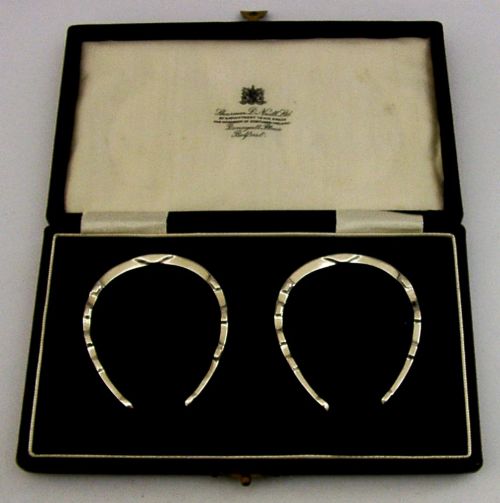
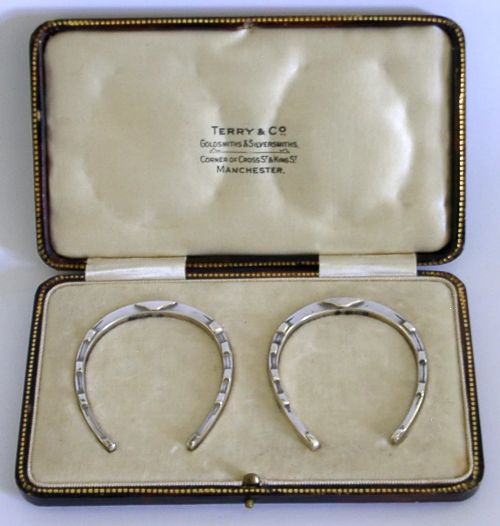
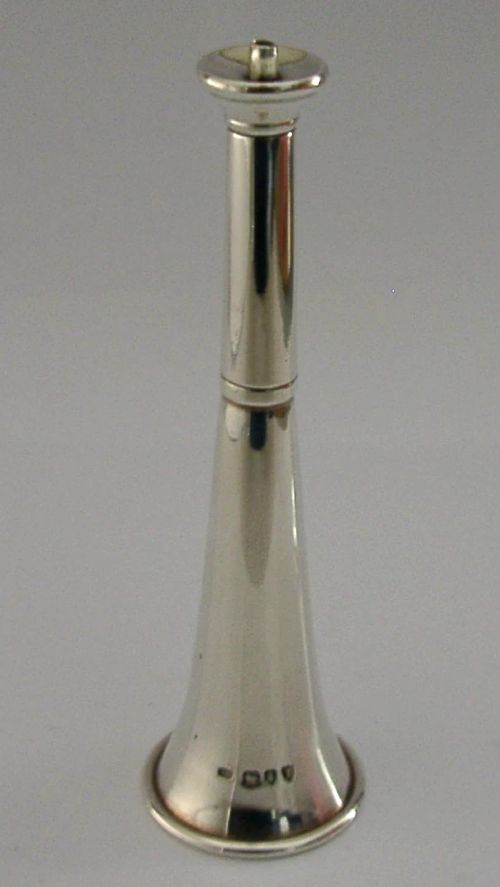
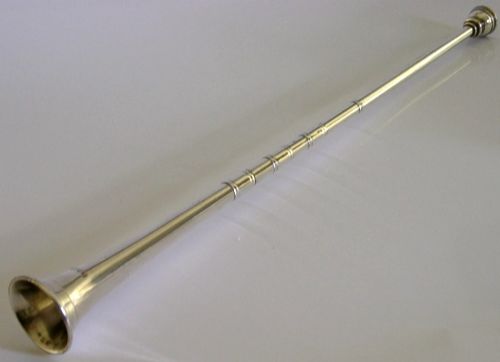
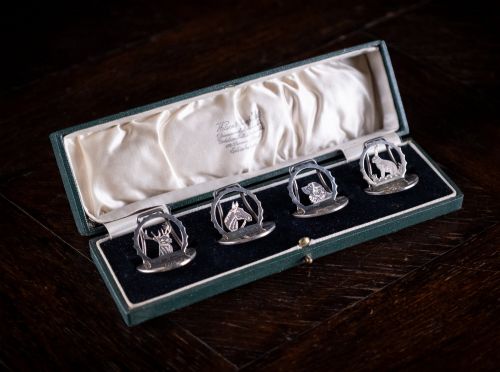
Antique equestrian accessories bring the field and stable indoors through practical desk pieces, smoking gear and table silver shaped as horse shoes, boots and hunting horns.
Antique Equestrian Accessories
Antique equestrian accessories comprise a diverse group of objects created for the desk, dining table and smoking room, taking their design cues from the riding stable and the hunt. Buyers searching this phrase meet everything from silver horseshoe napkin rings and jockey cap pin cushions to taxidermy hoof inkwells and boot jacks.
The pieces on this page span the Victorian and Edwardian eras alongside the nineteen-twenties and thirties, reflecting a period when equestrian pursuits held a central place in domestic life. Most items serve a dual purpose, combining utilitarian functions such as paperweights, inkstands and cigar lighters with figurative novelty designs.
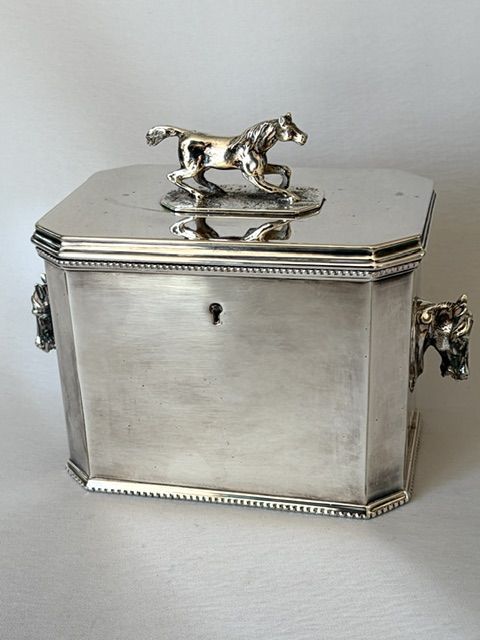
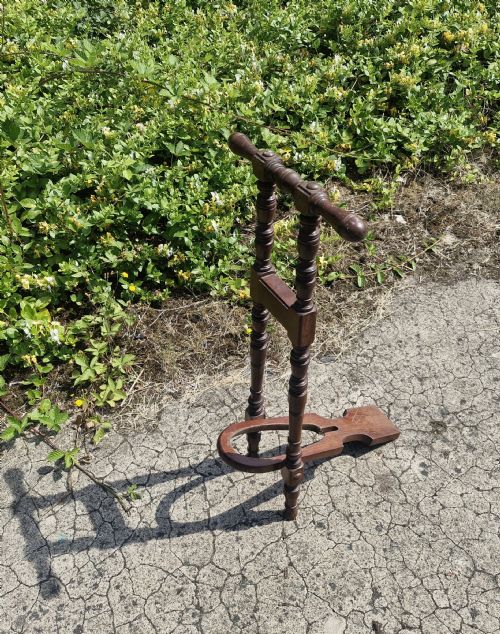
Originating largely from English workshops and silversmiths, these items range from campaign boot jacks in oak and walnut to sterling silver smoking compendiums and desk tidies. The selection leans heavily toward silver and metalwork, supplemented by horn, beech and glass.
How they were made
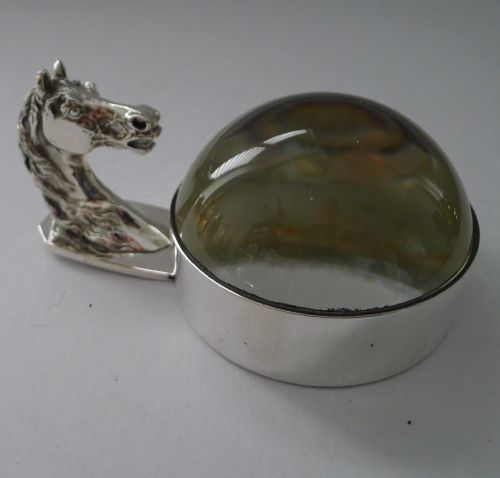
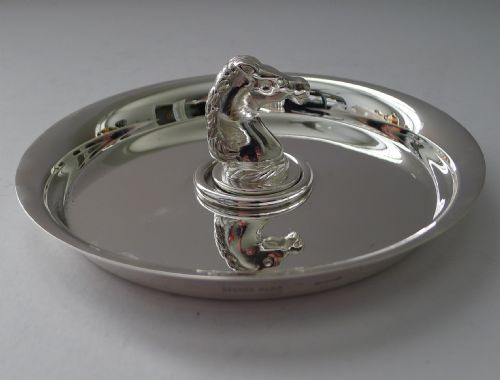
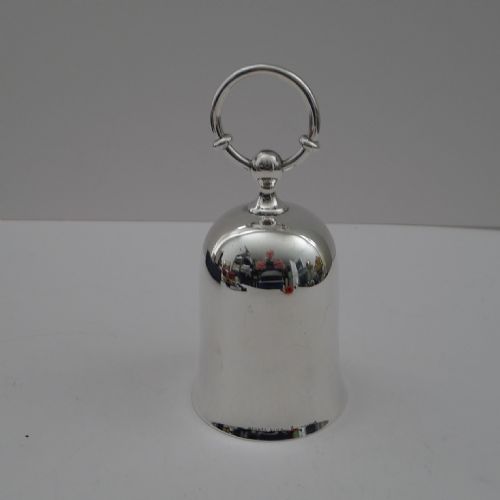
Silversmiths utilised sterling silver and silver plate for novelty pieces such as jockey caps, napkin rings modelled as stirrups, and magnifying glasses, often casting the metal to achieve precise anatomical details on horses heads and foxes. Hallmarks stamped into the silver record the assay offices of London, Birmingham and Chester alongside specific dates.
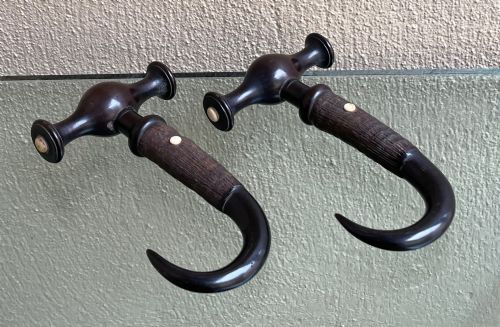
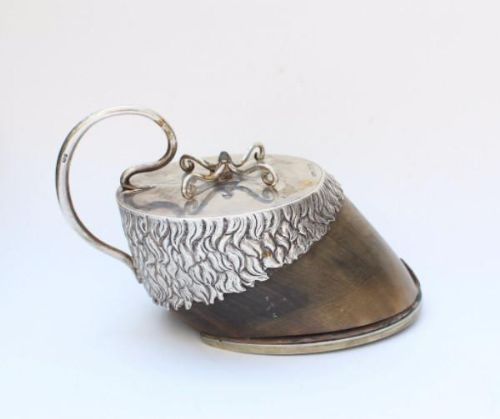
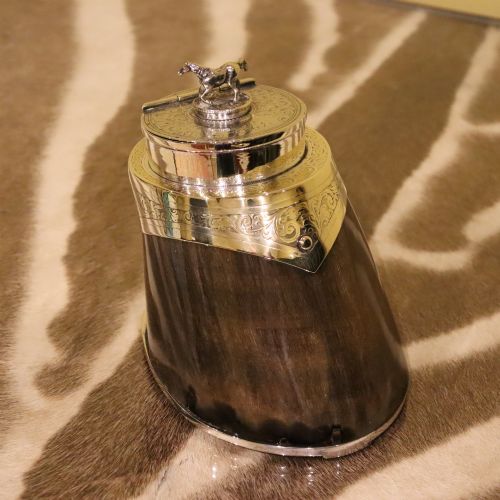
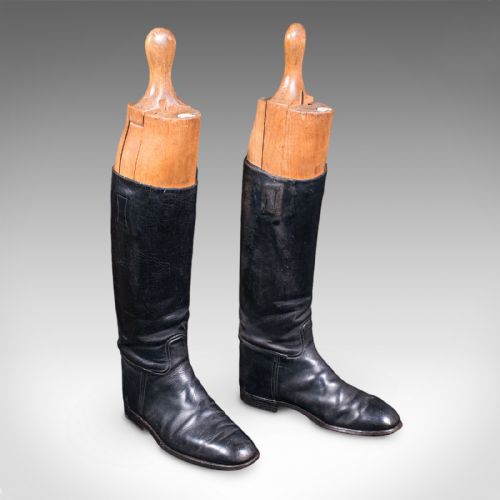
Taxidermy items incorporate real horse hooves mounted with brass or silver rims, fitted with hinged lids to form inkwells and desk tidies. Cabinetmakers shaped beech, walnut, oak and ebony into boot stretchers, boot jacks and book slides, combining turned wood with leather and metal mountings.
Antique Equestrian Accessories Retail Price Guide 2026
Typical asking prices for equestrian accessories among the pieces listed under this phrase on Sellingantiques today, from the lower quarter to the upper quarter. They describe what is for sale here now, not the wider market.
A nineteenth-century taxidermist once looked at a horse's foot and decided the only logical next step was to turn it into an inkwell.
What varies in quality
Quality rests upon the crispness of the casting and the naturalism of the modelling, particularly in novelty items where a horse head or jockey cap must render form accurately without stiffness. Pieces by known makers such as Sampson Mordan or braham show superior definition in chasing and engraving compared to uncredited workshop output.
The choice of materials and the integrity of the mountings determine the standing of an object, as seen in solid sterling silver against silver plate, or substantial hardwood timbers versus softer pine. Preservation of original elements, from taxidermy hooves to velvet linings and glass ink inserts, preserves the character of the piece.
Sampson Mordan·William Neale·A Wilcox·Maxwell London
The Antique Equestrian Accessories Glossary
- Vesta
- A small pocket box designed to hold matches, frequently fashioned in this category as a sterling silver horseshoe. These items often feature a striated base for striking the match.
- Boot jack
- A V-shaped device used for removing riding boots without bending down, constructed in walnut, oak or brass. Folding and campaign versions were made for travel.
- Inkwell
- A small container for holding liquid ink, which in equestrian silver often takes the form of a jockey cap or a mounted pony hoof with a hinged lid. Glass inserts typically sit within the metal or hoof body.
- Caddy spoon
- A small spoon for measuring loose tea, occasionally cast in the shape of a jockey's cap during the early twentieth century. Makers stamped their initials and hallmarks onto the underside.
- Desk tidy
- A compartmentalised tray for organising stationery, paper clips and pens, sometimes built from a large horse hoof fitted with silver mounts. These accessories sat upon nineteenth-century library and study desks.
Antique Equestrian Accessories: Frequently Asked Questions
What are antique equestrian accessories?
Antique equestrian accessories are functional desk, table and smoking items shaped to resemble riding equipment, horses, boots and hunting gear.
They span items like horseshoe napkin rings, boot jacks, inkwells and hunting horn table lighters produced during the Victorian, Edwardian and Art Deco periods.
How were horse hoof inkwells used?
Horse hoof inkwells served as desktop receptacles for dipping quill and steel-nib pens into liquid ink during the Victorian and Edwardian eras.
The hinged metal lid kept the ink from drying out while the fitted glass interior held the fluid safely away from the taxidermy hoof casing.
How do I date silver equestrian items?
Silver pieces carry hallmarks that indicate the assay office, the maker's mark and a specific letter code corresponding to the year of manufacture.
Items without silver hallmarks require stylistic analysis of the form, materials and construction techniques to place them within the nineteenth or twentieth century.
Where were these accessories made?
The majority of these accessories originated in English workshops, silversmiths and cabinetmakers, with prominent assay activity centred in London, Birmingham and Chester.
Continental makers also contributed novelty items such as Austrian cold-painted bronze figures and French smoking compendiums.
How do I care for silver and leather pieces?
Silver components benefit from gentle cleaning with a soft cloth to maintain the hallmarks and metal finish without stripping the original patina.
Leather cases, riding boot stretchers and wooden elements require dry storage away from direct sunlight to preserve the natural grain and rigidity of the material.