



Riding Boot Trees
These riding boot trees preserve the shape and leather of tall boots, combining practical utility with fine period woodwork.
Riding Boot Trees
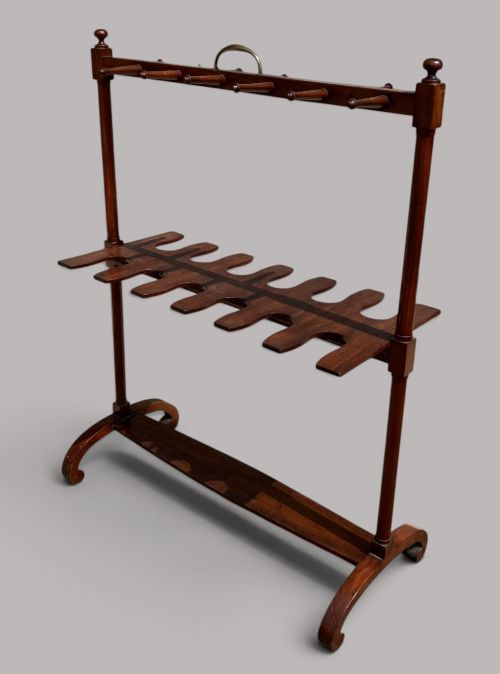
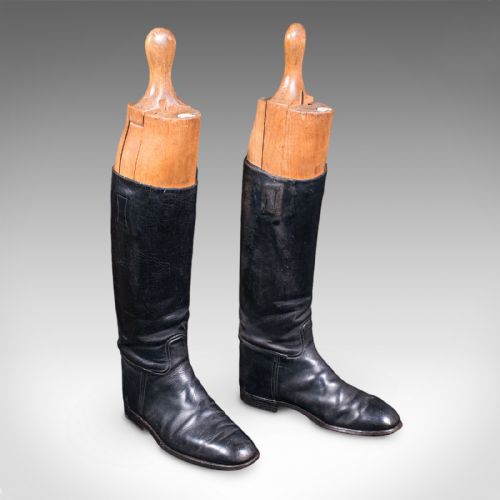
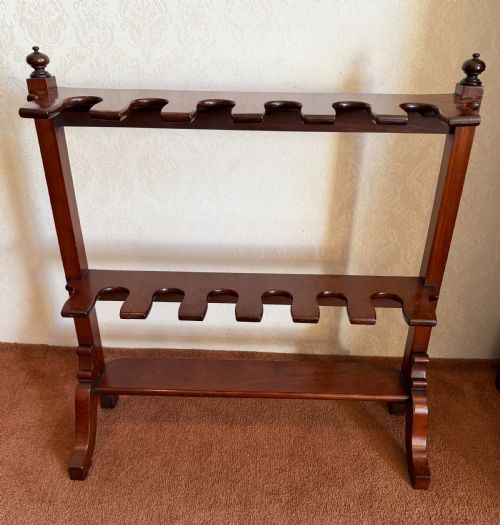
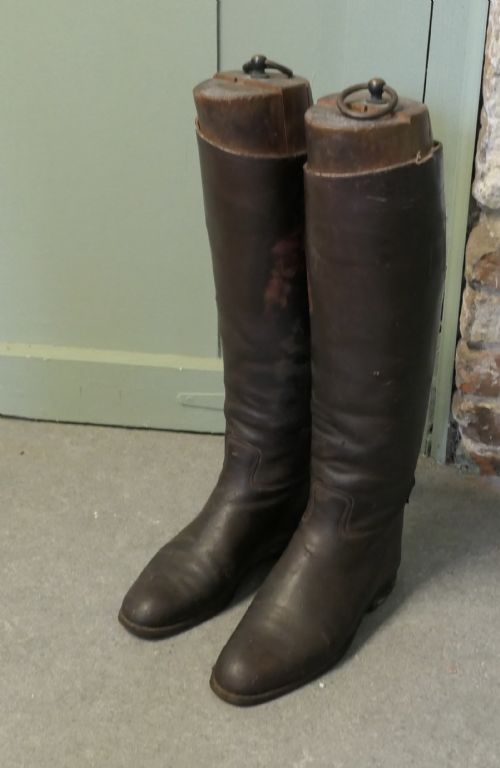
Riding boot trees are specialised wooden lasts and stretchers designed to maintain the form of tall boots when not in wear. These pieces include standalone trees paired with boots, revolving stands, and combination boot and whip racks.
The versions most commonly met span the nineteenth and early twentieth centuries, encompassing Victorian, Edwardian, and Regency examples in English and French styles. Makers and workshops such as Maxwell London, Peal and Co, Carter Bristol, and Rowell and Sons produced these robust items for daily equestrian use.
The inventory ranges from simple beech stretchers and mahogany boot racks to complete gentleman's and lady's leather riding boots fitted with wooden trees. Some examples incorporate brass mounts and iron hardware for adjusting tension and fit inside the boot shaft.
How they were made
Makers utilised dense hardwoods such as mahogany, beech, and assorted hardwoods, carved by hand to match the anatomical shape of the calf and foot. These wooden sections were frequently paired with brass hardware, iron screws, and leather components to provide functional expansion.
The construction relies on traditional joinery and turning techniques, evident in revolving bootstands, wall racks, and adjustable stretchers. Metal mechanisms allow the wooden blocks to expand inside the boot, ensuring the leather dries properly and retains its correct tension.
What varies in quality
Quality rests in the precision of the woodwork and the complexity of the mechanism used to expand the tree within the boot shaft. Superior examples show careful hand-carving in the wooden block and robust brass fittings rather than simpler iron or fixed construction.
The presence of maker stamps from notable bootmakers adds distinction to the piece, alongside the quality of the associated timber such as figured mahogany or seasoned beech. Complete sets featuring matching boots and original trees represent the upper tier of the range.
Maxwell London·Peal and Co·Carter Bristol·Rowell and Sons
The Riding Boot Trees Glossary
- Boot tree
- A device inserted into a boot to preserve its shape and prevent the leather from sagging or cracking as it dries. These objects typically use a two-part wooden block adjusted by a screw mechanism.
- Last
- The solid form, traditionally shaped from wood, around which a boot or shoe is constructed or stretched. Bootmakers used these to ensure the correct fit and proportions.
- Boot rack
- A piece of furniture designed to hold multiple pairs of boots upside down or upright for storage and display in a hall or boot room.
- Regency
- An English design period spanning the early nineteenth century, known for elegant proportions and the use of premium timbers like mahogany.
- Edwardian
- A period covering the early twentieth century up to the First World War, characterised by refined domestic accessories and traditional craftsmanship.
Riding Boot Trees: Frequently Asked Questions
What are riding boot trees used for?
Riding boot trees insert into tall leather boots to maintain their vertical shape and prevent the leather from curling or creasing while stored. They allow air to circulate inside the shaft, which helps preserve the leather over time.
Historically, they were kept in the boot room or stable after a day's riding to ensure the boots dried in the correct form. Today, collectors value them both as functional accessories and as decorative pieces of equestrian heritage.
How do I tell an Edwardian boot tree from a Victorian one?
Differentiating between Victorian and Edwardian examples depends largely on the turning style of the wooden handles and the complexity of the brass or iron hardware. Victorian pieces often display heavier mahogany construction, while Edwardian versions frequently utilise turned beech with stamped maker details.
The context of the associated boots, where present, also helps indicate the period through the cut of the leather and the height of the heel. Examining the specific joinery and finish provides further clues to the date of manufacture.
Can I still use antique boot trees in modern boots?
Many antique boot trees remain fully functional and can be adjusted to fit modern riding boots of a similar height and foot size. The internal screw mechanisms are designed to expand the wooden blocks gently against the inner walls of the boot.
Care should be taken when turning the brass or iron adjusters on older pieces to ensure the wood moves evenly without straining the historical material. Regular maintenance with suitable wax keeps the wood conditioned for continued use.
Where were boot racks and stands placed in a home?
Boot racks and revolving stands were traditionally housed in the entrance hall, boot room, or stable block of country houses and town residences. They provided an organised system for storing riding boots, whips, and footwear within easy reach.
In a modern interior, these architectural stands serve well in hallways or dressing rooms as practical storage solutions with a strong equestrian character.