
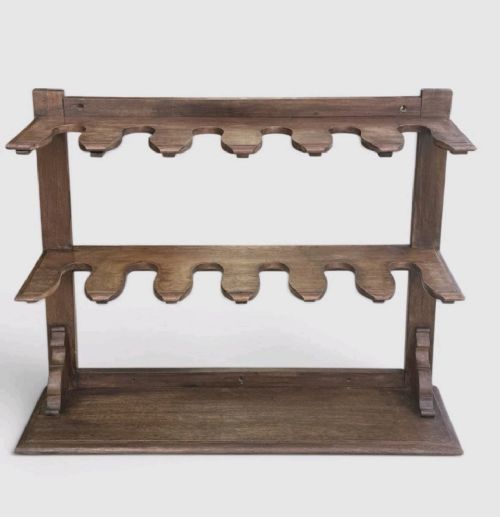
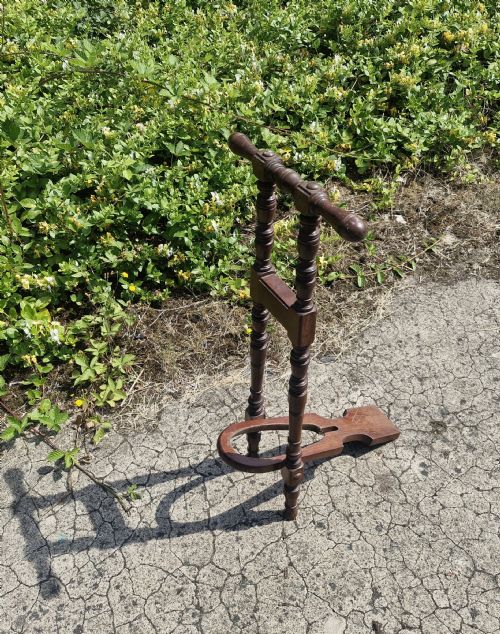
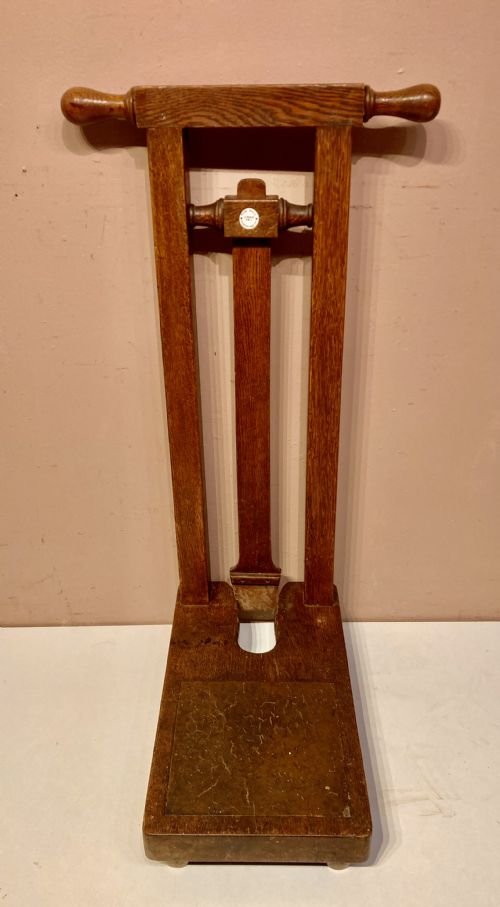
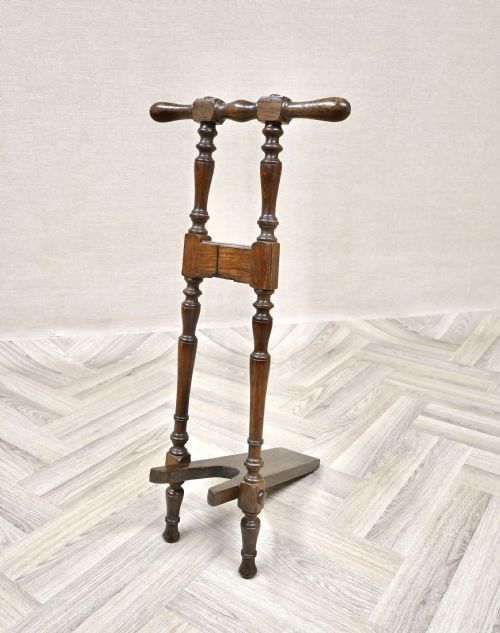


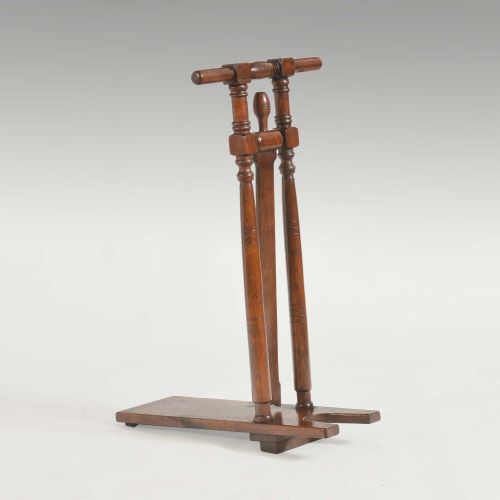
Victorian Boot Jack
These Victorian boot jack pieces offer practical hallway utility, giving you a dependable way to remove footwear cleanly.
Victorian Boot Jack
When you search for a victorian boot jack, you encounter solid wooden accessories designed for practical use in hallways and boot rooms. These items serve to pull off muddy riding boots or shoes without bending down.
How they were made
Maker workshops utilised sturdy timbers like oak, mahogany, and walnut, often combining these woods with brass mountings for structural reinforcement. Some examples incorporate leather elements or ash components to create functional hinges and folding mechanisms.
Surfaces received polished finishes to highlight the natural grain of the stained timber. Construction methods focused on durability to withstand the daily strain of pulling heavy footwear.
What varies in quality
Quality rests upon the choice of timber and the precision of the joinery. Dense hardwoods like mahogany and walnut paired with solid brass mounts represent the finer end of production.
Tom Hill
The Victorian Boot Jack Glossary
- Boot jack
- A device designed to hold the heel of a boot while the wearer pulls their foot out. This tool prevents damage to the leather and saves physical effort.
- Campaign
- A style of portable furniture designed for travel and military use during the nineteenth century. These items often feature folding parts or brass fittings for protection.
- Treen
- Small handmade wooden household objects collected for their tactile quality and age. Items in this category display the marks of traditional turning and carving.
- Hallway shoe stand
- A piece of furniture intended for entrance spaces to keep footwear and boots organised. These stands combine upright racks with base trays or boot jacks.
Victorian Boot Jack: Frequently Asked Questions
How do you use a boot jack?
You place the heel of your boot into the V-shaped notch while standing on the back part of the board with your other foot. Pull your foot upward to slide out of the boot smoothly.
This method keeps your hands clean and removes tight footwear without strain.
What woods were used for boot jacks?
Cabinet makers utilised durable hardwoods including mahogany, oak, and walnut to withstand heavy daily friction.
Some examples also incorporate ash and stained timber alongside brass hardware.
Are folding boot jacks authentic?
Folding versions were produced in the nineteenth century for easy storage and travel use.
These designs allowed owners to tuck the accessory away neatly in a hallway or packing chest.
Where were boot jacks placed?
They belonged in entrance halls, boot rooms, and country house corridors where outdoor footwear was removed.
Their practical placement kept mud and dirt contained near the door.