


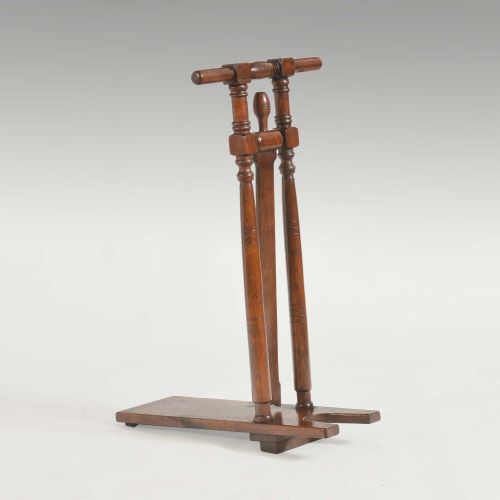
Standing Boot Pull
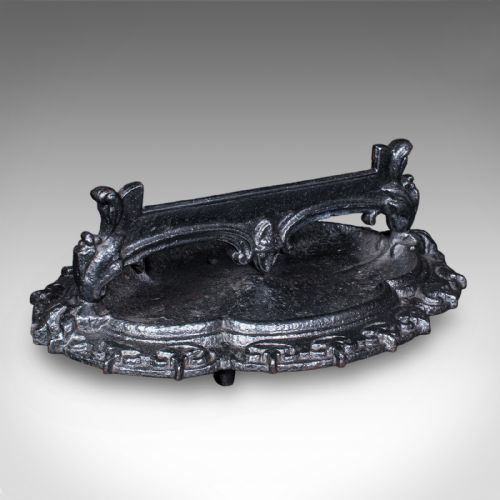
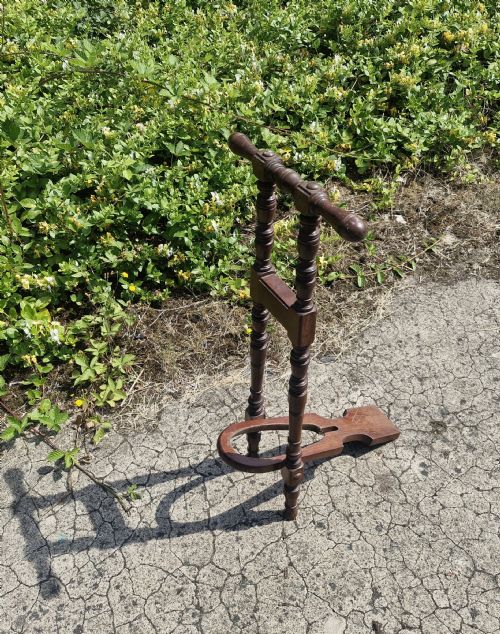
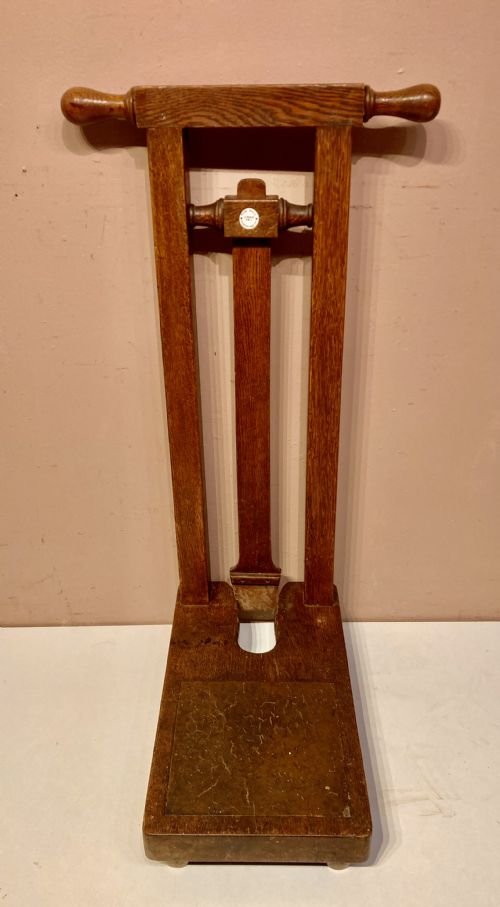
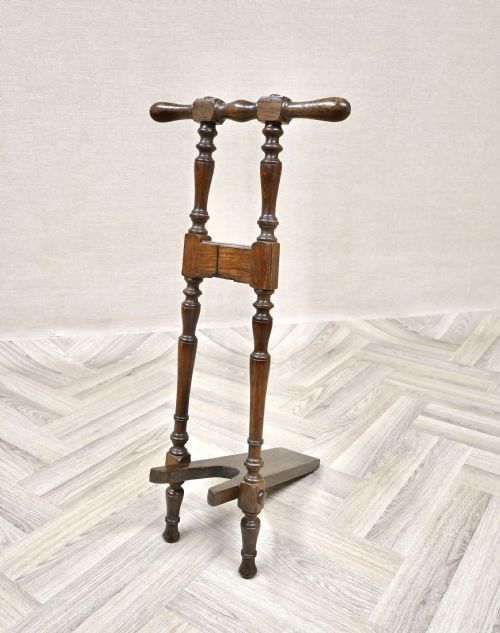
These standing boot pull examples bring heavy cast iron and rich timber to the hallway, offering a practical way to remove footwear without bending.
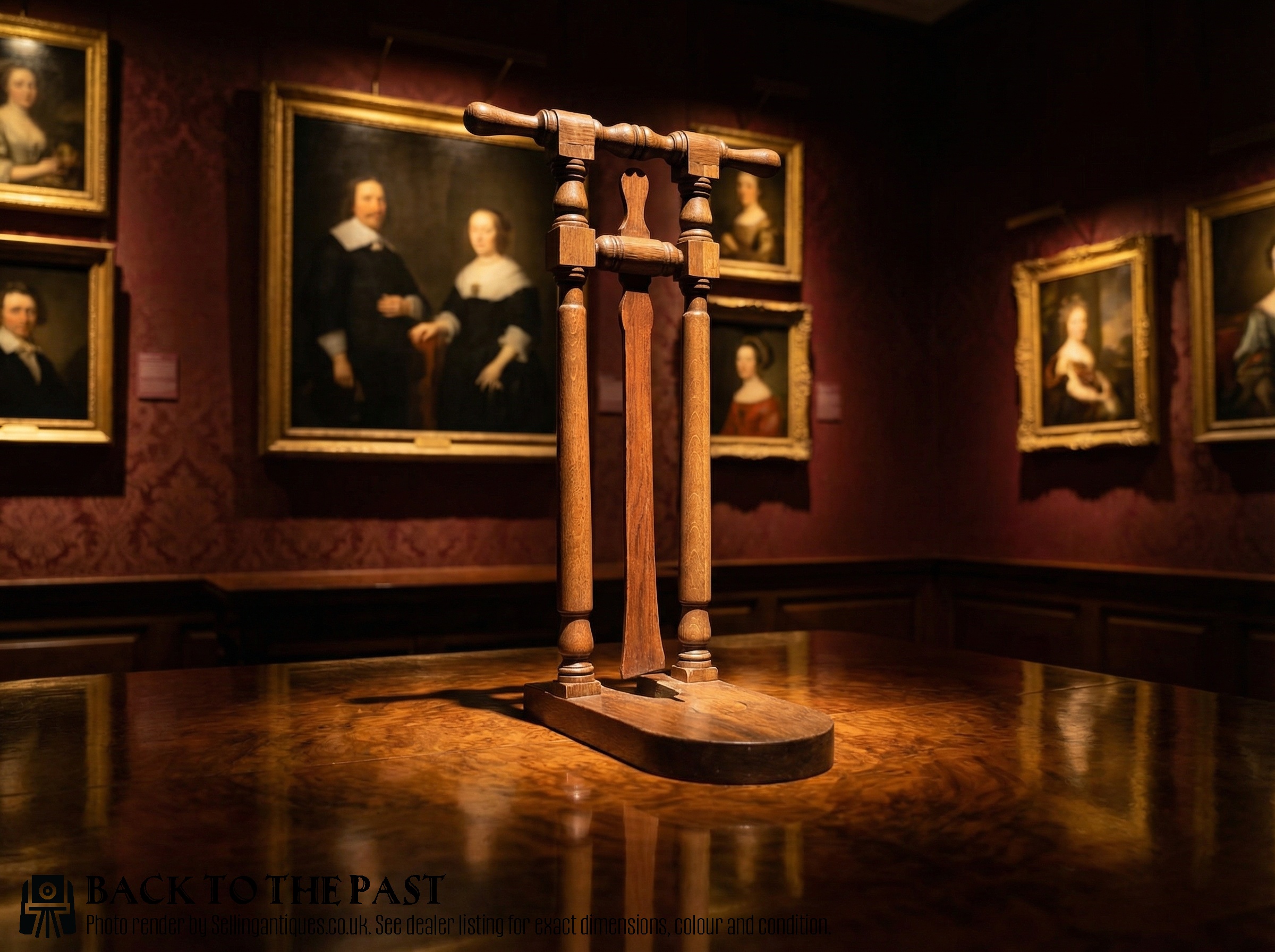
Standing Boot Pull
When you search for standing boot pull items, you encounter functional hall furniture and shoe removal devices designed for English country houses and entrance spaces. These objects combine leverage and stability to strip off muddy riding boots after outdoor pursuits.
Makers fashioned these pieces in oak, walnut, mahogany, and ash, frequently mounting them with brass or combining them with cast iron. Their primary function remained the removal of tight leather footwear at the threshold of the home.
How they were made
Joiners and metalworkers utilised durable timbers like oak, walnut, and mahogany, pairing them with robust cast iron and polished brass mounts. Stained timber also appears frequently in the construction of these country house accessories.
Craftspeople incorporated folding mechanisms into certain walnut and oak variants to save space in entrance halls. Brass fittings and heavy iron components provided the necessary strength to withstand the downward pull of heavy riding boots.
Some oak boot jacks feature folding mechanisms, proving that nineteenth-century gentlemen also appreciated smart space-saving hacks in the boot room.
What varies in quality
Quality rests upon the choice of timber and the integration of brass hardware against the primary wood body. Denser woods like oak and walnut display finer grain patterns and superior structural endurance compared to simpler stained timbers.
The refinement of the casting in the iron elements and the smooth operation of folding joints distinguish superior examples. Pieces bearing specific maker attribution, such as Tom Hill, demonstrate a higher grade of workshop provenance.
Tom Hill
The Standing Boot Pull Glossary
- Boot scraper
- An iron implement positioned outside doorways to remove heavy mud from soles before entry. It predates or accompanies the boot jack in entrance halls.
- English Country House
- A domestic style associated with large rural estates where robust, utilitarian furnishings were utilised for daily outdoor life.
- Folding shoe pull
- A variant featuring a hinged mechanism that collapses flat for storage when not in active service in the hallway.
- Cast iron
- A heavy, durable alloy poured into moulds to create rigid structural components capable of bearing repeated downward pressure.
Standing Boot Pull: Frequently Asked Questions
What is a standing boot pull?
A standing boot pull is a device designed to help remove tight footwear without bending down. It anchors to the floor or stands independently in an entrance hall.
These objects were standard fixtures in country houses where residents frequently wore heavy riding boots. They use leverage to slip footwear off cleanly.
Where were they placed?
These items lived in boot rooms, entrance halls, and doorways where people transitioned from outdoor mud to indoor floors. They sat alongside boot scrapers and umbrella stands.
Their placement ensured that muddy footwear was dealt with immediately upon entering the house. This kept the main living areas clean.
How do I date a piece?
Dating relies on the timber used, the style of construction, and period characteristics such as Georgian or Victorian turning. Walnut and mahogany point towards specific mid-to-late nineteenth-century tastes.
Makers' names stamped into the wood or metal also provide a firm anchor for dating. Simpler oak and ash variants often align with country house vernacular traditions.
Are folding models authentic?
Folding models are entirely period-correct, particularly among nineteenth-century walnut and oak examples. Makers designed hinges to allow the apparatus to fold flat against a wall or tuck away.
This practicality suited entrance halls where floor space was at a premium. The brass hinges and folding joints follow traditional joinery methods.