
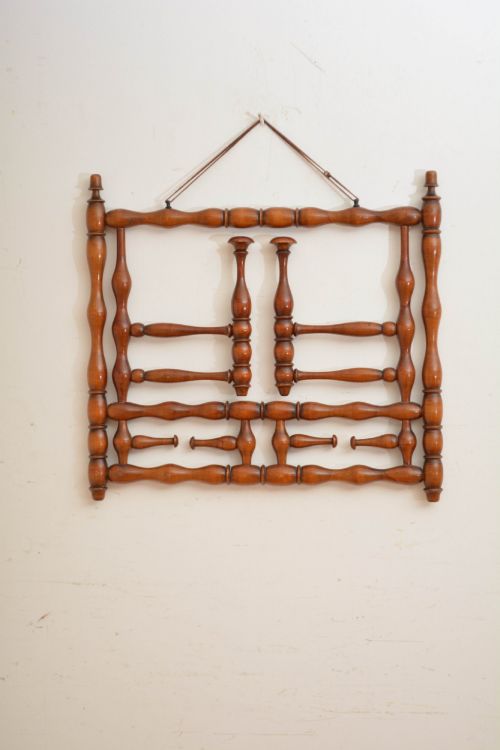


Entryway Wall Coat Hooks
Entryway wall coat hooks combine practical hanging space with period character, offering an efficient way to organise hallways using genuine antique designs.
Entryway Wall Coat Hooks
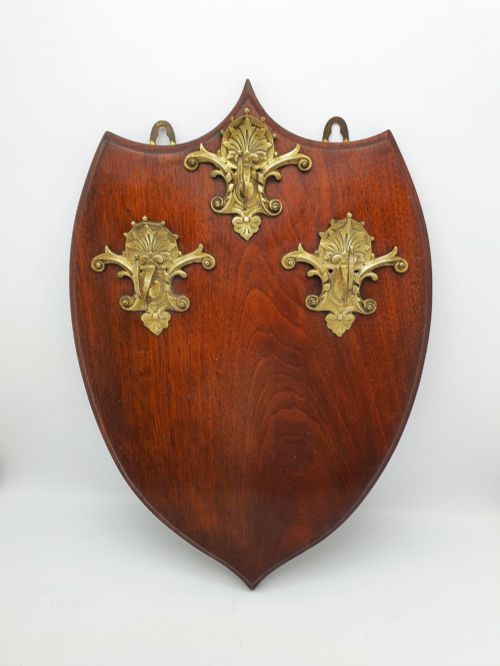
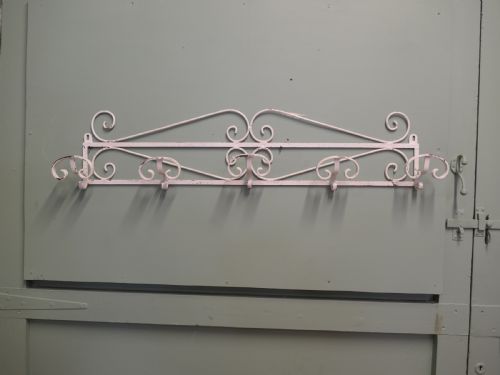
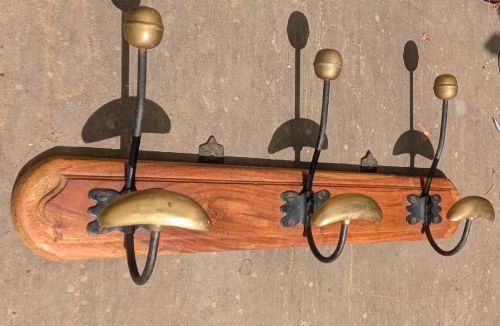
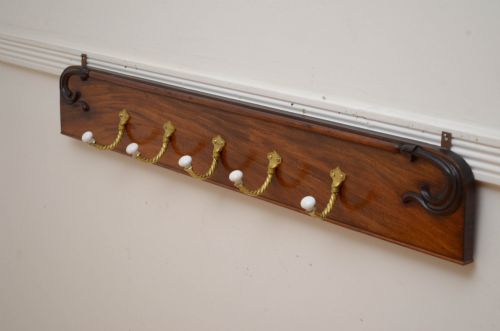
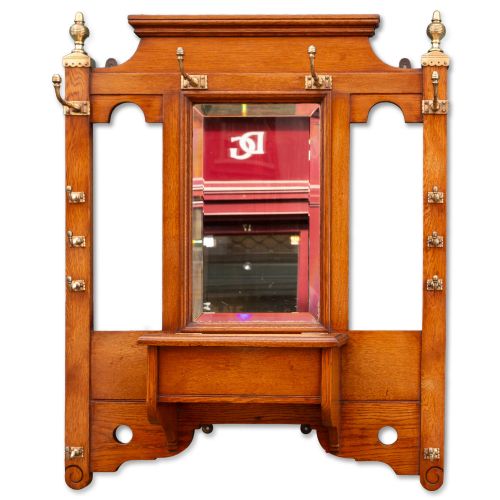
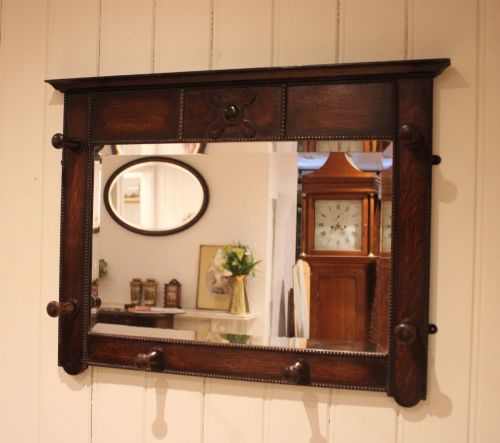
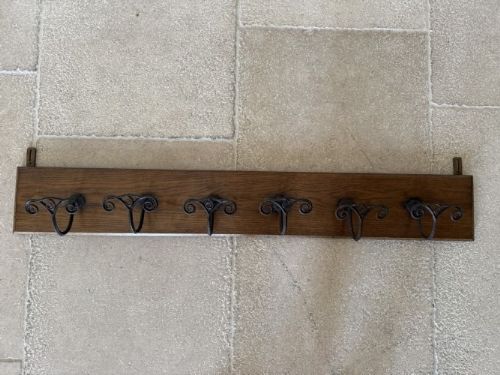
Entryway wall coat hooks encompass wall-mounted fixtures designed for hanging garments, frequently incorporating shelves, mirrors, or hat trees into a single unit. These functional pieces range from simple wooden battens fitted with brass hooks to architectural panels combining mirrors with brass or iron hardware.
The selections on this page span the nineteenth and twentieth centuries, featuring Victorian, Edwardian, and Art Deco interpretations in materials such as oak, walnut, brass, and wrought iron. Buyers most frequently encounter wooden wall-mounted racks alongside French mirrored designs dating from the early decades of the twentieth century.
Materials and construction
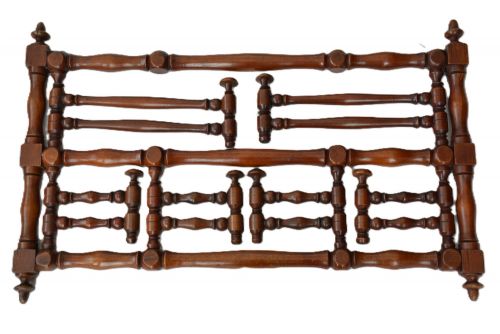
Makers utilised solid hardwoods including golden oak, walnut, and mahogany as the foundational backplates for these pieces, often shaping the timber with bevelled edges or carved details. Selected examples integrate turned wooden pegs alongside cast metal or brass hooks.
Metal components utilise brass, cast iron, and wrought iron, forged or cast into robust hooks designed to bear heavy garments. Mirrored variations incorporate bevelled glass plates secured within wooden frames or iron frameworks.
Some Edwardian visitors clearly had exceptionally tall hats, requiring dedicated upper branches to keep them out of reach of the damp hallway floor.
Judging quality in wall coat hooks
Quality reveals itself in the calibre of the timber selection and the integrity of the joinery used in the backplate or integrated shelf. Superior examples display thoughtful grain matching, crisp carving, and substantial metalwork that remains securely fastened to the backing.
The refinement of the hardware itself distinguishes finer specimens, where hooks feature well-defined casting or shaping rather than crude finishing. Integrated mirrors show clarity in the glass and appropriate ageing within the bevelled edges.
The Entryway Wall Coat Hooks Glossary
- Hat tree
- A structural projection or upper tier on a rack designed specifically for resting hats above the coat hooks. This addition was standard on Victorian and Edwardian hall stands.
- Wall mounted
- A configuration designed to be fixed directly to vertical wall surfaces rather than standing on the floor. These pieces save floor space in narrow hallways.
- Bevelled glass
- Mirror glass featuring an angled, polished edge that catches the light. This treatment signifies finer manufacture on period mirror plates.
- Turned wood
- Timber shaped on a lathe to create decorative cylindrical or bulbous profiles. This technique appears on pegs and structural supports.
Entryway Wall Coat Hooks: Frequently Asked Questions
How do I secure a heavy coat rack to the wall?
Heavy wall-mounted racks require sturdy fixings driven directly into wall studs or solid masonry using appropriate wall plugs and screws. The mounting holes provided by the maker should all be utilised to distribute the weight of winter garments safely.
Professional installation is recommended for antique wooden or iron pieces that carry integrated mirrors and shelves, as these add considerable weight to the assembly.
Can these hooks support heavy winter coats?
Period brass and iron hooks are robustly made and generally capable of holding heavy overcoats, provided the backplate is securely anchored to the wall. Solid hardwood boards offer superior strength compared to lighter composite backings.
Distributing garments evenly across all available hooks prevents undue strain on any single fixing point or the surrounding timber.
How do I care for antique wood and brass?
Maintain wooden backplates with a gentle application of beeswax to nourish the timber and preserve its natural finish without creating a heavy buildup. Avoid harsh chemical cleaners that can strip original polishes.
Brass hooks benefit from occasional dusting with a soft cloth, allowing the metal to retain its natural oxidisation and age character over the decades.
What is the difference between Victorian and Art Deco hooks?
Victorian designs tend to feature dark woods like walnut or mahogany, often combined with ornate brass hardware, carved detailing, and integrated mirror plates. They project a heavier, more traditional aesthetic suited to formal period interiors.
Art Deco examples lean towards wrought iron, streamlined geometry, and industrial influences, frequently pairing the hooks with functional upper shelves and simple metallic framing.