


French Hallway Coat Rack
These French hallway coat rack examples combine brass, wood, and iron to organise entranceways with continental utility and period style.
French Hallway Coat Rack
A French hallway coat rack serves as an entranceway fixture designed to hold hats, coats, and garments. Buyers searching this phrase encounter wall-mounted racks, individual hooks, and narrow hall stands.
The selection on this page spans several decades, drawing from the nineteenth century through the early twentieth century. Forms range from simple brass hangers to substantial portmanteaus and wrought iron stands.
Stylistic influences include Victorian, French Provincial, French Country, and French Art Deco designs. Most pieces incorporate functional elements like porcelain knobs, ceramic details, or cast mounting plates.
How they were made
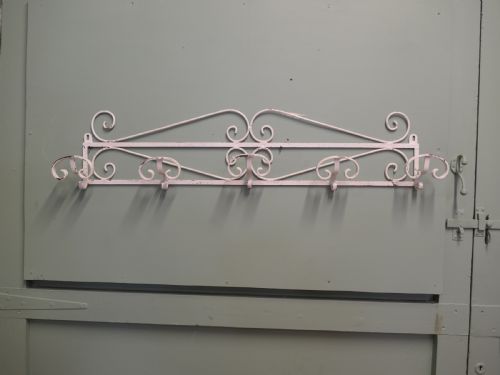
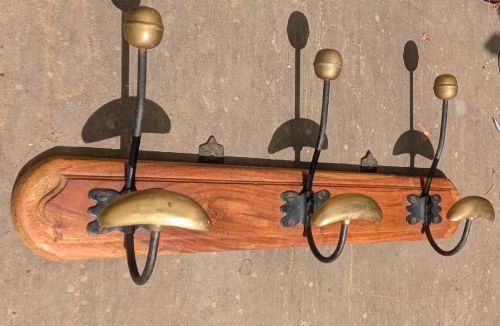
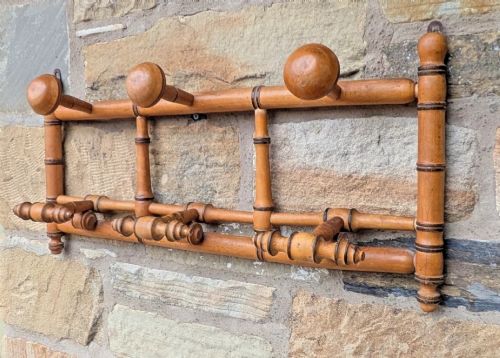
Construction relies heavily on metals such as brass, bronze, and cast iron, often shaped through casting and chasing techniques. Wood components utilise mahogany, turned wood, and ebonised or simulated bamboo finishes.
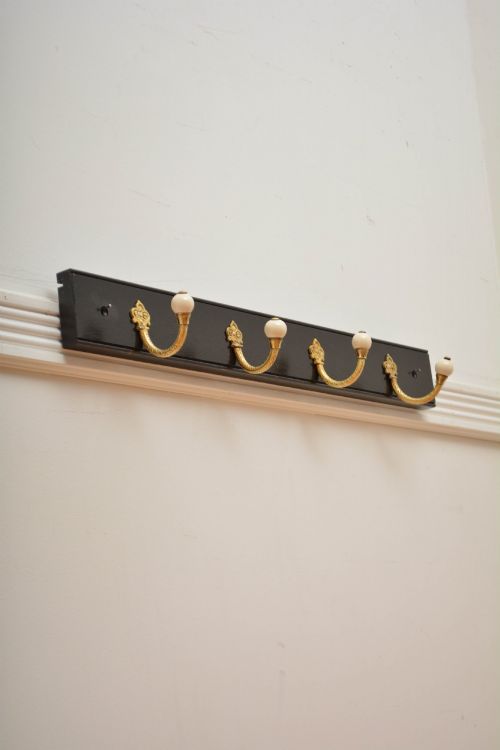
Decorative touches integrate ceramic and porcelain elements into the metal hooks and brackets. Wall-mounted racks employ structural backplates secured with visible fixings to ensure stability under heavy garments.
Listings span the nineteenth century through the 1920s, featuring materials like brass, mahogany, and cast iron in Victorian and Art Deco styles.
What varies in quality
The refinement of the casting work dictates the visual appeal of the metal elements, with chased brass and detailed mounting plates standing apart from plain production. Material selection also defines the tier, moving from standard turned wood to polished mahogany or solid bronze.
Complexity of form creates distinction between basic wall hooks and long triple bracket portmanteaus or elaborate hall stands. The integration of original ceramic or porcelain knobs adds an extra layer of authenticity.
The French Hallway Coat Rack Glossary
- Portmanteau
- A large wall-mounted rack featuring multiple brackets and hooks designed for hanging both hats and coats. These substantial fixtures often incorporate decorative backplates and extended rails.
- Ebonised wood
- Timber treated with a dark finish to mimic the appearance of ebony wood. This technique appears frequently on nineteenth-century frames and simulated bamboo designs.
- Chased brass
- Metalwork decorated with hand-chiselled or embossed patterns on the surface. This method enhances the decorative detail of hooks and mounting plates.
- Simulated bamboo
- Wood turned and carved to resemble natural bamboo stalks. Makers utilised this decorative technique during the late nineteenth and early twentieth centuries.
- Hall stand
- A tall furniture piece placed in an entranceway to hold outerwear and accessories. Examples from the period include wrought iron constructions and narrow wooden frames.
French Hallway Coat Rack: Frequently Asked Questions
How do I mount a wall rack safely?
Wall-mounted coat racks require secure fixing into solid masonry or adequate wall studs to support the weight of heavy garments. Using appropriate screws matched to the mounting plate holes ensures structural stability.
Positioning the rack at a practical height allows comfortable access for everyday use while accommodating longer coats and hats.
How do I clean antique brass hooks?
Antique brass benefits from gentle dusting with a soft cloth to preserve the aged surface finish and natural patina. Avoid harsh chemical cleaners that strip away the historical character built up over decades.
Checking the mounting screws periodically ensures the hardware remains tightly secured to the wooden backplates or walls.
Are these racks suitable for modern hallways?
Compact wall racks and narrow hall stands fit well into contemporary entranceways by providing vertical storage without occupying significant floor space. Their mixed metal and wood construction complements both traditional and modern interiors.
Individual hooks and shorter rails offer flexible placement options for smaller apartments or porches.