

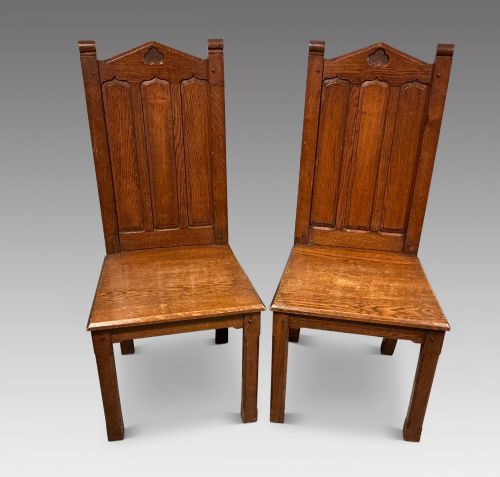


Entryway Side Chairs
Entryway side chairs are timber seats made to stand in halls and passages, combining firm timber construction with carved heraldic motifs.
Entryway Side Chairs
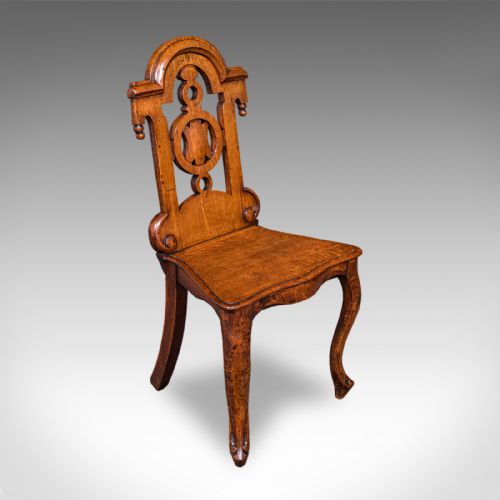
Entryway side chairs function as architectural seating designed historically for grand halls and passage spaces. The examples on this page are predominantly hall chairs originating from the eighteenth, nineteenth, and Victorian periods.
Makers shaped these timber seats from dense woods such as mahogany, oak, and walnut, often constructing them as pairs or sets for formal entrances. Their primary form relies on a solid wooden seat and an upright backrest, rather than upholstered comfort.
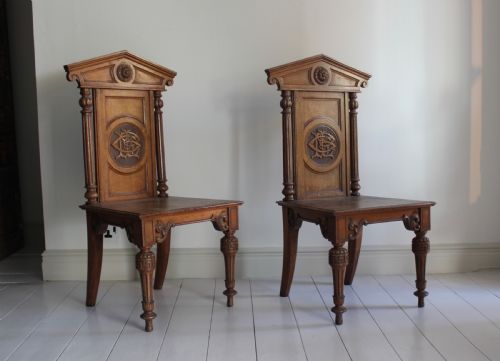
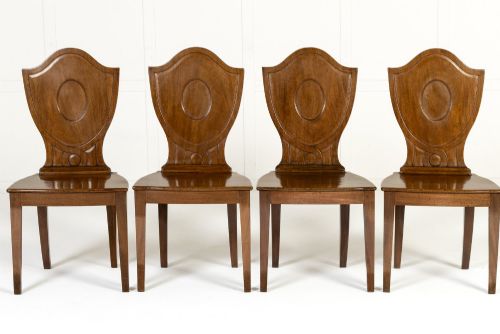
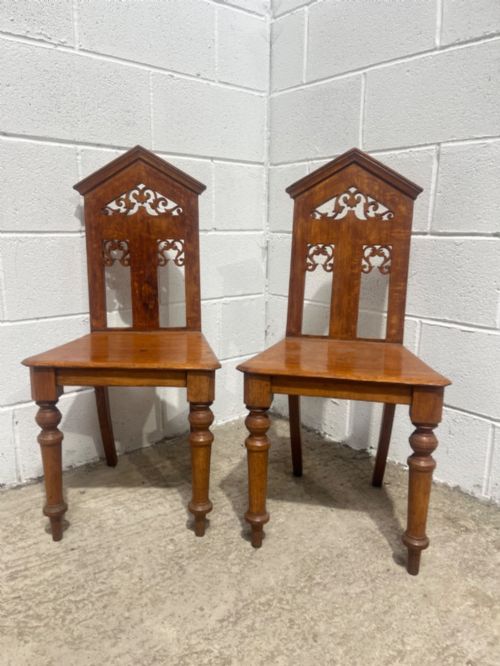
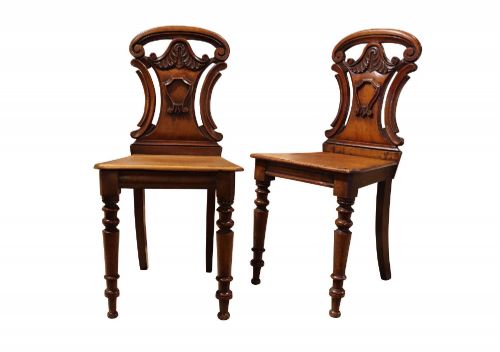
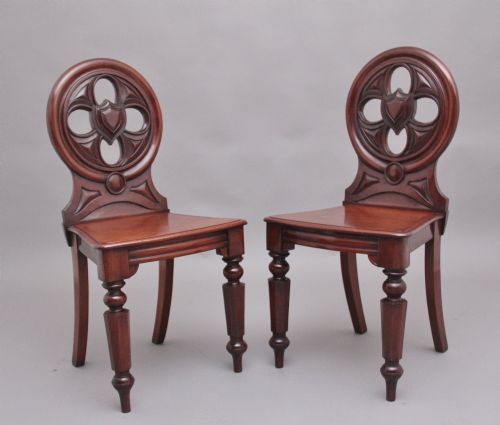
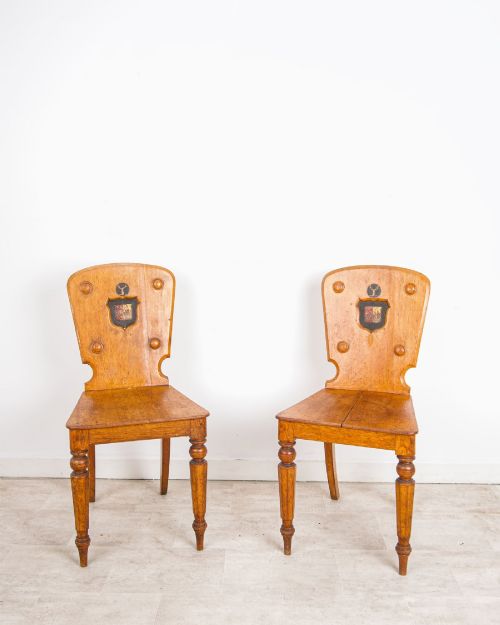
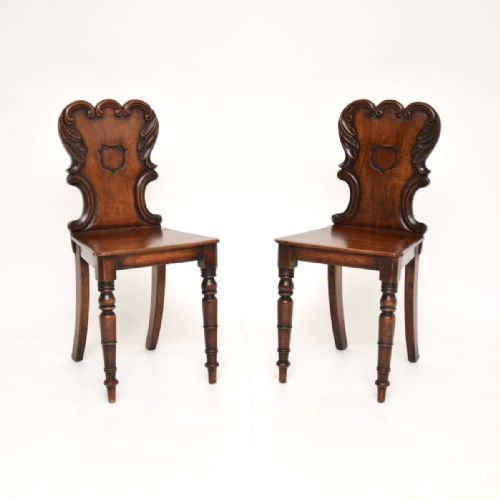
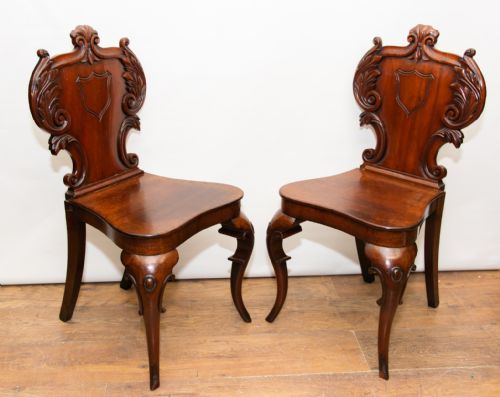
The aesthetic leans heavily into period revivals, featuring styles from the Georgian, Regency, and Victorian Gothic eras. Buyers frequently encounter shield backs, pelta backs, and carved heraldic motifs that denote lineage or estate provenance.
How they were made
Cabinetmakers utilised dense hardwoods like mahogany and oak, selecting timber for its strength and capacity to hold crisp, deep carvings. Panels and backrests were frequently shaped from single boards or joined with sturdy mortise and tenon construction.
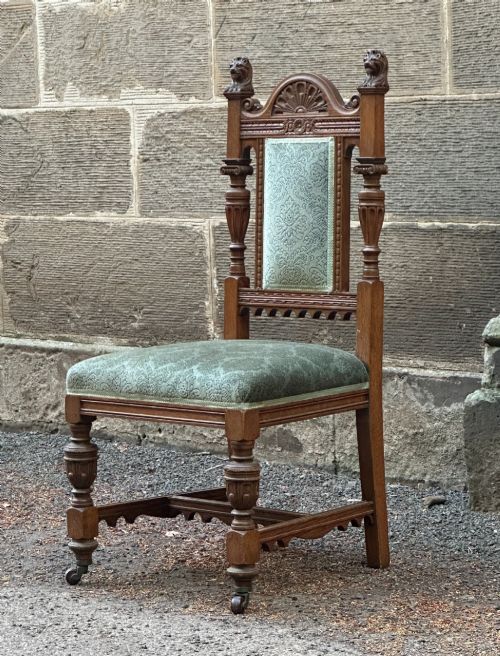
Carving defines the visual language of these seats, with artisans employing hand chisels to render heraldic shields, shell motifs, and barley twist supports. Surfaces were then finished with polish or wax to highlight the natural grain of the wood.
Listings feature woods such as mahogany, oak, and walnut across Victorian, Regency, and eighteenth-century periods.
What varies in quality
The depth and execution of the carved ornamentation separate standard examples from masterworks. Crisp relief work on shield backs and integrated structural turnings indicate superior workshop output.
Timber selection dictates long-term stability and visual richness. Dense, well-figured mahogany or quarter-sawn oak yields a heavier, more enduring frame than secondary woods.
Bruce Talbert·Gillows
The Entryway Side Chairs Glossary
- Hall chair
- A rigid wooden seat designed for a hallway or entryway, typically featuring a solid timber seat and a carved backrest. These pieces prioritised formal posture and heraldic display over physical comfort.
- Shield back
- A backrest shaped in the outline of a heraldic shield, frequently carved with crests or family armorials. This form gained popularity during the eighteenth and nineteenth centuries.
- Pelta back
- A backrest design taking its curved, shield-like form from the ancient Greek pelta shield. It appears on nineteenth-century mahogany seating.
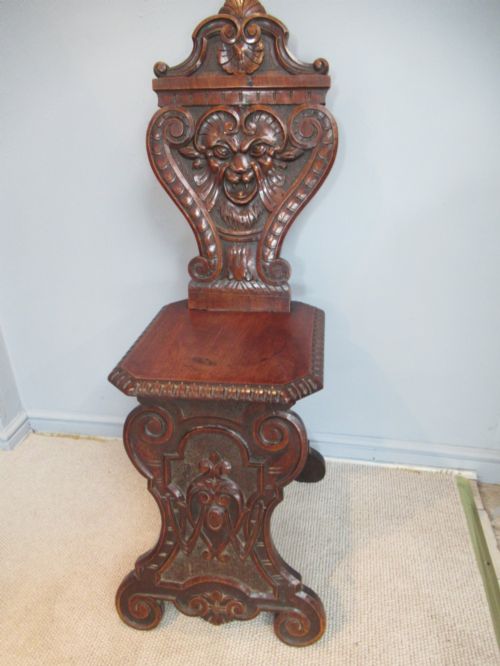
- Sgabello
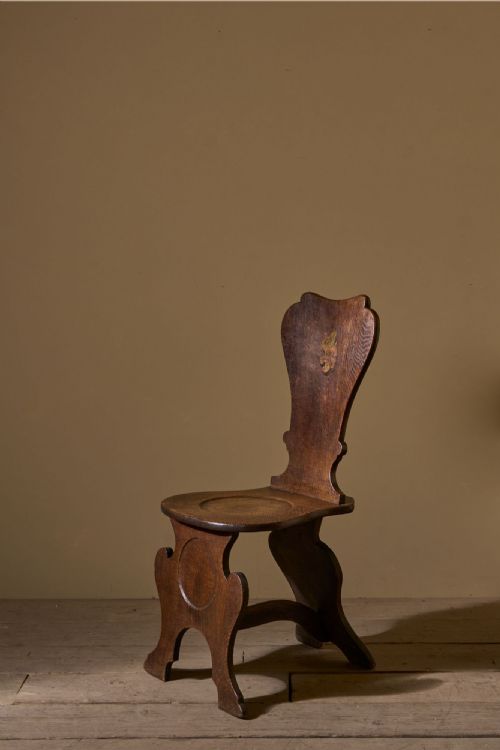
- An early Renaissance-style chair style featuring a wooden seat supported by flat board legs rather than four individual posts. Eighteenth and nineteenth-century makers revived this form in oak.
- Armorial
- Bearing a heraldic coat of arms or family crest, often carved into the wooden backrest of formal hall seating. Such detailing was used to mark estate provenance.
Entryway Side Chairs: Frequently Asked Questions
What is an entryway side chair?
An entryway side chair is a formal wooden seat designed for display and brief use in a hallway or passage.
These pieces feature rigid wooden seats and intricately carved backrests rather than soft upholstery.
How were hall chairs used?
Historically, these seats stood in grand entrance halls to be used by visitors waiting for admittance.
They also served to display family crests and heraldic shields to arriving guests.
How do I date a hall chair?
Dating relies on observing timber choices, such as oak in earlier periods versus mahogany and walnut later on.
Stylistic cues like Gothic revival motifs or Regency turning patterns also help establish the era of manufacture.