
Entryway Hall Seat
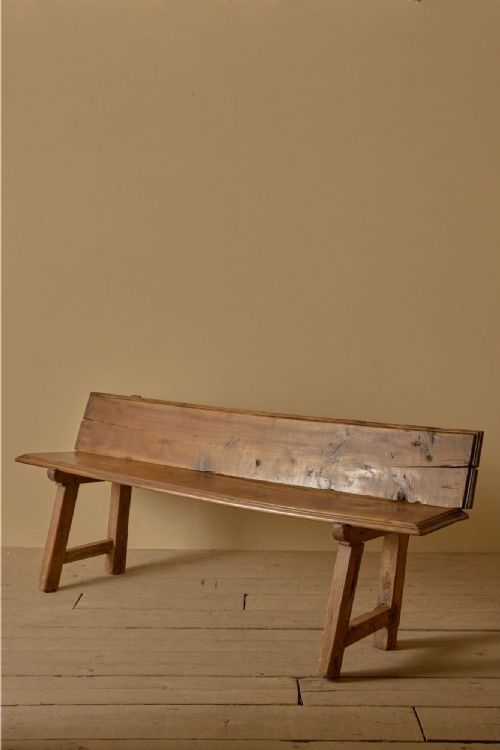
An entryway hall seat welcomes visitors with sturdy timber and practical storage, offering a traditional spot to pull off muddy boots.
Entryway Hall Seat
When people search for an entryway hall seat, they find a varied group of wooden furniture designed for corridors and passages, ranging from simple side chairs to high-backed settles. Oak and mahogany dominate the offerings, spanning centuries from the Georgian and Victorian eras through to the Arts and Crafts movement.
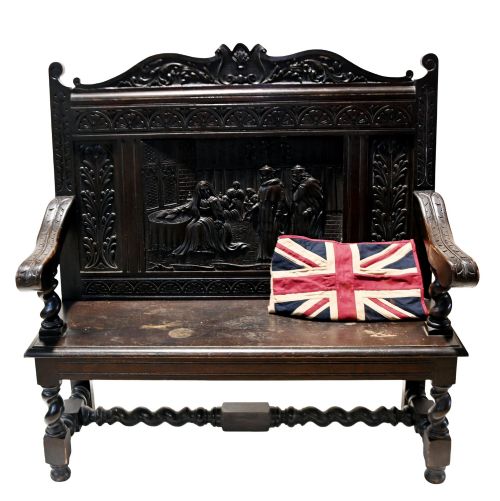
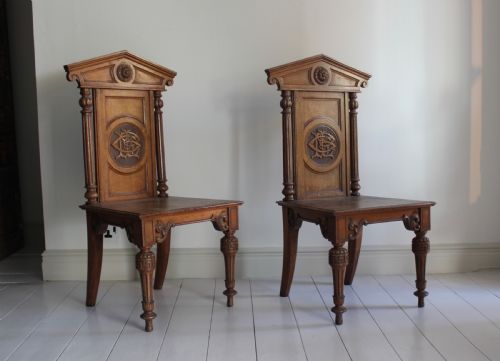
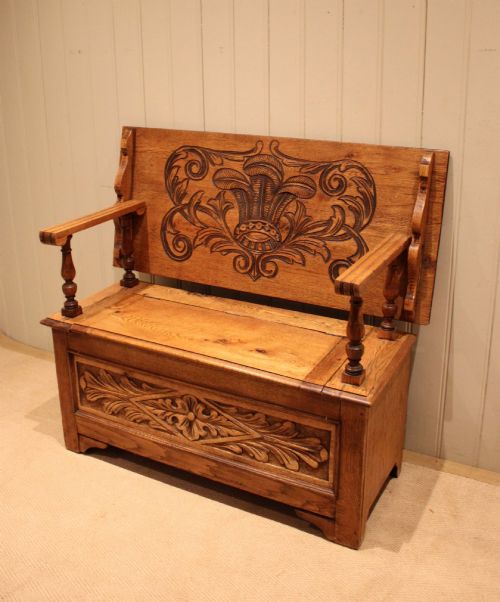
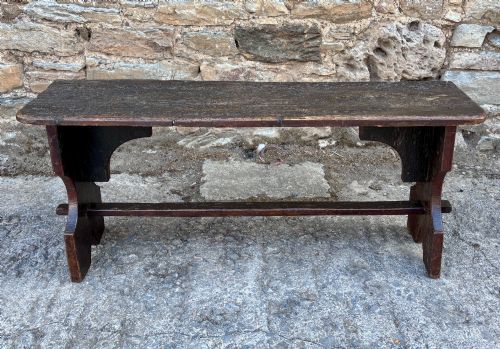
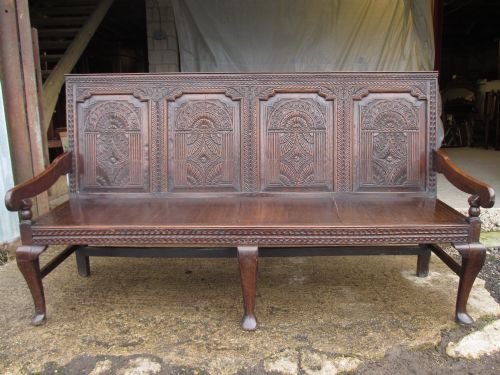
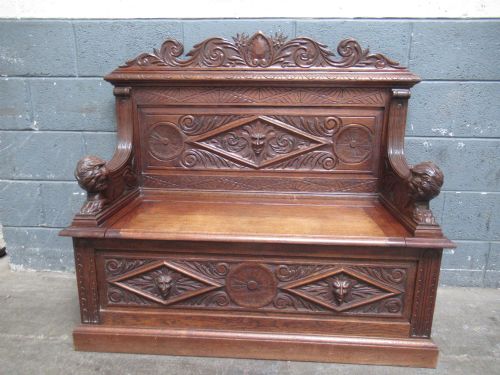
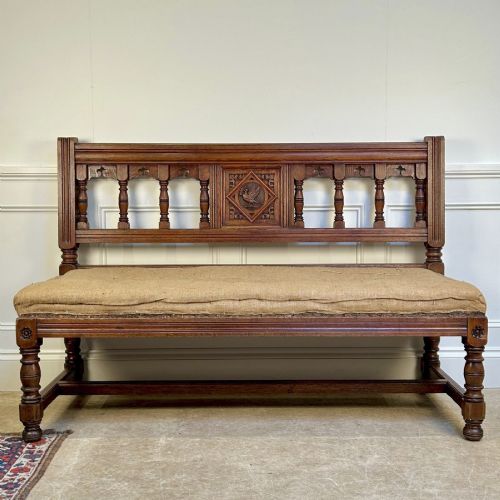
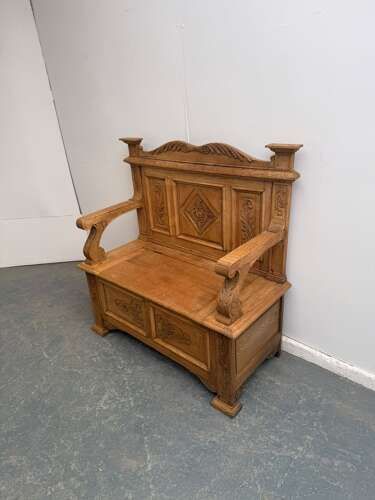
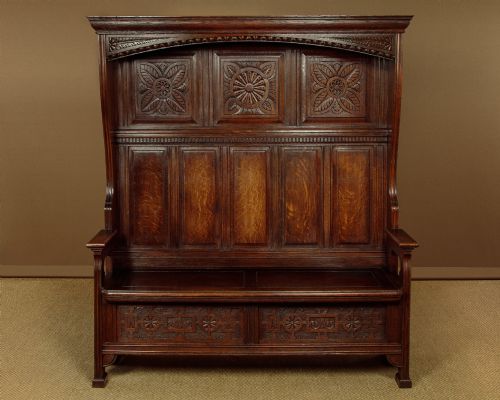
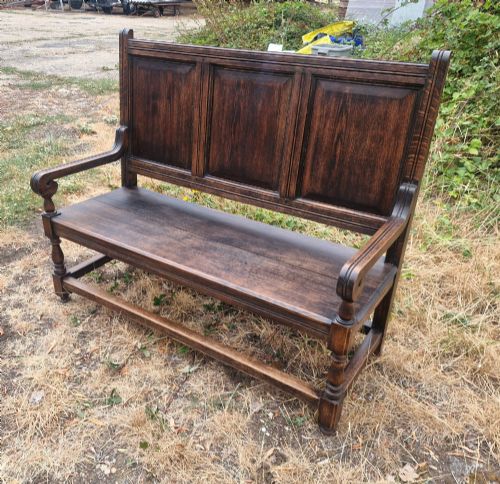
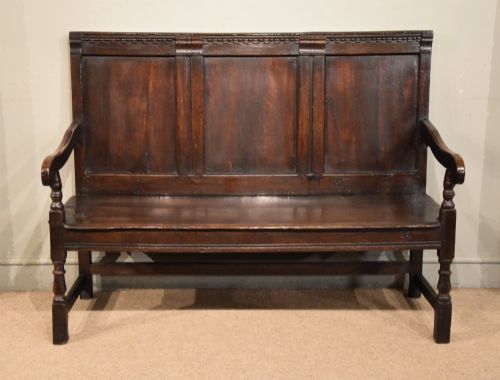
The most frequent examples on this page are sturdy oak benches and carved box settles from the nineteenth century, often incorporating hinged seats or integrated stick stands. Buyers also encounter pairs of matching hall chairs with shaped wooden panels, built to stand against narrow passage walls without blocking the thoroughfare.
Materials and construction methods
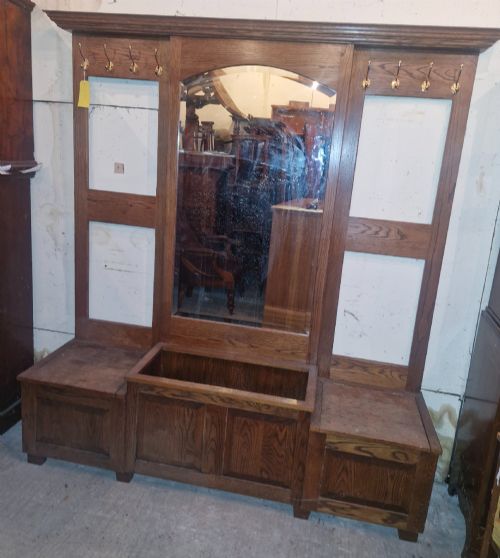
Cabinetmakers relied heavily on solid oak and mahogany, joining panels with traditional mortise and tenon joints to withstand the heavy daily use of a busy hallway. Many of these pieces incorporate turned brass fittings, iron hooks for hats and coats, or leather upholstery.
Carving and panel construction define the surface decoration, with craftsmen utilising hand chisels to render gothic tracery, heraldic shields, and floral motifs into the timber. Wax finishes protect the wood while accentuating the natural grain built up over generations of handling.
Listings feature oak, mahogany, and pine construction spanning the eighteenth, nineteenth, and early twentieth centuries.
Distinctions in construction and design
The division between standard workshop production and superior cabinet work rests on the crispness of the hand carving and the selection of figured timber. Examples bearing maker stamps from established firms demonstrate finer proportions and more deliberate integration of multi-functional elements like umbrella stands and cabinets.
Structural integrity depends on the retention of original joints and the stability of the timber over time. Pieces that preserve their original box storage compartments and unmodified wooden seats command greater attention from collectors than heavily altered items.
James Shoolbred and Co·Liberty
The Entryway Hall Seat Glossary
- Settle
- A wooden bench with a high back, solid arms, and often a hinged seat concealing a storage box beneath. This form kept draughts away from people sitting near hallway doors.
- Hall Chair
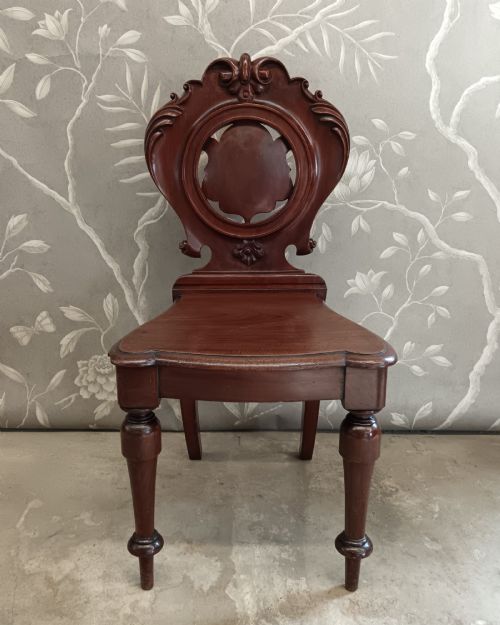
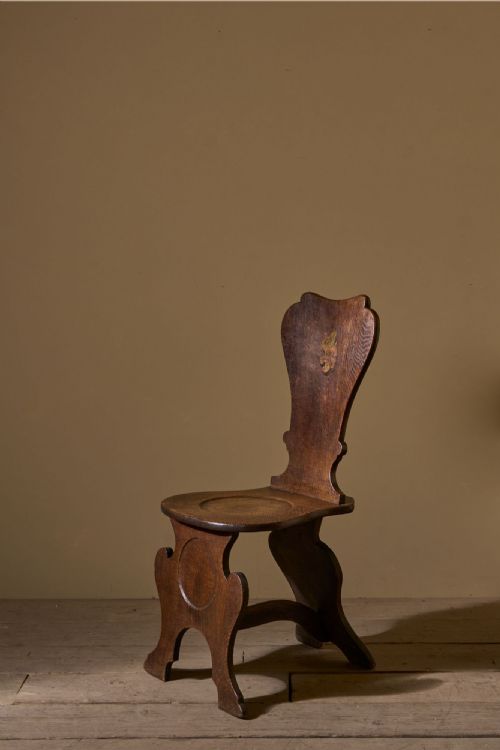
- A rigid wooden seat with a solid back, usually devoid of upholstery, designed for brief seating in a passage or reception room. These often feature carved heraldic shields or family crests.
- Box Settle
- A bench featuring a compartment beneath the seat for storing boots, gloves, or heavy textiles. The enclosed base prevented cold air from rising through the floorboards.
- Stick Stand
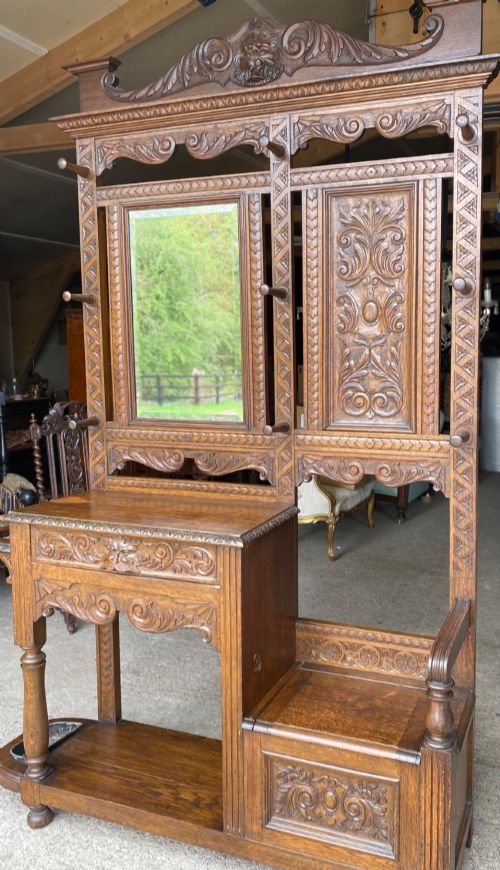
- An integrated rack or trough designed to hold walking canes and umbrellas, frequently incorporated into the framework of larger hallway seating. These often include metal drip trays at the base.
- Shield Back
- A chair back shaped in the contour of a heraldic shield, popular in mahogany seating from the Georgian and Victorian periods. Carvers frequently decorated these surfaces with painted or carved crests.
Entryway Hall Seat: Frequently Asked Questions
What is a hall settle?
A hall settle is a high-backed wooden bench designed to block draughts in corridors and passage areas. Many versions include integrated armrests and enclosed box storage beneath the seat.
Historically placed near front doors, these pieces provided a practical spot for putting on footwear while offering concealed storage for outdoor garments.
How do I style a hall bench?
A hall bench suits narrow spaces like corridors, boot rooms, and large reception areas where sturdy seating is useful. Pairing the timber seat with traditional coat hooks or a mirror enhances the practical function of the hallway.
Leaving the wood grain visible through wax polish allows the natural patina to complement both historic interiors and contemporary room schemes.
Are hall chairs comfortable?
Hall chairs feature solid wooden seats and upright backs designed for temporary use rather than extended lounging. Their firm construction encouraged proper posture for visitors waiting briefly in entrance halls.
Craftsmen shaped the wooden panels to fit the contours of the body, though squab cushions are sometimes added for extra comfort.
How do I identify Victorian hall seats?
Victorian hall seats often display dark waxed oak or mahogany with Gothic revival or Jacobean revival motifs. Look for heavy carved panels, heraldic shield backs, and integrated umbrella stands.
Makers from this period frequently combined multiple functions into a single piece of hallway furniture, such as incorporating cabinets or hinged storage boxes.