

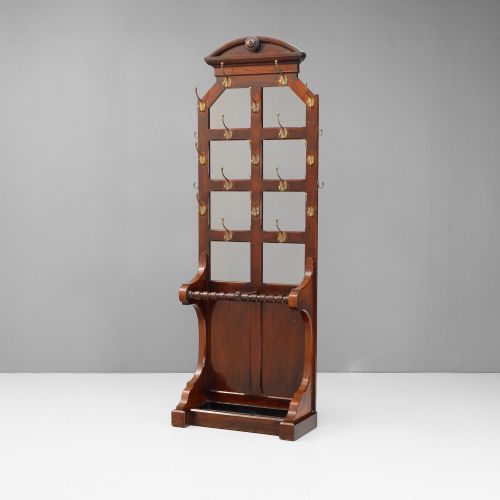
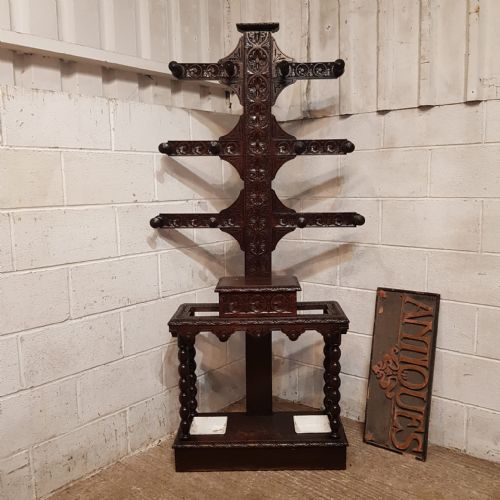
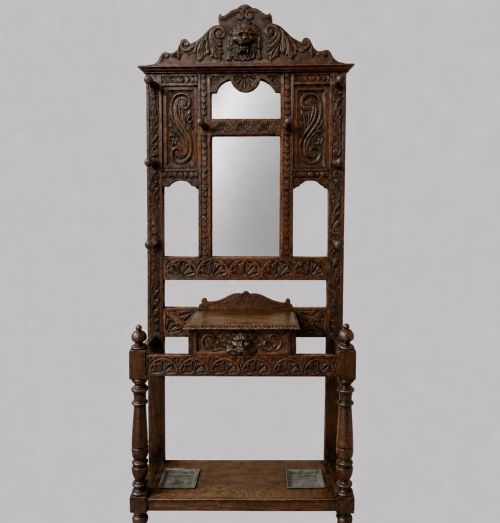
Entryway Coat Tree
An entryway coat tree organises visitors' hats and coats upon arrival, bringing period character and practical storage to a hallway.
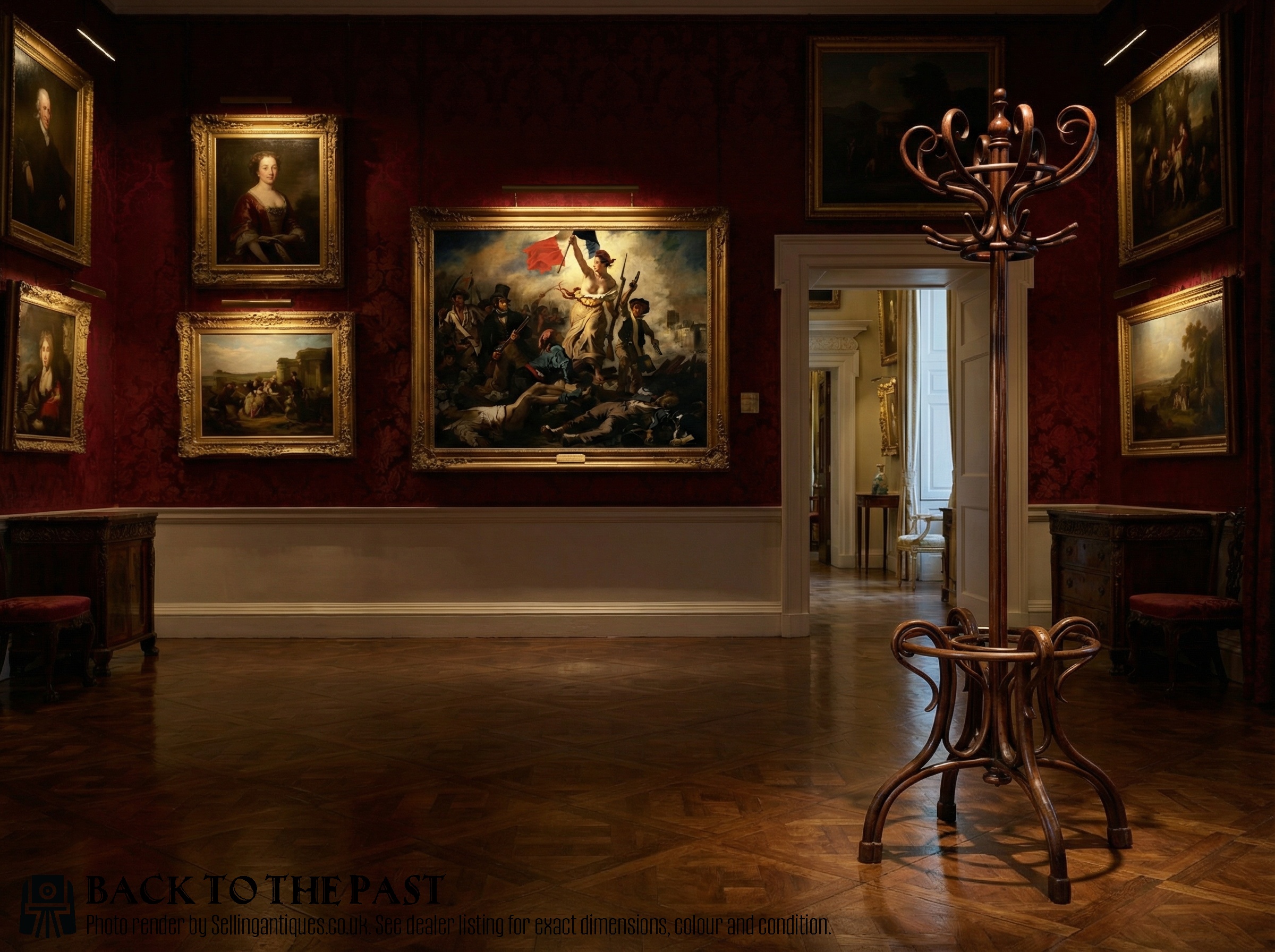
Entryway Coat Tree
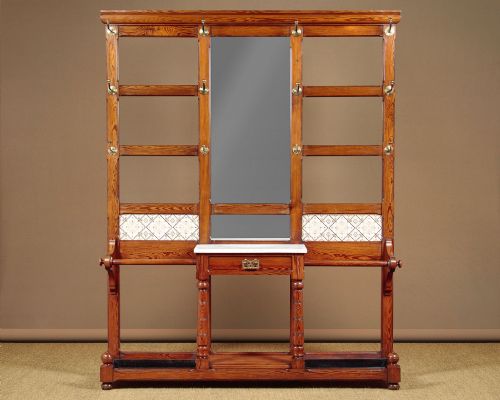
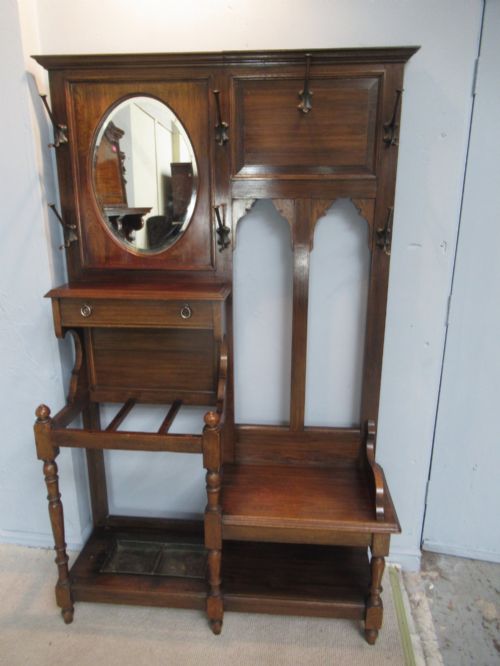
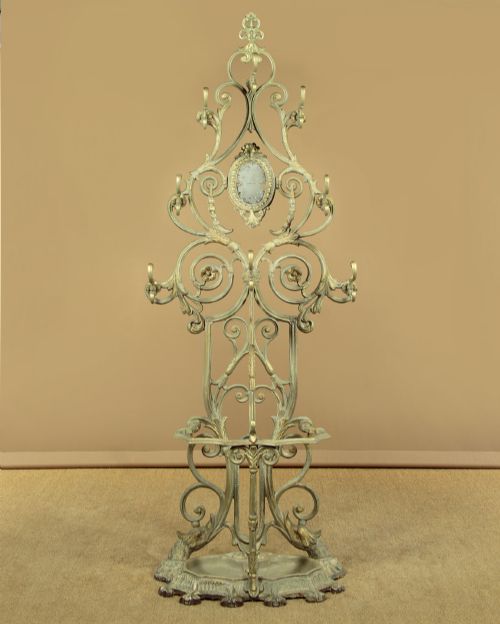
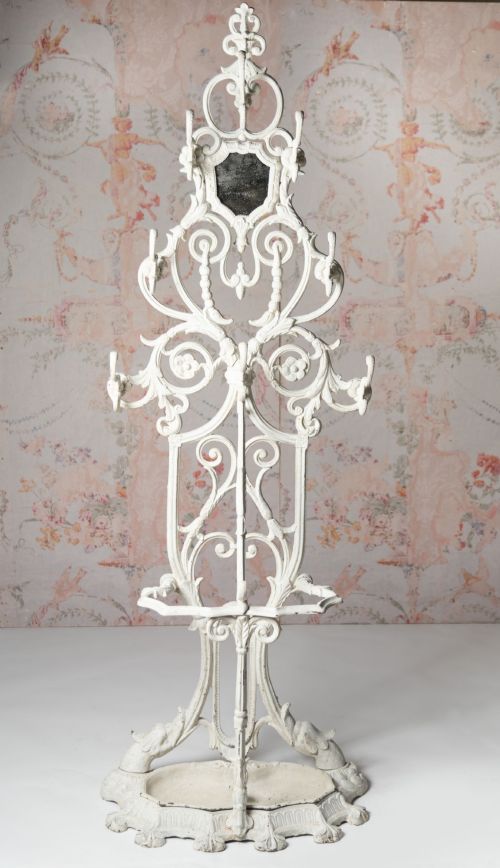
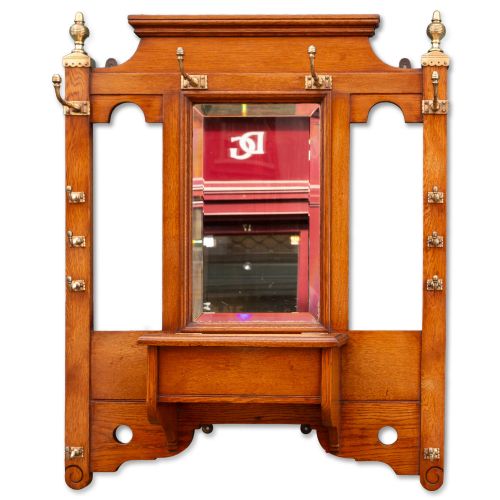
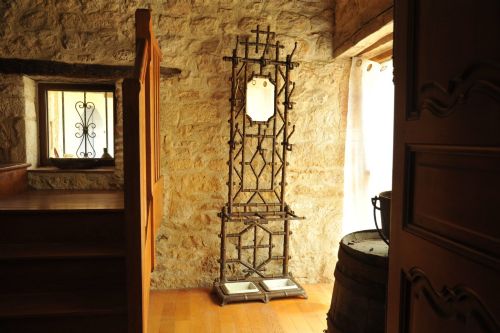
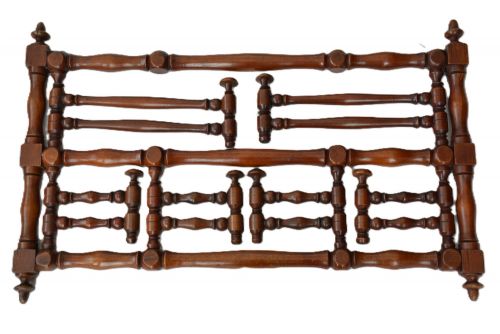
An entryway coat tree appears across multiple nineteenth and twentieth century periods, taking the form of tall hall stands, coat stands, and wall mounted racks. Victorian and Edwardian examples dominate the selection, alongside earlier nineteenth century pieces and items from around nineteen hundred.
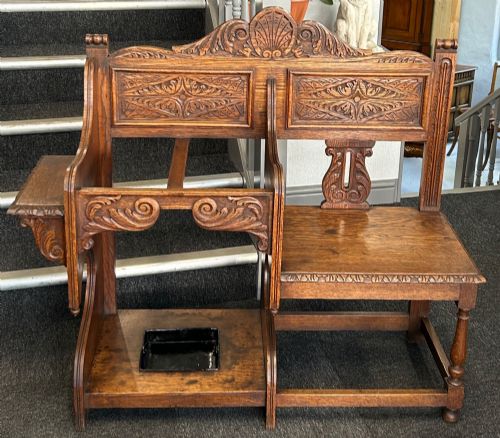
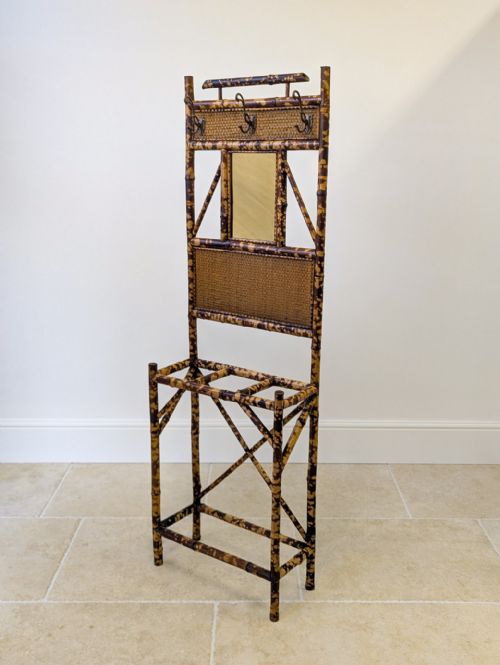
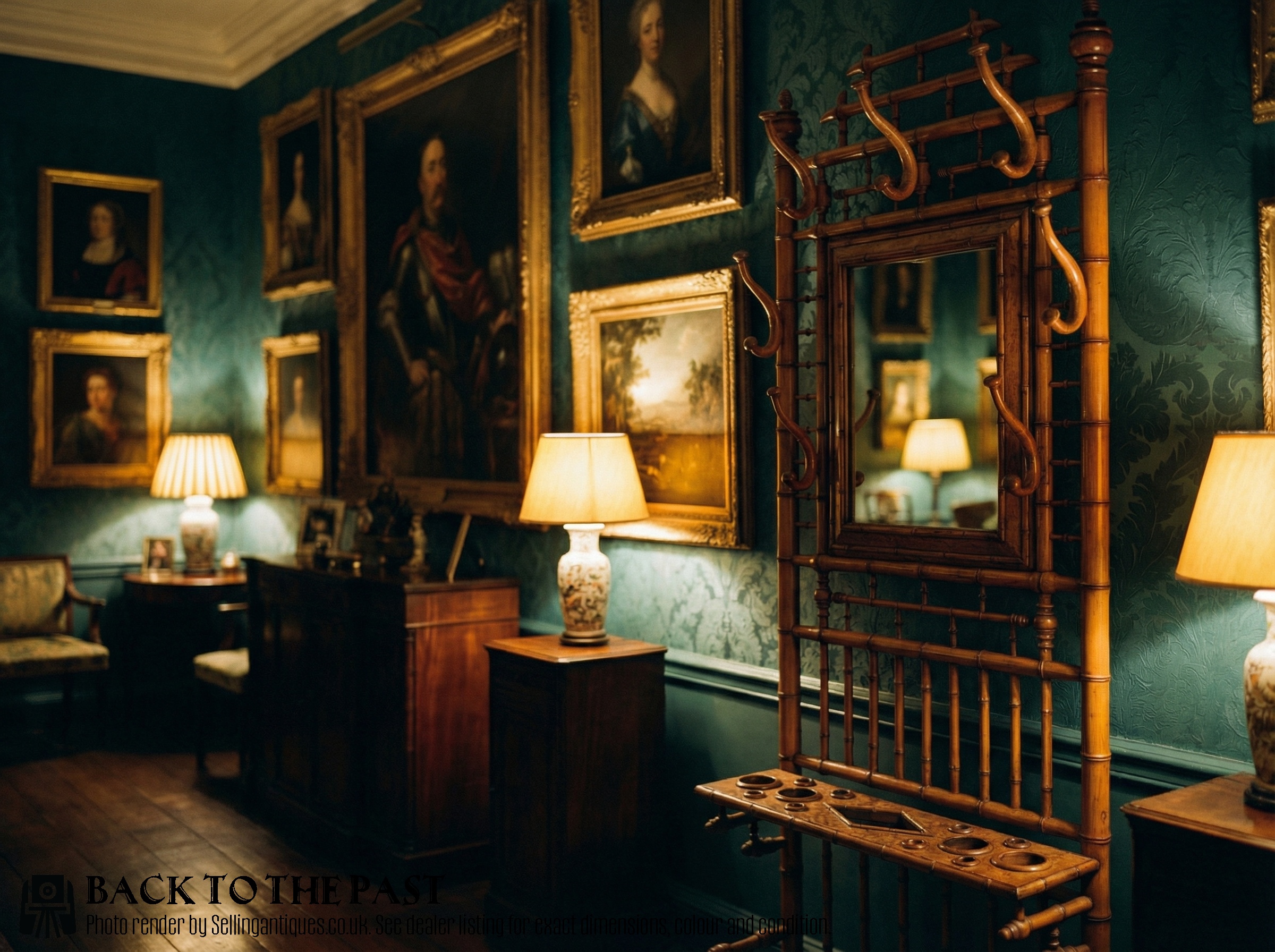
Makers produced these functional items as hall seats, combined coat and umbrella stands, and multi-functional bench units. Oak and mahogany form the primary wooden structures, supported by alternative materials such as cast iron, bamboo, and bentwood.
The Distinction in Quality
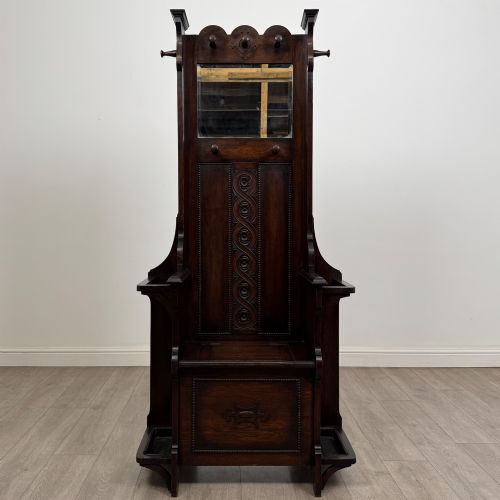
The standard of an entryway coat tree rests upon the selection of timber and the ambition of its carving. Heavy oak and substantial mahogany structures with integrated mirrors and fitted umbrella drip trays sit at the upper end of the range.
Subtlety of joinery and the integrity of applied brass hardware separate superior items from standard utility pieces. Sculptural elements, such as detailed Black Forest carvings or named foundry work, indicate elevated workshop production.
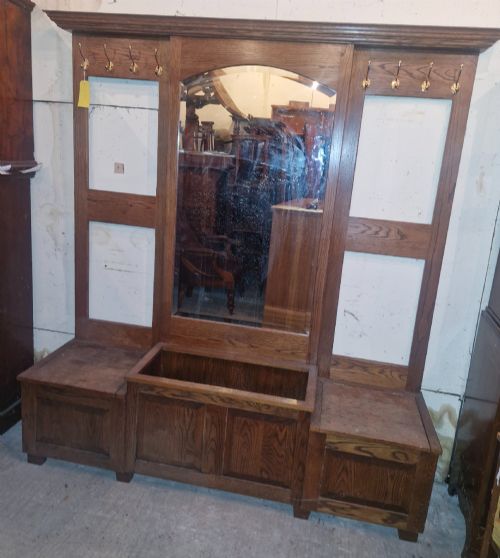
Several items combine coat storage with bench seating and umbrella wells, reflecting multi-functional Victorian hallway design.
The Falkirk Foundry·Fischel
The Entryway Coat Tree Glossary
- Hallstand
- A substantial piece of hall furniture combining coat hooks, a hat shelf, a central mirror, and umbrella stands with a drip tray. Many examples also incorporate a bench seat with hidden storage beneath.
- Bentwood
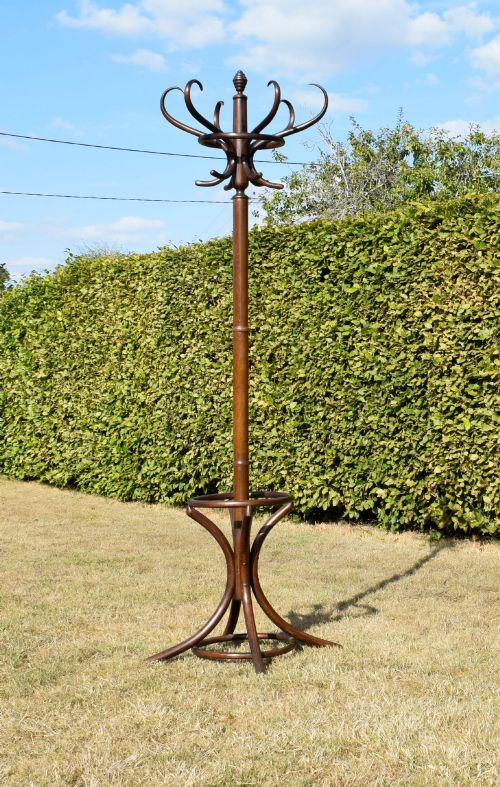
- A technique of steaming wood until pliable and bending it into curved structural forms. This method produced light yet resilient coat stands popular around the turn of the twentieth century.
- Faux bamboo
- Wood turned and carved to imitate natural bamboo stalks. Makers utilised this decorative finish during the Victorian Aesthetic Movement.
- Green man
- A sculptural face carved from foliage or branches, appearing frequently as an ornamental motif on nineteenth century carved oak furniture.
- Aesthetic Movement
- A late nineteenth century design style emphasising visual beauty over narrative meaning. Pieces from this movement often incorporated bamboo and ebonised wood.
Entryway Coat Tree: Frequently Asked Questions
What is an entryway coat tree?
An entryway coat tree is a tall piece of hallway furniture designed to hold outdoor garments, hats, and umbrellas.
These items range from cast iron stands to substantial wooden hall seats with integrated mirrors.
How were hall stands used historically?
Victorian and Edwardian households placed these stands immediately inside the front door for arriving guests and family members.
The hooks held heavy overcoats, while the base caught wet umbrellas and walking sticks.
How do I date an antique coat stand?
Dating relies upon stylistic markers, materials, and construction methods characteristic of specific periods.
Victorian pieces often feature heavy carved oak or mahogany, whereas Arts and Crafts and Art Nouveau examples display simplified lines or organic motifs.
Are bentwood coat stands sturdy?
Bentwood stands utilise steamed and curved timber to achieve surprising structural strength despite their slender appearance.
Their lightweight design made them easy to reposition within a hallway.