


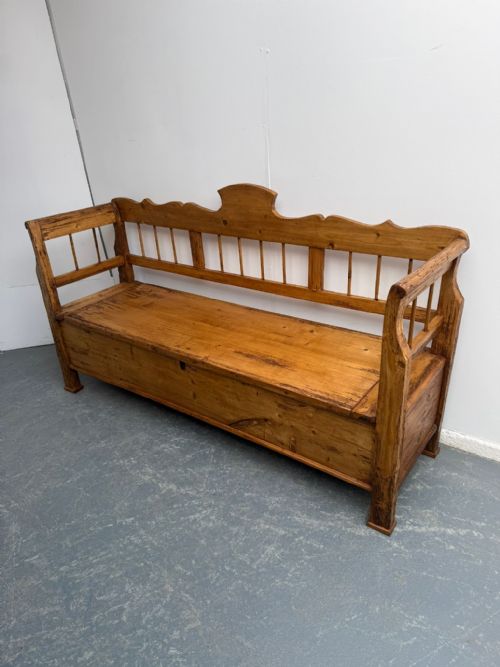


Entry Hall Storage Seat
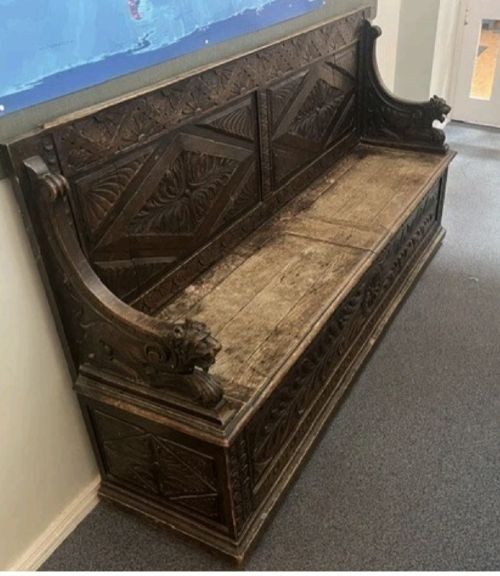
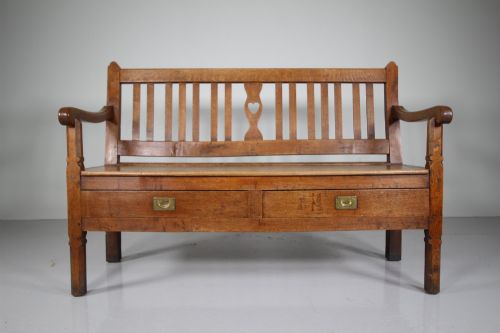
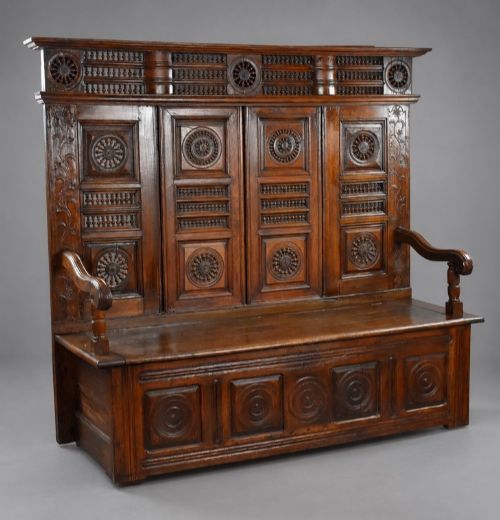
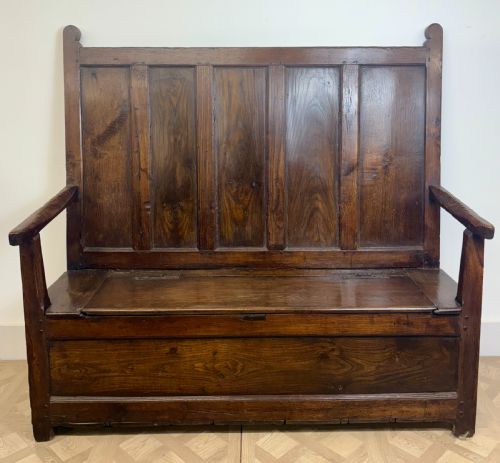
An entry hall storage seat is a robust piece of hallway furniture offering both a place to sit and a compartment to store household items.
Entry Hall Storage Seat
An entry hall storage seat encompasses forms such as settles, hall benches, box settles, and monks benches across periods including the 18th century, Georgian, Victorian, and Edwardian eras. Buyers searching for an entry hall storage seat will frequently encounter solid timber constructions designed for practicality and daily utility in corridors and vestibules.
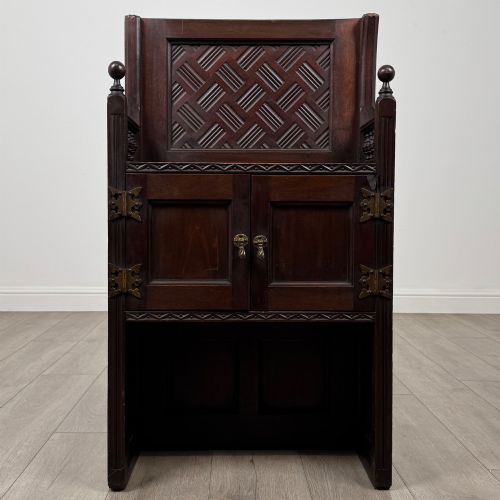
The material palette is dominated by sturdy timbers like oak, pine, and walnut, often accompanied by iron or brass hardware. These pieces draw upon styles such as Gothic Revival, Jacobean Revival, and Welsh Country traditions to deliver substantial presence and fitted seating.
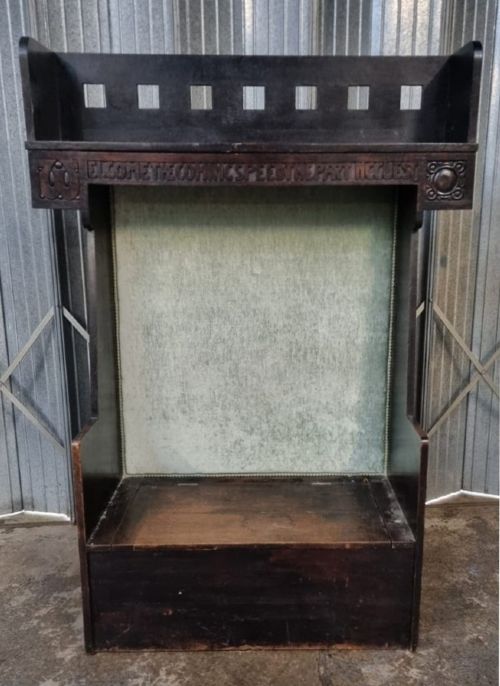
Many examples feature lift-up seats or integrated cabinets that conceal storage space beneath the bench. These functional compartments distinguish straightforward hallway seating from multi-purpose furniture designed to organise boots, blankets, or coats.
What varies in quality
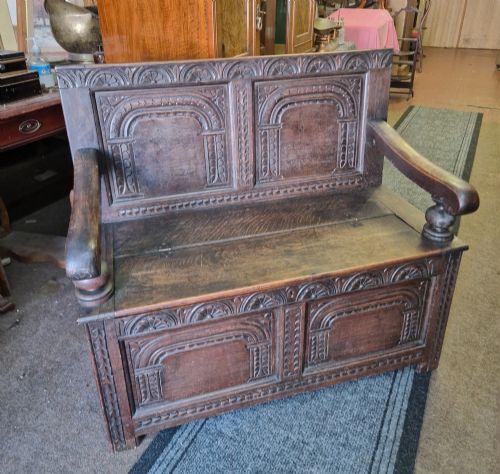
The standard of carving and the selection of timber dictate the distinction between vernacular workshop pieces and high-end cabinet work. Deeply carved panels, dense oak or figured walnut, and sophisticated revival styles reflect greater investment of time by the maker.
Structural integrity depends on the original construction of the box base and the preservation of the timber. Pieces retaining their original hardware, uncompromised joinery, and honest surface patination stand apart from examples altered or heavily restored over time.
One grey painted pine box settle crossed from Hungary to join the British hallway lineup.
Shapland & Petter·Liberty·Hampton & Son's
The Entry Hall Storage Seat Glossary
- Box settle
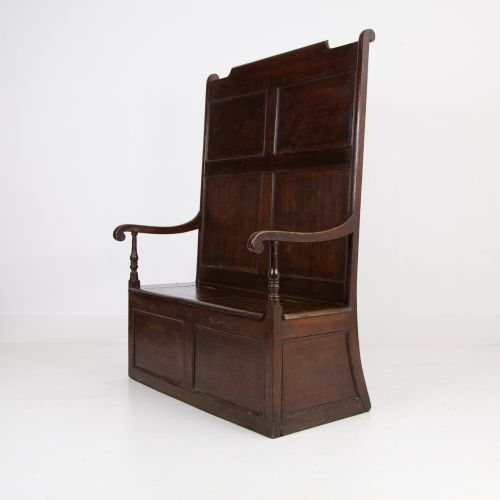
- A wooden bench featuring a high back, solid arms, and a concealed storage compartment beneath the hinged seat. This form provided draught-proofing and utility in domestic halls.
- Monks bench
- A multi-functional seat whose back could fold forward to form a table top, often incorporating a box base for storage. It is frequently associated with Victorian and Edwardian revival furniture.
- Welsh vernacular
- Furniture built by regional craftsmen using local timbers like oak and ash, prioritising utility and robust construction over metropolitan fashion. These pieces often display simple lines and honest joinery.
- Gothic Revival
- A style drawing inspiration from medieval architecture, characterised by pointed arches, tracery, and heavy carved ornamentation. It appears frequently on 19th-century oak benches.
- Panelling
- A method of framing wooden boards within a grooved framework to allow for natural wood movement. It provides structural strength to the high backs of settles and hall benches.
Entry Hall Storage Seat: Frequently Asked Questions
What is a box settle?
A box settle is a wooden bench with a high back and a storage compartment hidden beneath the hinged seat. It served to keep hallways tidy while offering a sturdy place to sit.
These pieces often stood near front doors to block draughts in older houses. The enclosed base provided practical storage for boots, textiles, and household goods.
How do I tell an 18th-century settle from a Victorian one?
Eighteenth-century pieces typically display simpler, pegged joinery and timber surfaces showing deep patination from age and wear. Their construction reflects regional vernacular traditions without heavy factory ornamentation.
Victorian and later examples often feature heavier, machine-assisted carving and revival motifs such as Gothic arches or Jacobean strapwork. The hardware and wood finishes also differ according to the period of manufacture.
Where should I place a hall bench?
A hall bench suits an entrance vestibule, corridor, or boot room where people pause to remove outerwear. Its narrow profile allows it to sit flat against a wall without obstructing narrow walkways.
The integrated storage compartments make these seats useful for containing clutter near an entryway. Placing one in a larger landing or reception room also provides functional occasional seating.
Are these seats comfortable?
Most historic hall benches and settles feature upright wooden backs and solid seats designed for temporary use rather than lounging. They were built for durability and utility rather than soft upholstery.
Some examples accommodate loose fabric cushions on the seat to add comfort. The high wooden backs were originally designed to keep out cold draughts from front doors rather than support relaxed posture.