
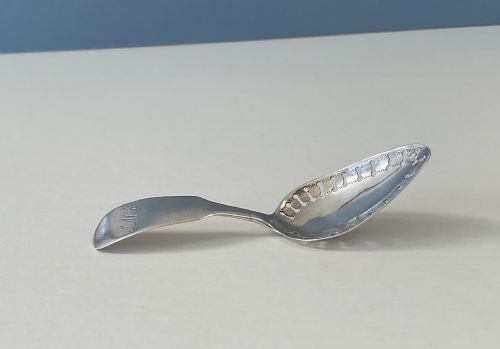


Engraved Tea Spoon
These engraved tea spoon examples bring character to the table, combining functional heritage with crisp surface work from the Georgian and Victorian eras.
Engraved Tea Spoon
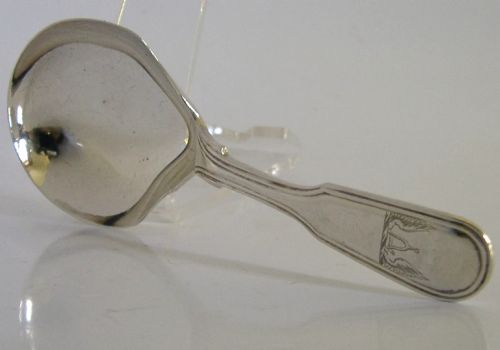
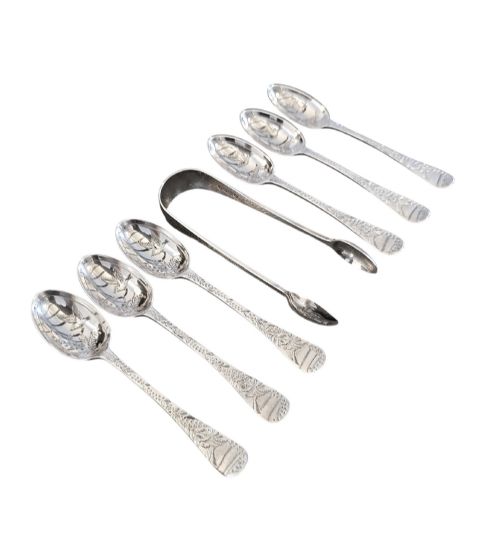
An engraved tea spoon covers small utilitarian vessels and flatware designed for leaf tea and serving, with the caddy spoon forming the most prominent variation on this page. These pieces emerge predominantly from Georgian and Victorian periods, often turning up alongside sets of teaspoons or fitted caddy sets.
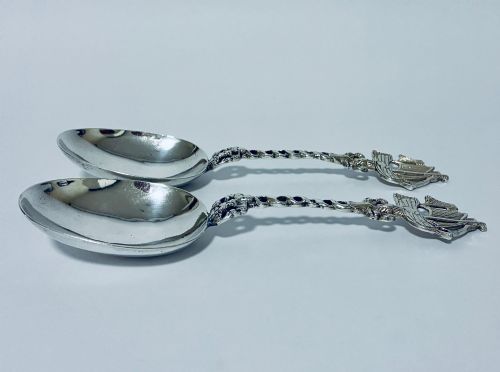
Makers shaped these items across provincial towns and capital workshops, resulting in regional forms like Scottish provincial output and Dublin silver. Collectors encounter standard teaspoons alongside specialised caddy spoons featuring shell bowls, rectangular bowls, and novelty shapes.
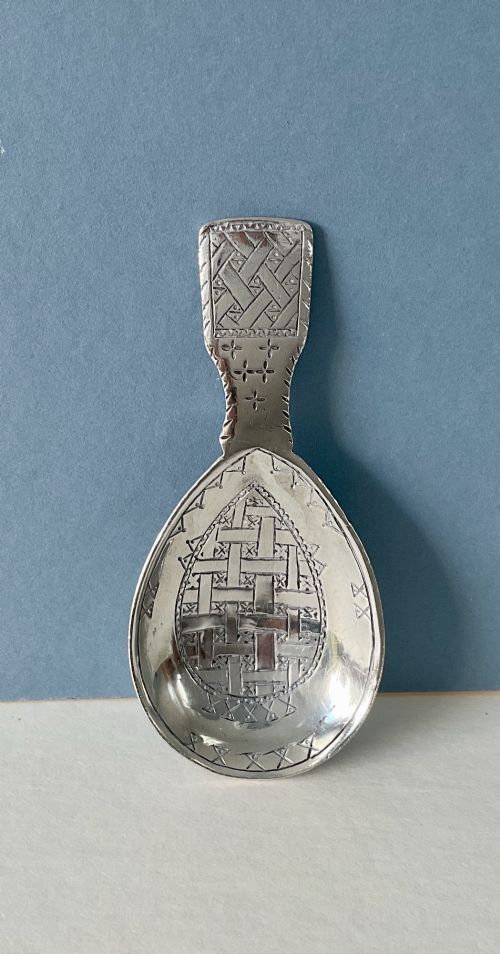
The decorative intent focuses on the handle or bowl, where bright-cut work, foliate engraving, and punch patterns define the surface. Many survive individually, though boxed sets and pairs appear among the nineteenth-century examples.
Materials and construction
Sterling silver dominates the selection, shaped through hammering, casting, and pressing before receiving hand-applied surface decoration. Silversmiths utilised silver-gilt for select interiors and highlights, while silver plate serves as the primary base for specific nineteenth-century caddy sets.
Engraving was executed by hand using gravers to cut linear patterns, scrolls, and foliate borders directly into the metal. Presentation cases lined with velvet, silk, or leatherette complemented the finer caddy spoons and matched spoon sets.
Listings feature sterling silver and silver-gilt pieces spanning the Georgian, Victorian, and Edwardian periods.
Judging the work
Quality rests on the crispness of the engraved lines and the preservation of the original bowl shape against decades of use. Crisp bright-cut work retains sharp angles that catch the light, whereas worn pieces show softened edges from polishing.
Maker marks and town hallmarks add distinction, with clear stamps indicating provenance from notable silversmiths in London, Birmingham, Sheffield, or Glasgow. The integrity of novelty forms, such as jockey caps or shell bowls, dictates the desirability of the piece.
William Neale·George Unite·Robert Stebbings·George Wintle
The Engraved Tea Spoon Glossary
- Caddy spoon
- A specialised small spoon designed for measuring loose tea leaves from a caddy into a pot. They frequently feature decorative shallow bowls and engraved handles.
- Silver-gilt
- Sterling silver that has been coated with a thin layer of gold on the surface. This technique provided a rich finish to the interiors of specific spoons and caddy sets.
- Hallmark
- An official stamp applied by an assay office to indicate the metal standard, the year of manufacture, and the maker. British pieces rely on these marks for exact dating.
- Bright-cut engraving
- A surface decoration technique using faceted cuts that reflect light from different angles. It creates a sparkling, geometric pattern across silver handles and bowls.
- Foliate engraving
- Ornamental carving styled after leaves, vines, and floral motifs. This style adorned the rectangular and shell-shaped bowls of nineteenth-century spoons.
Engraved Tea Spoon: Frequently Asked Questions
What is a caddy spoon used for?
A caddy spoon measures dry tea leaves from storage containers into the teapot. Their short handles and broad bowls were specifically proportioned for tea caddies.
Today they function as display pieces or collection items, though collectors still use them for measuring loose leaf tea.
How do I date a silver spoon?
Dating relies on the assay office hallmarks stamped directly onto the metal. These small symbols indicate the town, the silver standard, and a specific date letter.
Stylistic details like bright-cut engraving and bowl shapes also point toward Georgian or Victorian production periods.
How should I display antique spoons?
Displaying spoons safely involves mounting them in shallow wall cabinets or keeping them within lined presentation boxes. Avoid direct sunlight and damp conditions to preserve the metal surface.
Handling them minimally prevents oils from tarnishing the silver over time.