
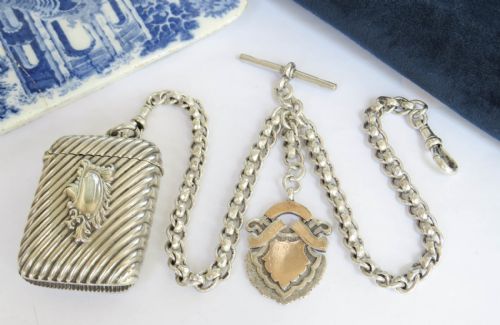
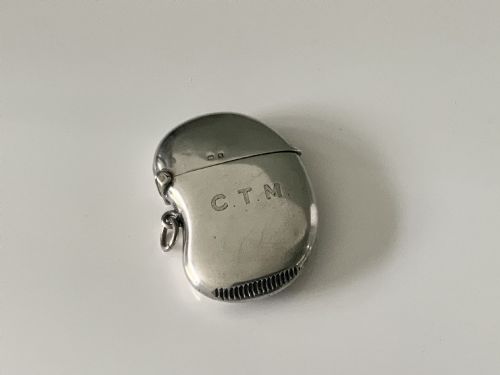

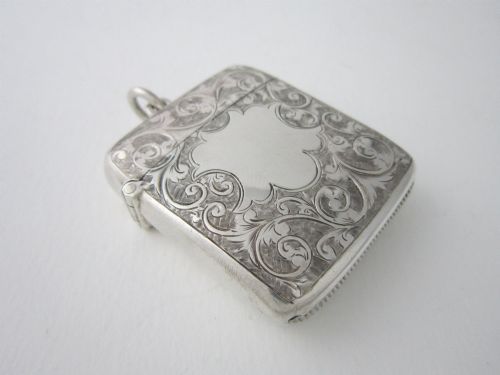
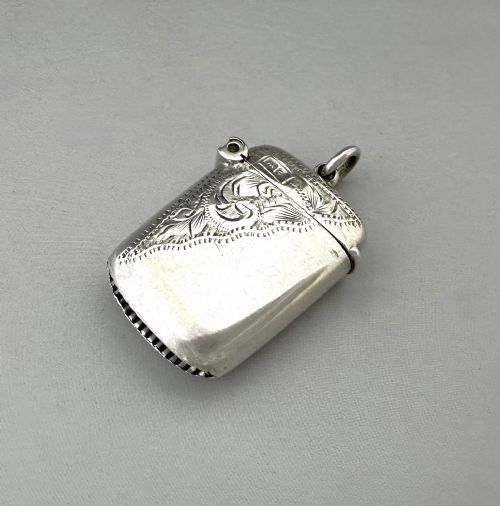

Engraved Sterling Silver Vesta
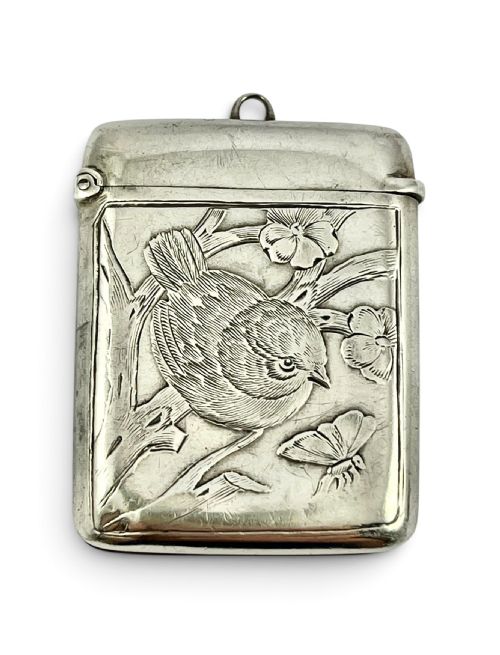
These engraved sterling silver vesta cases are pocket-sized match safes from the Victorian, Edwardian, and later periods that bring fine craftsmanship to daily carry.
Engraved Sterling Silver Vesta
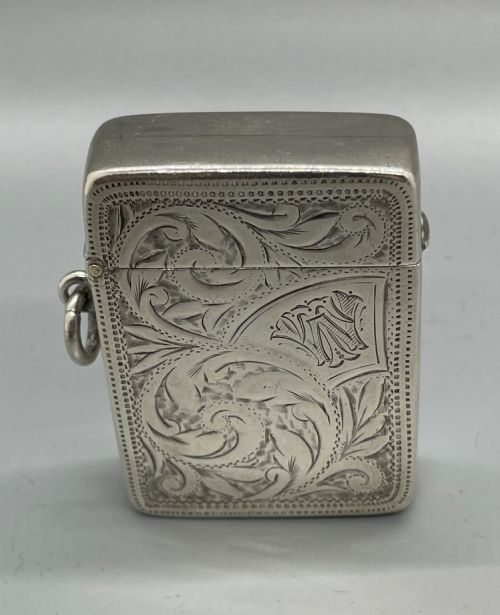
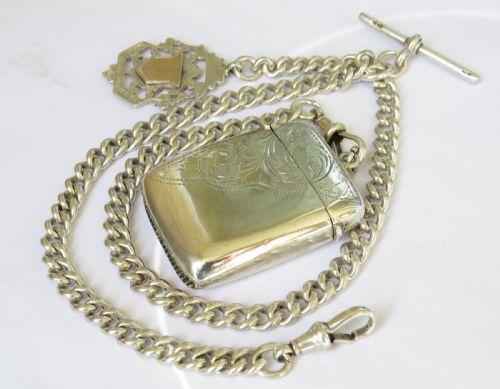
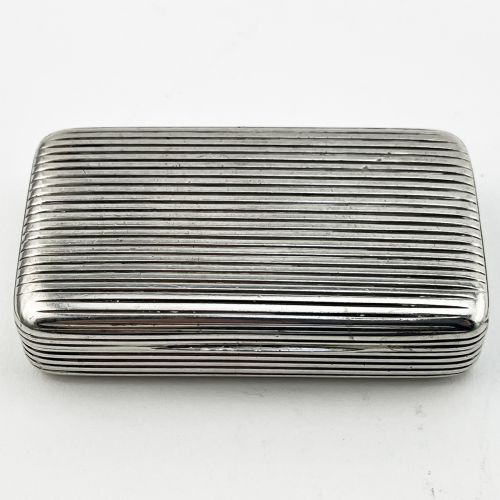
An engraved sterling silver vesta is a pocket container designed to hold matches safely while providing a striking surface on the base. When you search for an engraved sterling silver vesta, you encounter small personal accessories spanning the Victorian and Edwardian eras, as well as the 1910s and 1920s.
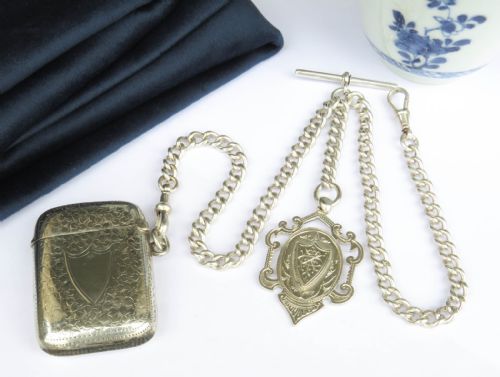
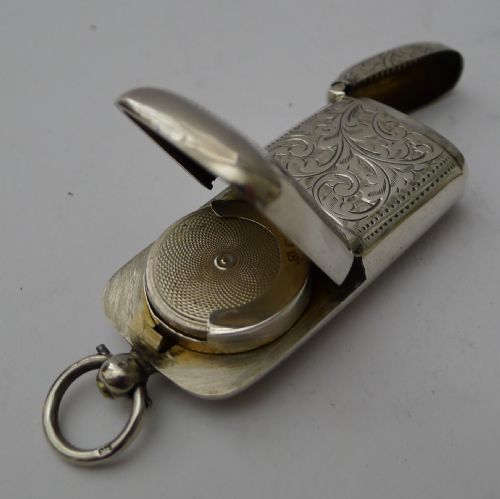
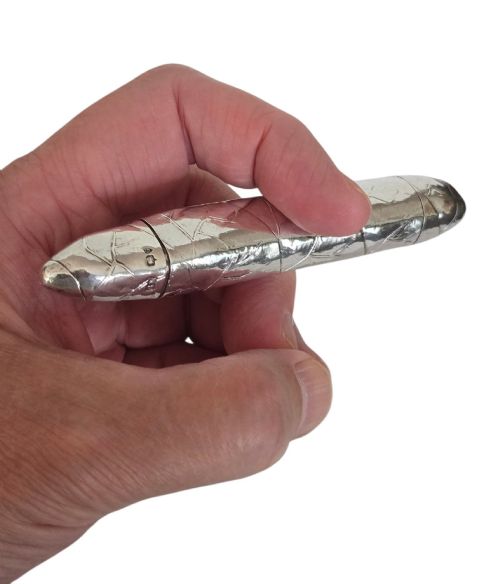
The forms vary widely from standard rectangular pocket cases to shaped, heart, kidney, horseshoe, and novelty animals like boars and pugs. Many examples integrate additional functions, appearing as double compartment combinations with snuff boxes, sovereign cases, or attached watch albert chains.
How they were made
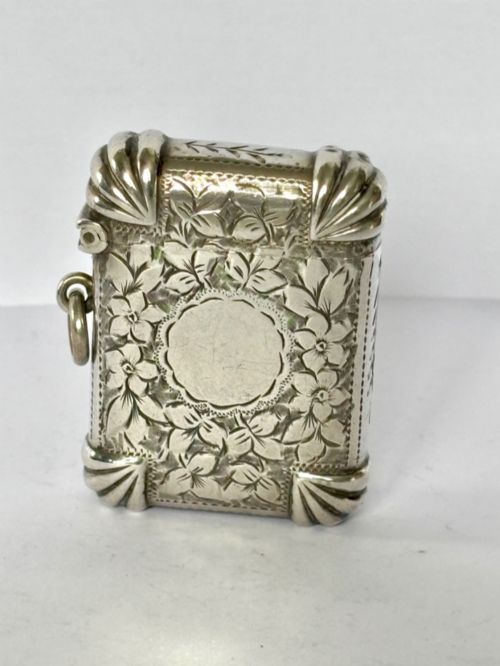
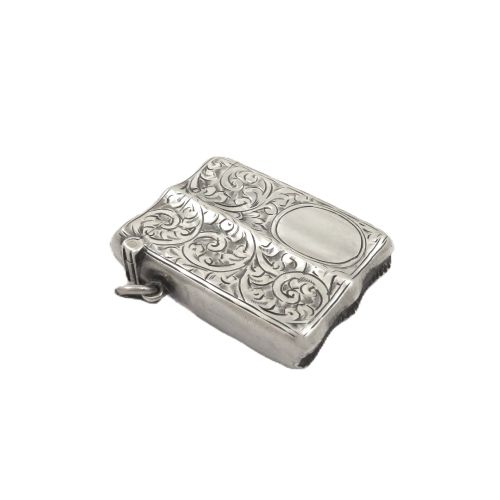
Silversmiths constructed these cases primarily from sterling silver, occasionally incorporating rose gold accents, coloured enamel work, or suede linings. The metal was shaped, hinged, and fitted with a striker edge, then decorated by hand.
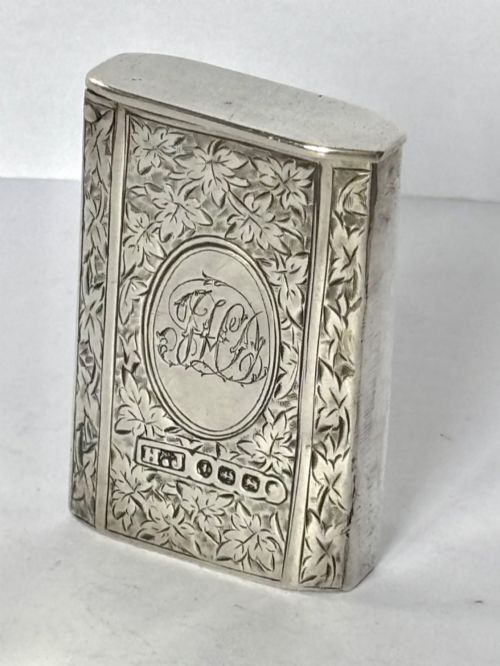
Engraving formed the primary surface decoration, utilising techniques such as scrollwork, geometric patterns, and pictorial scenes like golfers. Workshops stamped hallmarks onto the metal to record the town of assay, the date letter, and the sterling standard.
Carry a pug dog or a boar in your pocket with the novelty animal vestas.
What varies in quality
Quality rests upon the crispness of the hand engraving and the originality of the form, distinguishing standard rectangular boxes from novelty animal shapes or trick mechanisms. The weight of the sterling silver and the tightness of the spring-loaded lid closure also set pieces apart.
Maker attribution elevates certain items, particularly pieces stamped by notable workshops such as Sampson Mordan or EV Pledge & Son. The integration of extra materials like enamel work or gold accents marks the upper tier of production.
Howard James Birmingham·EV Pledge & Son·Sampson Mordan & Co·Alfred Clark·William Hair Haseler
The Engraved Sterling Silver Vesta Glossary
- Vesta
- A small pocket case designed to hold matches safely and keep them dry. It typically includes a serrated base for striking safety matches.
- Sterling silver
- A silver alloy containing 92.5 percent pure silver and 7.5 percent other metals, usually copper, to provide durability. British items carry the lion passant hallmark to indicate this standard.
- Hallmark
- An official stamp applied to precious metals indicating the standard of purity, the assay office, and the year of manufacture. Birmingham and Chester offices appear frequently on these items.
- Sovereign case
- A small round container engineered to hold British gold sovereign coins. Certain pocket pieces combine this function with a vesta compartment.
- Watch albert
- A chain attached to a pocket watch, frequently worn across a waistcoat. Vestas often hang from these chains alongside pocket watches.
Engraved Sterling Silver Vesta: Frequently Asked Questions
What is an engraved sterling silver vesta used for?
These pieces served as pocket containers for matches, allowing smokers to carry vestas safely without risk of accidental ignition in a waistcoat.
The integrated serrated edge on the bottom of the case provided a ready striking surface for the matches inside.
How do I read the date on a silver vesta?
Makers stamped hallmarks directly onto the sterling silver, including a specific letter stamp that corresponds to the assay office's year cycle.
Matching this letter against official assay office records for towns like Birmingham or Chester reveals the exact year of manufacture.
What is a combination vesta case?
Combination pieces joined the standard match compartment with secondary functions such as sovereign holders for gold coins or internal sections for snuff.
These multi-use items offered greater utility for daily wear on a pocket watch chain.
Are novelty vesta cases genuine antiques?
Novelty examples shaped like animals, boots, or hearts date primarily to the Victorian and Edwardian periods, carrying period hallmarks from silversmiths.
Their unusual forms reflect the Victorian appetite for whimsical, highly detailed pocket accessories.