

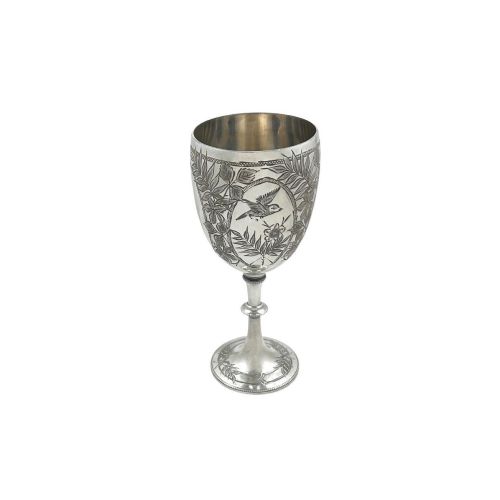
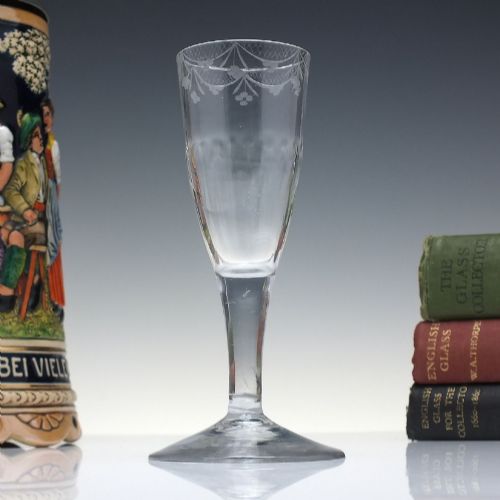
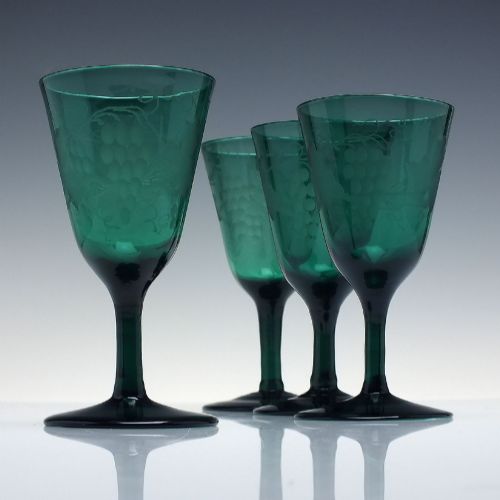
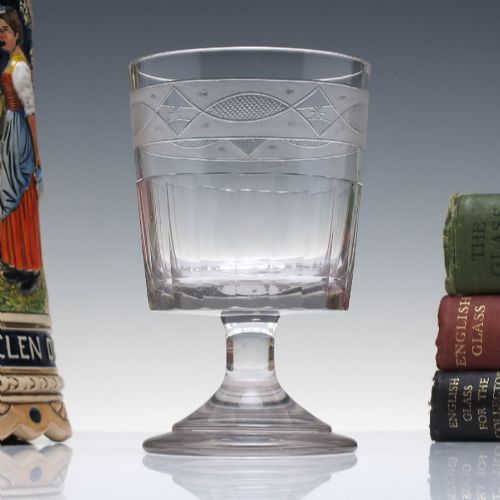
Engraved Stemware Goblet
When you search for engraved stemware goblet, you are looking at drinking vessels formed in lead glass and clear glass, shaped by historical periods from the eighteenth century onwards.
Engraved Stemware Goblet
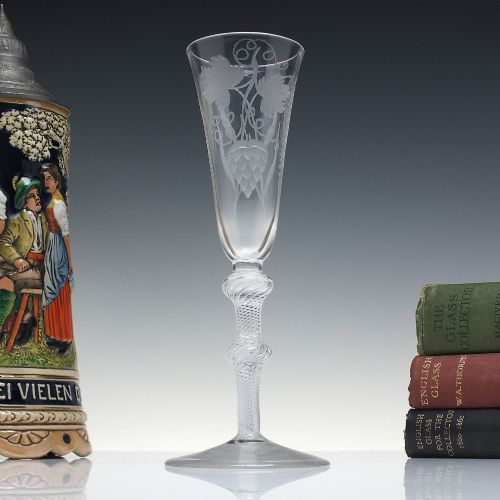
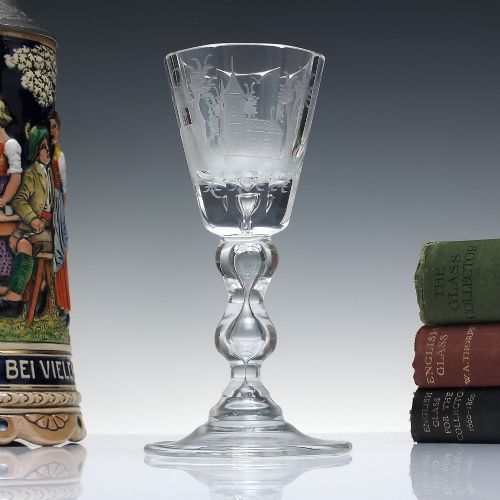
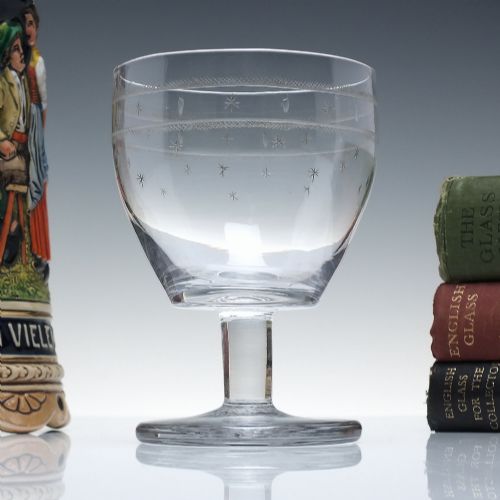
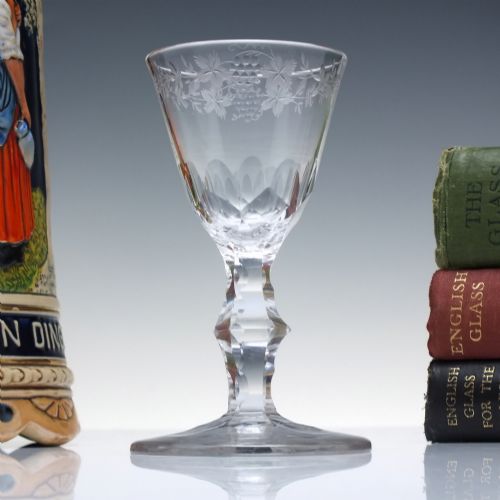
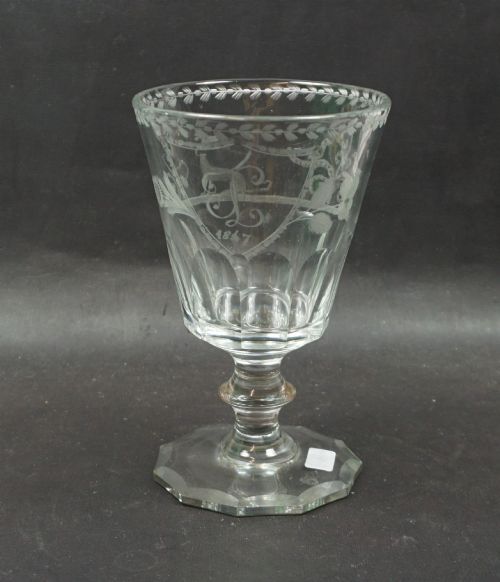
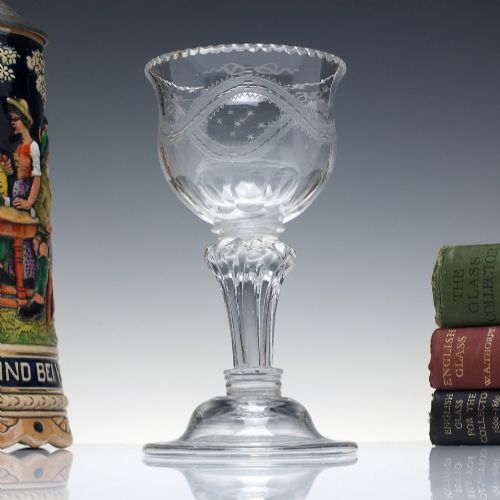
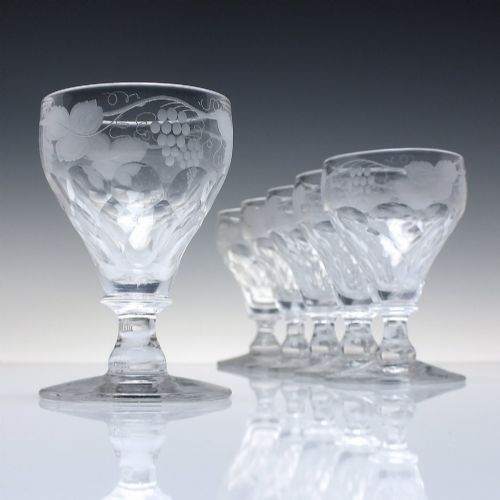
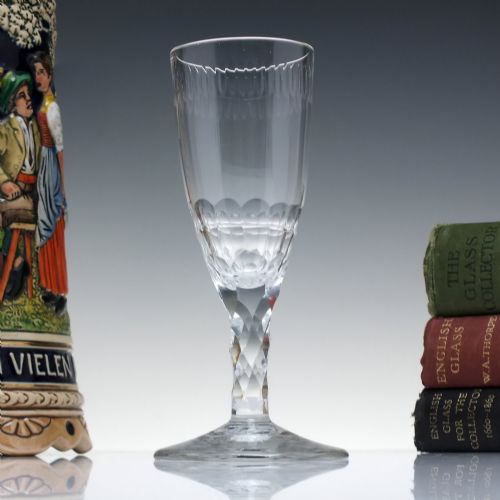
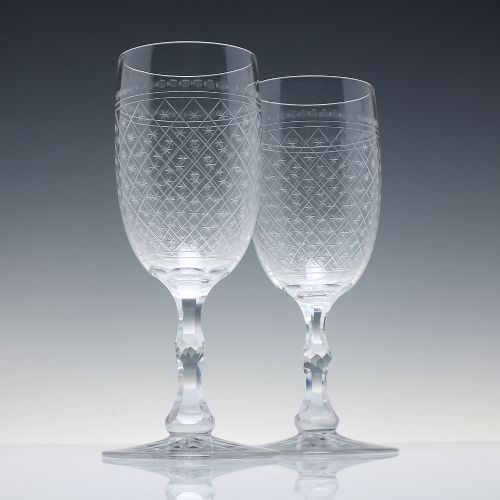
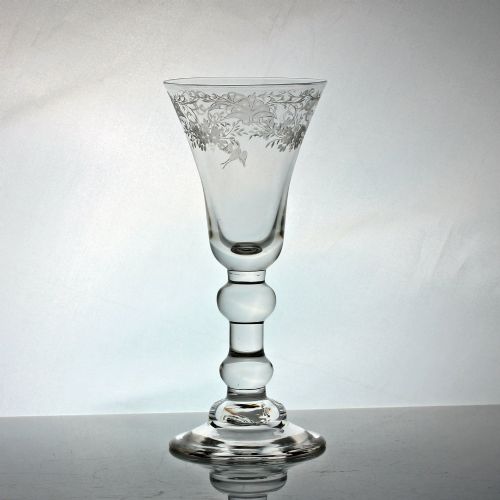
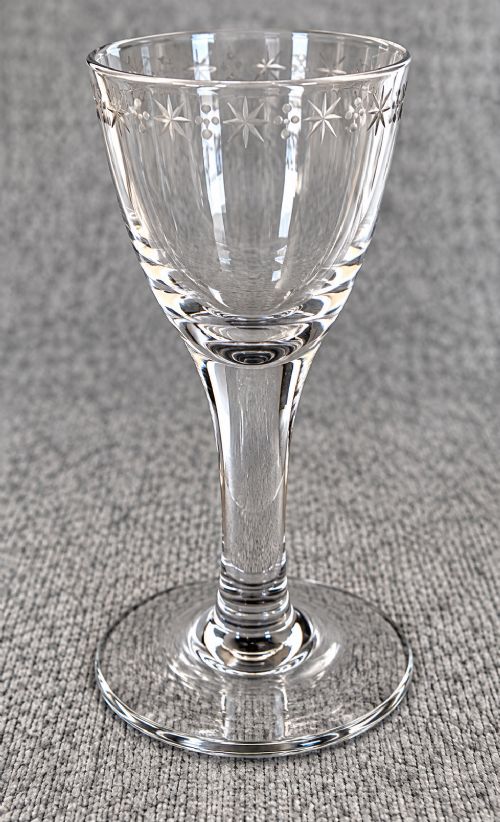
An engraved stemware goblet encompasses drinking vessels spanning the eighteenth century, the Georgian era, and the Victorian period, including rummers, wine glasses, and ale glasses. The items appearing most frequently on this page are eighteenth-century Georgian wine glasses and rummers featuring wheel-engraved or etched decoration on lead glass bowls.
Makers and manufacturers worked within distinct stylistic traditions, producing pieces ranging from simple balustroid forms to elaborate commemorative vessels. Collectors encounter domestic drinking glasses alongside specialised glassware services, each displaying specific decorative motifs such as hops, barley, and armorial crests.
How they were made
Glassmakers utilised lead glass and clear lead crystal as the primary medium, shaping bowls and stems through blowing and tooling techniques. Molten metal was gathered, blown into shape, and joined to applied feet and stems.
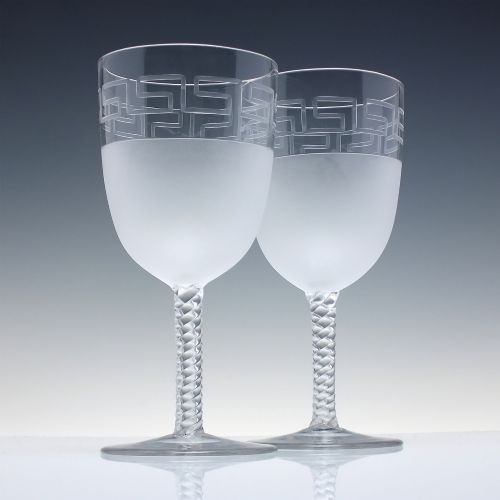
Decoration relied upon wheel engraving, intaglio cutting, and acid etching to create surface designs on the finished vessel. Artisans occasionally incorporated gilt highlights or enamel details to enhance the visual depth of the engraved motifs.
Engraved Stemware Goblet Retail Price Guide 2026
Typical asking prices for engraved stemware goblet among the pieces listed under this phrase on Sellingantiques today, from the lower quarter to the upper quarter. They describe what is for sale here now, not the wider market.
One remarkably honest eighteenth-century rummer bears the unromantic inscription 'Women & Wine'.
What varies in quality
Quality rests upon the crispness of the wheel engraving and the proportional balance of the stem and bowl. Superior examples display deep, clean cuts in the glass without surface scratching or distortion in the metal.
The complexity of the stem construction, such as air twists or opaque twists, distinguishes standard production from finer workmanship. Purity of the lead glass and clarity of the metal further differentiate standard drinking glasses from exhibition-quality pieces.
Moser Bohemian·Webb Corbett
The Engraved Stemware Goblet Glossary
- Baluster stem
- A heavy, swelling stem shape found on eighteenth-century drinking vessels. This form derives from architectural balusters popular in earlier periods.
- Rummer
- A large, sturdy drinking glass introduced in the late eighteenth century for ale or wine. These vessels usually feature thick bowls on short stems.
- Air twist
- An internal decorative effect within a glass stem created by drawing out bubbles of air during manufacture. These spiral threads run through the length of the stem.
- Intaglio
- A technique where the design is sunk below the surface of the glass rather than carved in relief. This method requires considerable skill with a small cutting wheel.
- Folded foot
- A rim folded under the base of a glass to provide extra strength and weight. This construction method appears frequently on eighteenth-century drinking vessels.
Engraved Stemware Goblet: Frequently Asked Questions
What is an engraved stemware goblet used for?
These vessels served as drinking containers for wine, ale, spirits, and commemorative toasts during formal dinners and social gatherings. Owners utilised them for daily dining as well as marking significant political or personal events.
Over time, many of these glasses transitioned from practical table use into cabinet pieces collected for their historical association and decorative engraving.
How do I identify an 18th-century glass?
Eighteenth-century pieces typically exhibit lead glass construction with distinct stem formations like air twists, opaque twists, or baluster profiles. The metal often shows small surface imperfections characteristic of early manufacturing methods.
Foot rims frequently feature folded edges or pontil marks on the underside where the glassblower detached the pontil rod.
What is a Jacobite wine glass?
Jacobite glasses are eighteenth-century drinking vessels engraved with secret symbols supporting the exiled Stuart dynasty. Common motifs include the rose and oak leaf, which served as covert identifiers for loyalists.
These pieces required careful handling during political gatherings where supporters toasted the king over the water.
How should I clean antique glass?
Antique glassware requires gentle hand washing in warm water using a mild detergent, avoiding sudden temperature changes that can crack the material. Drying with a soft lint-free cloth preserves the clarity of the lead glass.
Harsh abrasive cleaners and modern dishwashers must be avoided to protect the delicate wheel-engraved surface and any gilt highlights.