

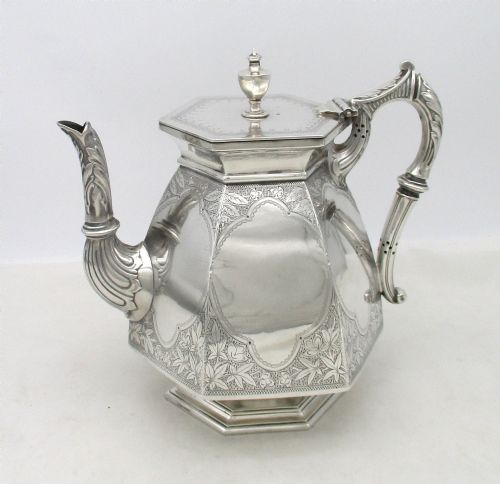


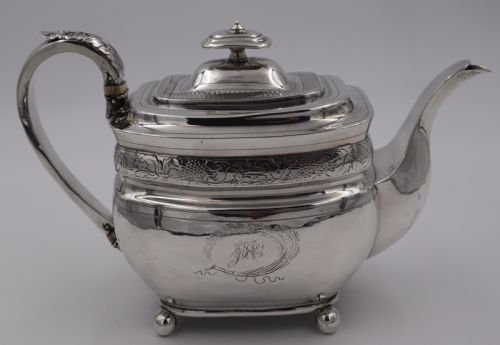

Engraved Silver Tea Pot
These engraved silver tea pot examples bring nineteenth century and Georgian craftsmanship directly to the table.
Engraved Silver Tea Pot
An engraved silver tea pot is a functional vessel designed for brewing and serving hot tea, decorated with surface chisel work or engraving. These pieces emerge across nineteenth century, Georgian, Regency, and Victorian periods, often taking the form of standalone teapots or components of larger matching tea and coffee services.
The versions most commonly met on this page span Georgian sterling silver through to later silver plate and electroplated nickel silver items. Makers ranged from provincial English workshops to prominent silversmiths, producing both solid silver and plated alternatives for domestic use.
Forms vary from classic Georgian shapes to ornate Victorian and Aesthetic Movement designs, frequently incorporating insulating elements on handles to manage heat. Buyers encounter everything from provincial Newcastle items to grand London pieces bearing detailed decorative panels.
Materials and construction
The construction relies on sterling silver or various plating methods such as Old Sheffield plate and electroplated nickel silver over a base metal. Workshops shaped the bodies through hammering or spinning before applying detailed surface engraving by hand.
Practical domestic utility required careful thermal management, leading makers to incorporate bone or wood insulators into the handle mounts. These natural materials prevented the heat of the boiling contents from transferring directly to the metal handle during service.
Engraved Silver Tea Pot Retail Price Guide 2026
Typical asking prices for engraved silver tea pot among the pieces listed under this phrase on Sellingantiques today, from the lower quarter to the upper quarter. They describe what is for sale here now, not the wider market.
The listings show materials ranging from sterling silver and silver plate to wood and bone insulators.
Assessing quality and craftsmanship
Quality reveals itself in the crispness and depth of the hand engraving, where sharper, more deliberate cuts indicate superior artisan skill over shallow machine work. The weight and balance of the vessel, alongside the structural integrity of the spout and handle joints, separate finer examples from standard production.
The choice of materials also dictates the tier of the piece, with solid sterling silver retaining intrinsic value above plated alternatives like electroplated nickel silver. Furthermore, the presence of legible hallmarks provides definitive evidence of the maker and date, elevating historical interest.
Walker and Hall·Paul Storr·Boardman Glossop and Co·John and George Angell
The Engraved Silver Tea Pot Glossary
- Sterling silver
- A silver alloy containing 92.5 percent pure silver by mass and 7.5 percent other metals, usually copper. This standard alloy provides the durability required for domestic holloware while maintaining a bright metallic lustre.
- Old Sheffield plate
- An early fused plating technique where a thin sheet of sterling silver is fused to a thicker copper base. This method creates a durable dual-layer metal sheet favoured in eighteenth and early nineteenth century manufacturing.
- Electroplated nickel silver
- A base metal alloy of copper, nickel, and zinc coated with a thin layer of pure silver through an electrolytic process. Introduced in the nineteenth century, this technique offered a cheaper alternative to solid silver.
- Hallmark
- An official stamp applied by an assay office to indicate the purity of a precious metal, the maker, and the year of manufacture. These marks provide reliable provenance for British items.
- Aesthetic Movement
- A late nineteenth century design style that emphasised visual beauty over narrative subject matter, drawing inspiration from Japanese art. Objects from this movement often feature asymmetric engraved motifs and natural forms.
Engraved Silver Tea Pot: Frequently Asked Questions
How do I clean an engraved silver tea pot?
Maintenance requires mild soapy water and a soft cloth to clean the surface without wearing down the delicate engraved lines. Avoid harsh abrasive dips that strip away historical patina and damage plated surfaces.
Storing the vessel in a dry environment helps prevent accelerated tarnishing between uses. Regular gentle dusting is usually sufficient for pieces kept on display.
Can I use an antique silver tea pot daily?
Using these pots for daily service is entirely possible provided you handle them with care and avoid thermal shock from boiling water hitting ice-cold metal. Solid silver handles require caution, while those with bone insulators stay safely cool.
Modern dishwashers must be avoided entirely to protect the soldered joints and antique finishes. Hand washing preserves the structural integrity of the spout and hinges.
What is the difference between solid silver and plated pots?
Solid silver items are made entirely of precious metal throughout their structure, carrying intrinsic material value alongside historical importance. Plated versions use a base metal such as nickel silver or copper beneath a thin exterior layer of pure silver.
Visual inspection of wear points often reveals the base metal underneath plated surfaces over time. Hallmarks also distinguish solid sterling silver from plated alternatives.
How do I date an engraved silver tea pot?
Dating relies primarily on the stamped hallmarks showing assay office symbols, date letters, and maker marks. Stylistic clues such as the silhouette, handle insulation materials, and the style of engraving also narrow down the period of manufacture.
Georgian pieces display different proportions compared to Victorian or Aesthetic Movement examples. Comparing the decorative motifs against known historical styles confirms the era.