
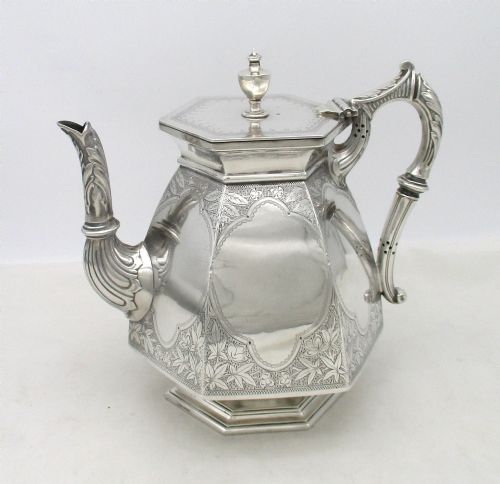


Epns Silver Teapot
An epns silver teapot brings the polished ritual of nineteenth and twentieth-century service directly to your table, offering durable silver plate over a sturdy metal base.
Epns Silver Teapot
When you search for an epns silver teapot, you find items shaped for domestic hospitality across the nineteenth and twentieth centuries. The selection spans single teapots, spirit kettles on stands, and larger multi-piece tea and coffee sets.
Edwardian examples dominate the listings, alongside Victorian and Aesthetic Movement pieces. These range from simple three-piece configurations up to ornate six-piece services equipped for formal entertaining.
How they were made
Makers utilised base metal or electroplated nickel silver as the foundation for these vessels, applying a durable silver plate over the top. This technique allowed workshops to produce substantial domestic silverware at a scale previously impossible.
Functional details frequently incorporate wood, ebony, or ebonised wood for insulating handles and finials. These contrasting materials protected users from heat while adding a dark, sharp accent to the bright silver surface.
Several kettles arrive with their original burners intact, ready to warm water over a tiny flame just as they did in Edwardian drawing rooms.
What varies in quality
The distinction between standard items and superior examples rests on the complexity of the design and the integrity of the plating. Ornate Victorian or Aesthetic Movement pieces exhibit deeper chasing and more deliberate decorative planning than plain utilitarian vessels.
The completeness of a service also shifts the character of the object, as matched multi-piece sets and kettles with burners demand greater initial skill and coordination from the original makers than a standalone pot.
Boardman Glossop And Co
The Epns Silver Teapot Glossary
- EPNS
- Electroplated nickel silver. This foundational abbreviation denotes a base metal core coated with a thin layer of silver through an electrical process.
- Aesthetic Movement
- A late nineteenth-century design focus. This style prioritised visual beauty and artistic detail over strict historical revivalism.
- Spirit Kettle
- A water heating vessel mounted on a frame. These pieces feature an integrated burner underneath to maintain water temperature during tea service.
- Victorian
- Spanning the nineteenth century. This era produced ornate domestic metalwork often decorated with heavy embossing and classical motifs.
Epns Silver Teapot: Frequently Asked Questions
How do I clean an epns silver teapot?
Use a specialised silver polish and a soft cloth to gently remove tarnish from the plated surface. Avoid abrasive pads that can wear through the thin silver layer over the underlying metal.
Take extra care around wooden or ebonised elements to keep moisture away from joints. Regular, gentle dusting preserves the bright finish far better than harsh chemical cleansers.
Can I use these teapots daily?
These pieces were built for functional domestic service, making them entirely suitable for occasional use. Many retain their internal structure and handle insulation just as intended by nineteenth-century makers.
Hand wash the vessel promptly after use and dry it thoroughly to prevent water spots. Modern dishwashers should be avoided entirely to protect the delicate plated finish and wooden fittings.
What is the difference between EPNS and solid silver?
EPNS consists of a base metal core, such as nickel silver, coated with a layer of pure silver through electroplating. Solid silver items are constructed uniformly from precious metal throughout the entire object.
Plated pieces offered households a brilliant metallic appearance at a fraction of the cost of solid silver. This method made elaborate tea services accessible to a much broader public.
How do I date a silver plated teapot?
Examine the overall design style, decorative motifs, and any accompanying maker stamps on the base. Victorian and Aesthetic Movement pieces generally display heavier ornamentation, while Edwardian items lean towards lighter, refined forms.
Reference the materials listed, such as ebonised wood handles or specific plate terminology, to narrow down the manufacturing window. Stylistic shifts across the nineteenth and twentieth centuries provide the clearest clues to age.