




Engraved Silver Stand
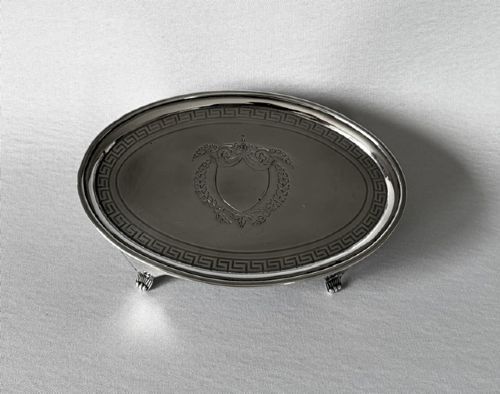
An engraved silver stand combines practical utility with decorative surface work, spanning Georgian, Victorian, and Edwardian periods.
Engraved Silver Stand
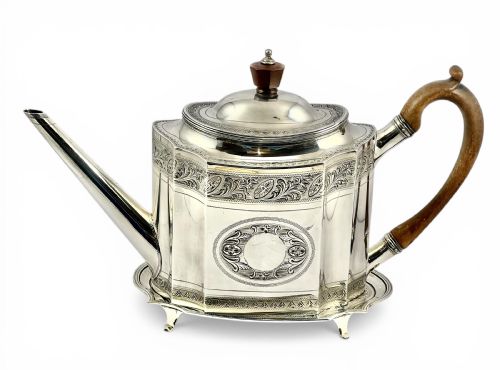
An engraved silver stand encompasses diverse objects such as teapot stands, inkstands, spirit kettles on stands, and wine bottle coasters. These items emerge primarily from the Georgian, Victorian, and Edwardian eras, reflecting changing domestic habits across the nineteenth and early twentieth centuries.
Teapot stands and inkstands dominate the offerings, alongside wine coasters, spirit kettles, and menu holders. Pieces range from solid sterling silver constructions to Old Sheffield Plate and later silver-plated metals, often paired with cut glass, wood, or bone.
Buyers encounter distinct regional and stylistic varieties, from George III tea wares to Victorian inkwells and Edwardian candlesticks. Makers utilised stylistic influences including Neoclassical, Regency, and Belle Epoque designs.
Materials and Techniques
Silversmiths employed sterling silver and silver plate over base metals, frequently combining metalwork with cut glass inserts, wooden bases, or bone elements. Articles such as spirit kettles, cake stands, and inkwells required complex assembly of frames, burners, and supporting feet.
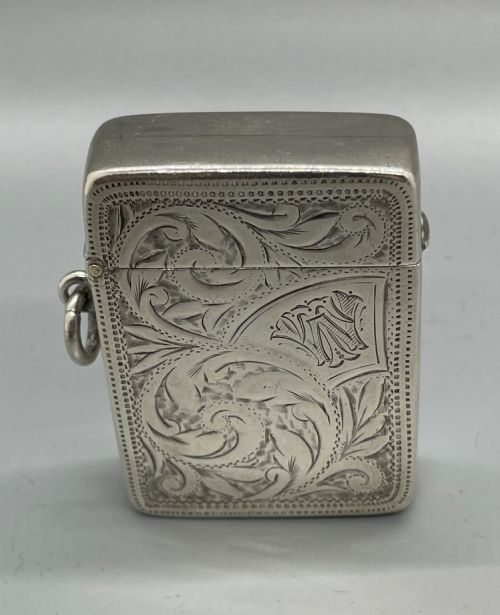
Surface decoration relies on fine hand engraving, creating floral frames, ferns, armorial crests, and heart motifs upon the silver or silver-plated surfaces. Makers also utilised casting and piercing techniques to shape candlesticks, wine coasters, and dish rings.
Materials span sterling silver, silver plate, cut glass, wood, and bone across multiple centuries.
Evaluating Quality
Quality rests upon the crispness of the hand engraving and the structural integrity of the metal frame. Superior examples display deep, clear incisions in floral or armorial motifs rather than shallow or worn surface marks.
The weight and balance of the piece dictate standard, particularly in multi-component items like spirit kettles on stands or fitted inkstands. Original matching components, such as burners, glass inserts, and fitted stands, elevate the integrity of the piece.
Robert Hennell I·Paul Storr·John and Thomas Settle·Elkington·Martin Hall·Mappin and Webb
The Engraved Silver Stand Glossary
- Sterling silver
- A silver alloy containing 92.5 percent pure silver and 7.5 percent other metals, usually copper. This standard composition provides the durability required for functional domestic objects.
- Old Sheffield plate
- An early form of plated metal created by fusing a thin sheet of silver to a thicker copper base. This technique was largely superseded by electroplating in the nineteenth century.
- Inkstand
- A desk accessory comprising a tray holding one or more inkwells, often with compartments for pens and powder. These pieces formed central furnishings on writing desks.
- Spirit kettle
- A water kettle mounted on a metal stand above a small spirit burner. This setup allowed tea water to remain hot at the table.
- Wine coaster
- A small circular tray with a raised rim, frequently wooden-based and silver-rimmed, designed to hold a wine bottle. They protected dining tables from spills and allowed bottles to slide easily.
Engraved Silver Stand: Frequently Asked Questions
What is an engraved silver stand used for?
These stands served various domestic functions, supporting teapots, spirit kettles, inkwells, or wine bottles on dining and writing tables.
They protected polished wooden surfaces from heat and moisture while adding decorative display to the room.
How can I tell a Georgian stand from a Victorian one?
Georgian stands often exhibit clean Neoclassical or Regency lines, reflecting earlier eighteenth and early nineteenth-century aesthetics.
Victorian examples tend toward heavier ornamentation, incorporating elaborate floral engraving, ferns, and more complex mechanical stands.
How do I care for antique silver stands?
Gentle cleaning with a soft cloth removes dust and prevents tarnish accumulation without wearing away delicate hand engraving.
Avoid abrasive polishes, particularly on silver-plated items where harsh scrubbing can expose the base metal beneath.