

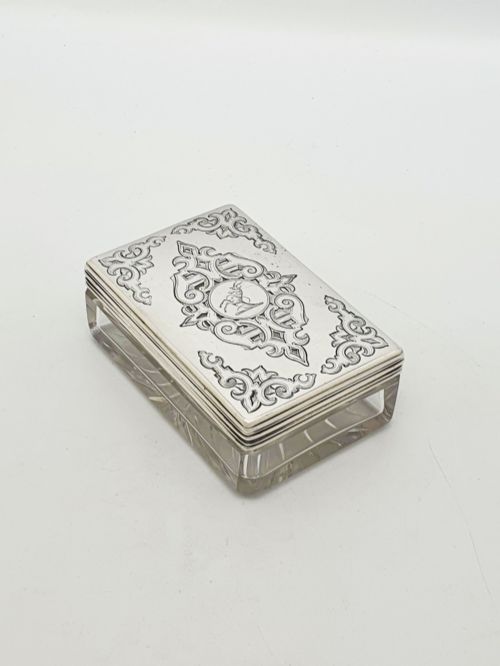


Engraved Silver Dressing Box
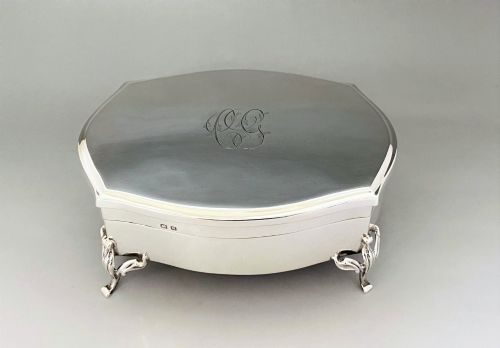
An engraved silver dressing box brings the tidy elegance of the boudoir into the present room, fashioned for vanity and travel.
Engraved Silver Dressing Box
An engraved silver dressing box is a container designed for personal ornamentation, cosmetics, and small treasures. These pieces span periods from the Georgian era through to the 1920s, encompassing styles such as Victorian, Edwardian, and Art Nouveau.
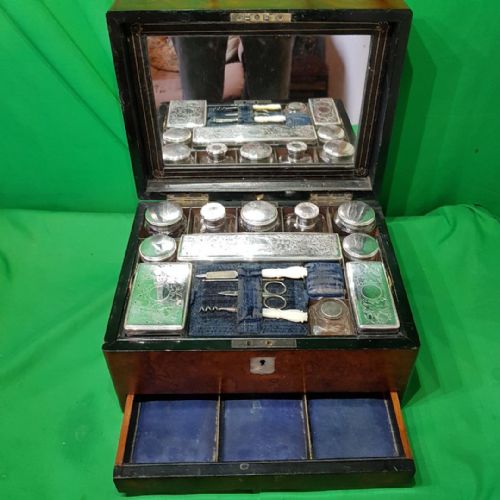
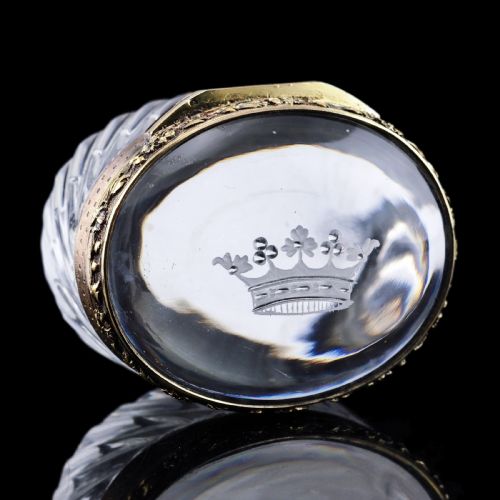
The assortment on this page includes trinket boxes, jewellery caskets, travelling sets, and vanity cases. Many examples incorporate cut glass, cut crystal, burr walnut, and tortoiseshell alongside sterling silver mountings.
Origins vary widely, taking in English makers, French nineteenth-century works, and traditional Thai pieces with niello decoration. Buyers encounter everything from small patch boxes to large fitted travelling sets.
How They Were Made
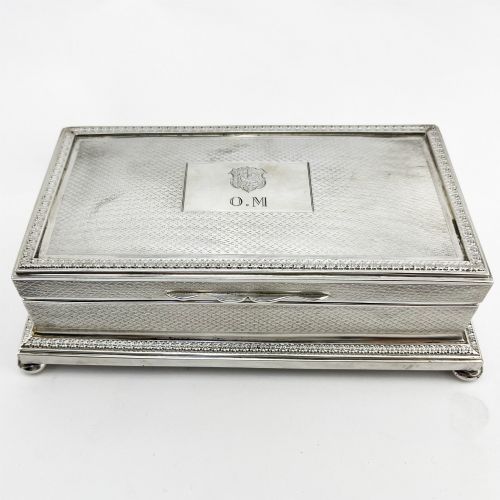
Makers utilised sterling silver and silver gilt for mounts, hinges, and lids, often applying chased or engraved decoration by hand. Glass bodies were heavily cut or moulded to catch the light, while internal fittings relied on wood such as burr walnut and coromandel.
Lining materials like velvet provided a soft bed for jewellery and toilet instruments. Metalwork techniques combined casting, piercing, and precise hand engraving to create crests, floral motifs, and geometric patterns.
Listings feature materials spanning sterling silver, silver gilt, cut glass, tortoiseshell, burr walnut, and velvet across multiple centuries.
What Varies in Quality
The distinction between tiers rests upon the crispness of the engraving and the weight of the metal used in the mounts. Superior examples demonstrate a tight integration between silver lids and glass bodies, without looseness in the hinges.
Fitted interiors with intact velvet lining and original glass bottles elevate a piece beyond simple boxes. Maker attribution and the complexity of decorative techniques such as niello or parcel gilt also set finer items apart.
Paul Storr·Elkington and Co·Jane Brownett Alexander Jones·Asprey
The Engraved Silver Dressing Box Glossary
- Sterling silver
- An alloy comprising ninety-two point five percent silver and seven point five percent other metals, chiefly copper. This standard ensures durability for decorative and functional boxes.
- Silver gilt
- Silver covered with a thin layer of gold on its surface, giving a rich warm tone. It was frequently applied to the interior or mounts of luxury dressing boxes.
- Niello
- A black metallic alloy used as an inlay on engraved metal, particularly silver. The dark contrast highlights delicate patterns and pictorial scenes.
- Cartouche
- An ornamental tablet or shield shape framed by scrollwork, often left blank for initials or a crest. Engraved dressing boxes frequently display these on the lid.
- Coromandel
- A dense, heavily grained dark wood from Asia, prized for nineteenth-century vanity cases and luxury boxes. It provides a striking contrast to bright silver mounts.
Engraved Silver Dressing Box: Frequently Asked Questions
What fits inside an engraved silver dressing box?
These boxes accommodate rings, brooches, small vanity items, and personal keepsakes. Travelling variants often hold scent bottles and grooming tools.
Interior compartments and velvet linings keep delicate items separated and secure during daily use.
How do I clean an engraved silver dressing box?
Use a soft microfibre cloth and a mild silver polish formulated to protect delicate engraving. Avoid abrasive cloths that wear down thin silver layers.
Keep polish away from glass, fabric linings, and wooden interiors to prevent staining or water damage.
Are these boxes suitable for daily travel?
Many historical pieces were built precisely for travel, featuring robust locking mechanisms and fitted leather or wooden outer cases. However, antique glass and delicate hinges require careful handling.
Modern owners often prefer to keep them stationary on a dressing table to preserve their condition.
How can I tell the period of a box?
Stylistic clues such as floral Art Nouveau curves, heavy Victorian Rococo scrolling, or neoclassical Georgian shapes offer clear indications. Hallmarks on the silver provide precise dating where legible.
Materials like coromandel or specific cut glass patterns also align with distinct manufacturing decades.